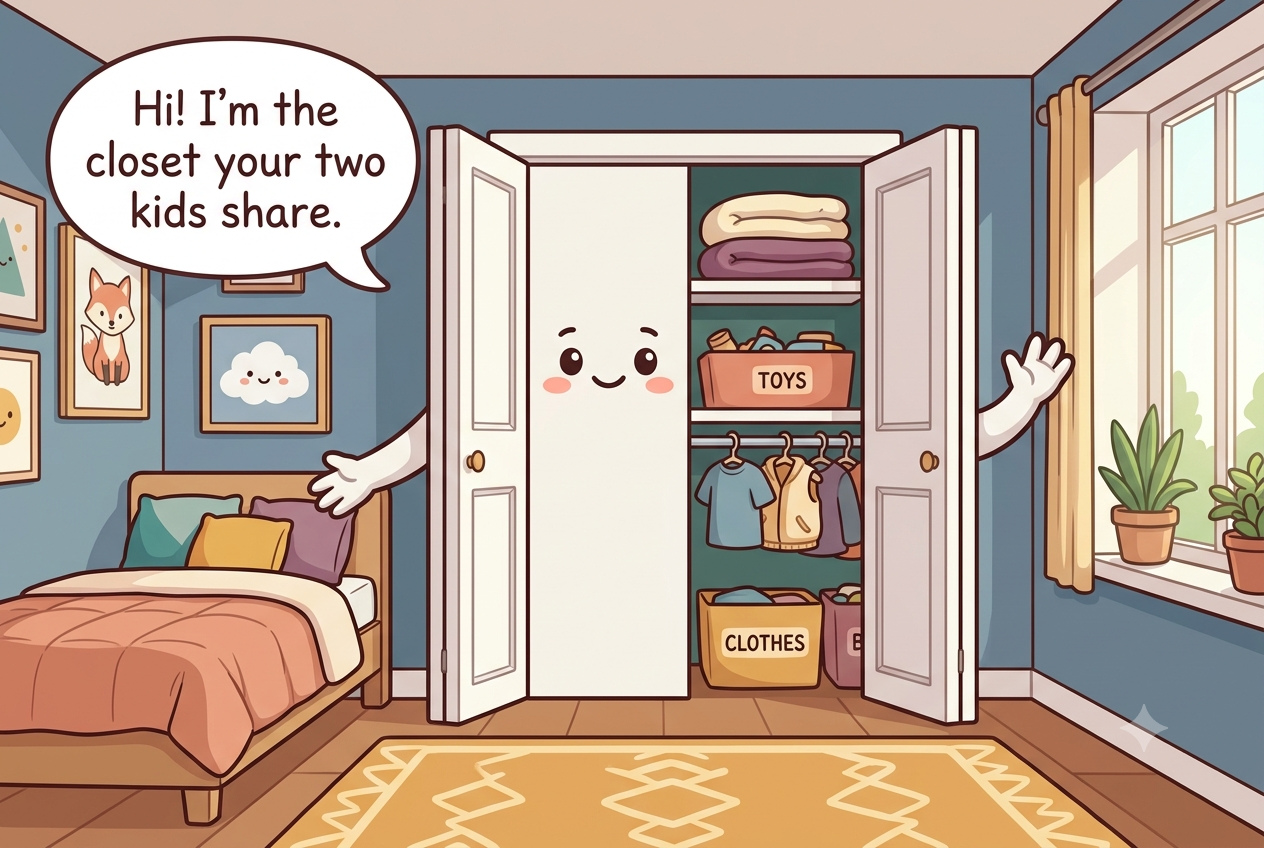
The short answer
Divide the closet so each child can see and reach a clear daily zone. Keep current-size clothes on low rods, hooks, or open bins; use two labeled grown-up-managed bins for 'too small' and 'next size'; keep heavy items low; and anchor tall or freestanding storage so children cannot pull it over or use it for climbing.
What to gather before you start
- A child-height hanging option: a lowered rod or an add-on double-hang bar
- Kid-sized slim hangers
- Open bins with picture-and-word labels
- A step stool if some storage has to be up high
- Two clearly different colors or tags, one per child
- A grow-into bin and an outgrown-now bag or bin
Measure first. Buy only the pieces that solve a specific access problem.
Empty it and sort by child, then by size
Remove the contents and make separate piles for each child before sorting by current size, too small, next size, seasonal, and special occasion. This prevents hand-me-downs from being mixed into the wrong active wardrobe. Check fit and condition rather than relying only on the size printed on the label, because children's clothing brands vary.
Remove damaged items that are not worth repairing and set aside donations promptly. Keep small accessories and loose parts contained so they do not disappear on the floor. Wipe shelves and inspect the closet for unstable furniture, loose rods, or heavy objects stored overhead before reloading.
Keep sentimental clothing out of the active sort so it does not compete with everyday sizes. Check each child's current fit, then place true hand-me-downs directly into a labeled future-size zone. While the closet is empty, correct loose hardware and remove heavy objects from positions above where children dress or reach. Count only clothing that is wearable now when sizing the active zone. Keeping next-size, sentimental, and seasonal pieces mixed into daily drawers makes the closet appear fuller than the child's real wardrobe and turns every morning into a search through irrelevant sizes.
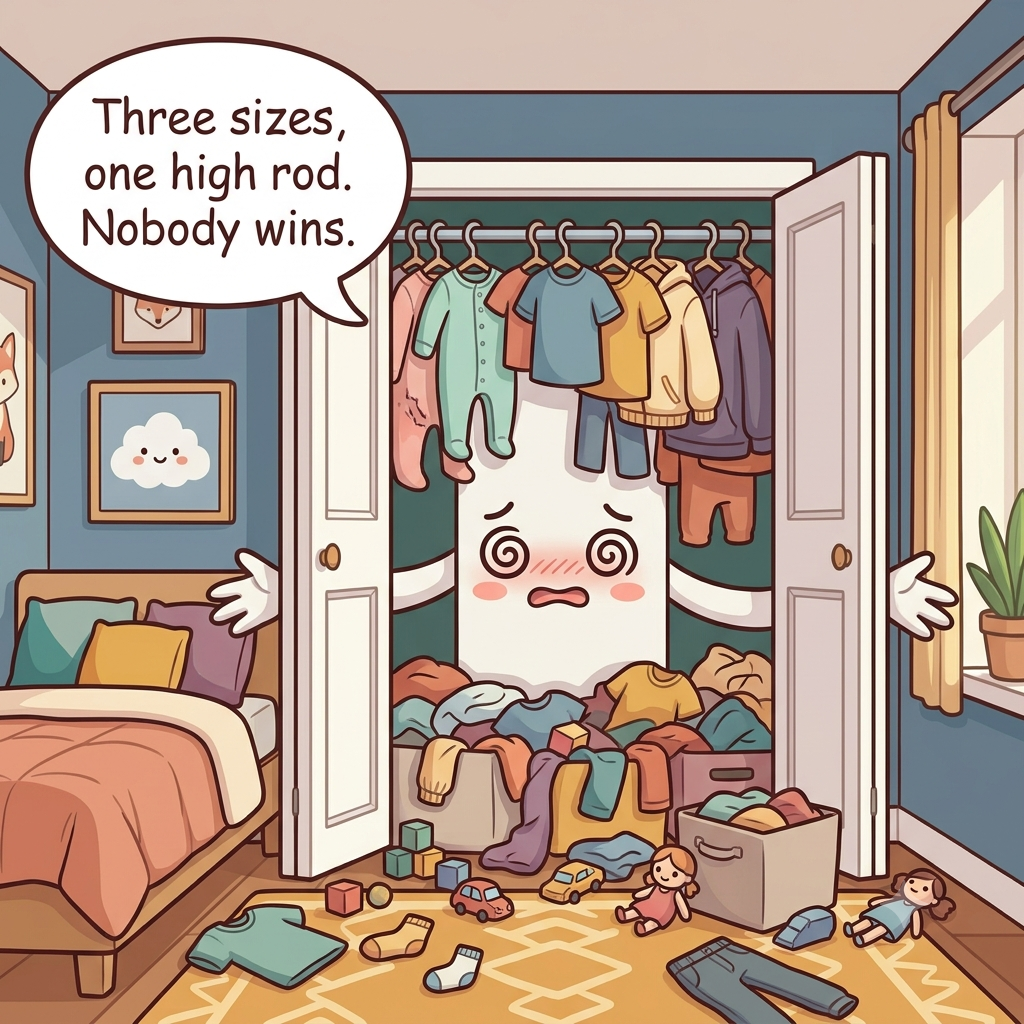
Give each child a fair, obvious zone
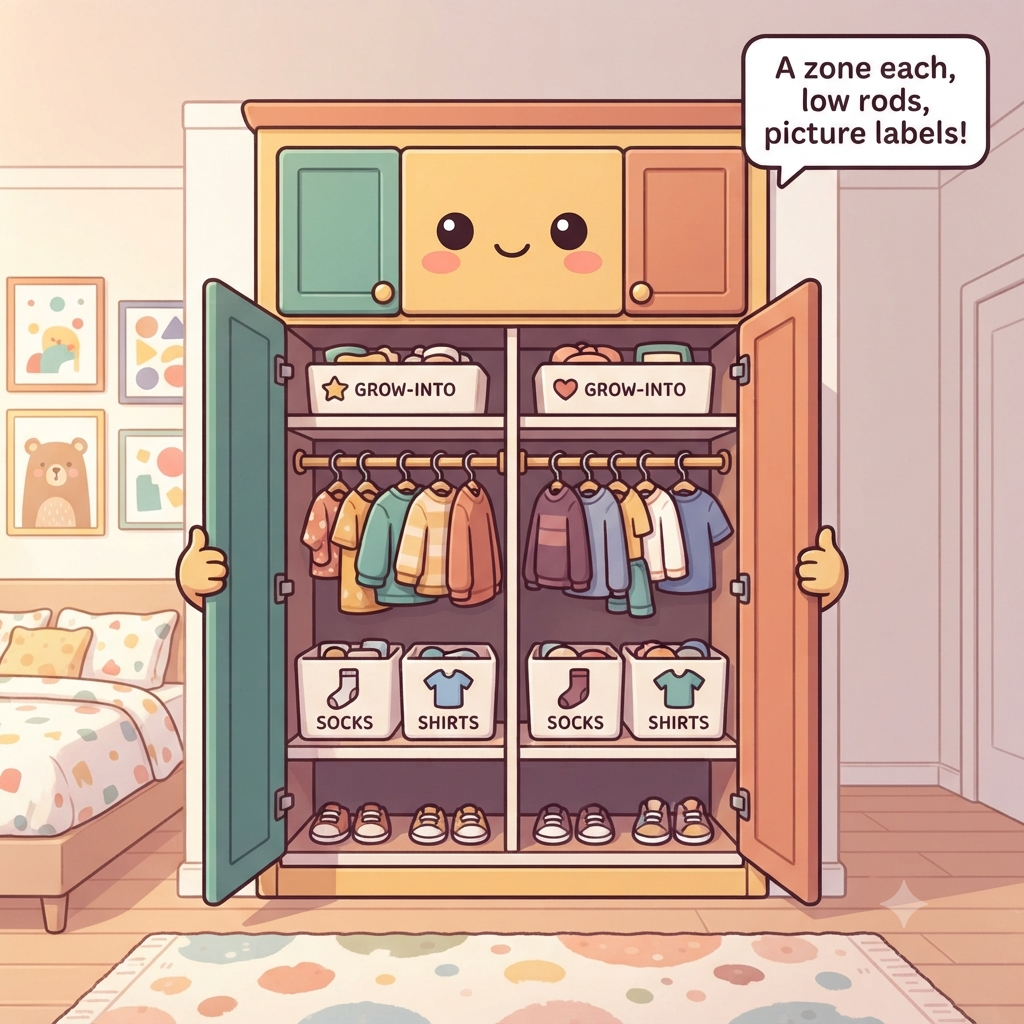
Use one side of the rod, a color-coded bin, a labeled shelf, or a row of hooks for each child. The zones do not have to be identical if the children's clothing needs differ, but the boundaries should be obvious enough that a child can return an item without asking where it belongs.
Avoid dividing every tiny category by child if that creates too many containers. Shared items such as dress-up accessories or school uniforms can have one clearly labeled shared zone. Use words, simple pictures, or both depending on the children's reading level.
Make the boundary visible from the doorway with labels, color cues, or simple pictures, but do not force identical storage when the wardrobes differ. One child may need more hanging space while another needs more folded bins. The fair outcome is that both can identify and return their own clothes without crossing through the other's active zone. Use labels that still make sense when laundry is returned quickly. A child's name, picture, or simple category is usually more durable than a highly specific system that requires remembering where every shirt style belongs.
Put the current size where small arms reach
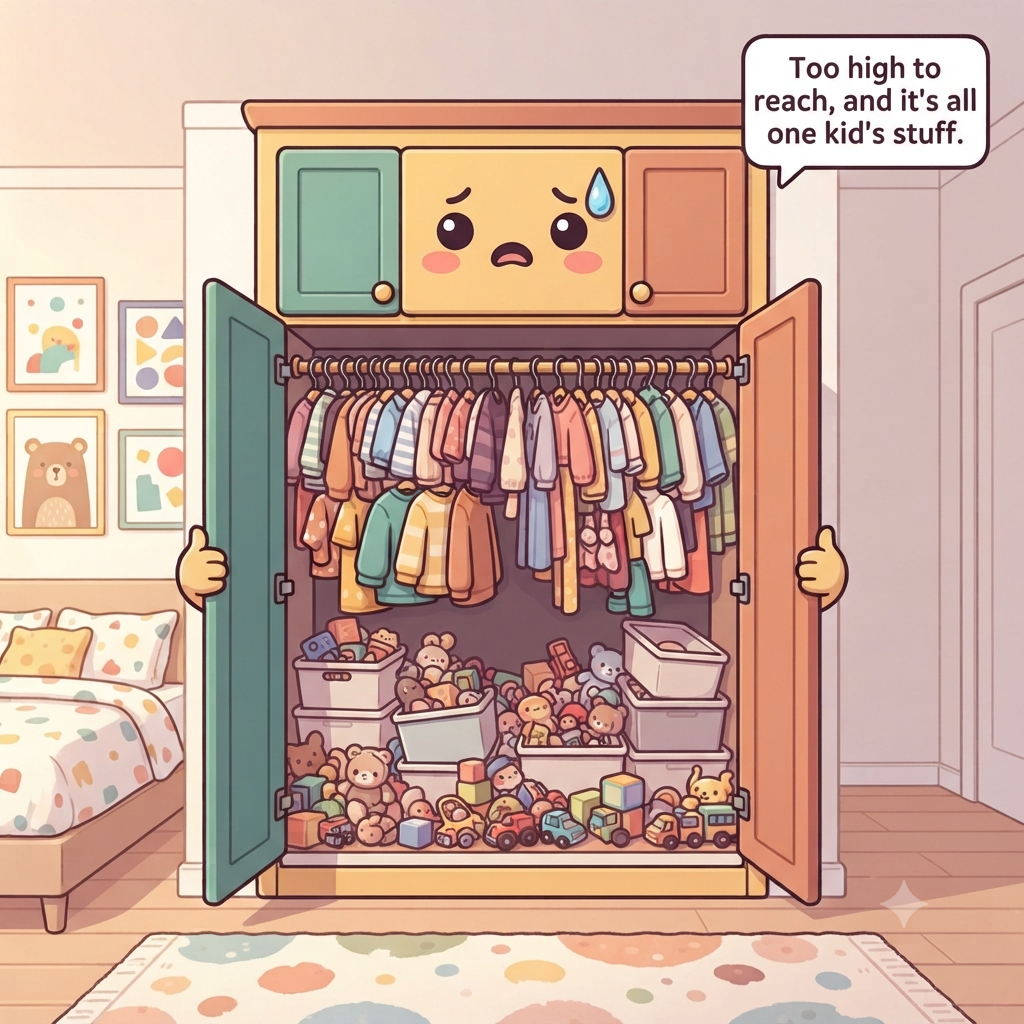
Place everyday shirts, pants, pajamas, and jackets on low rods, hooks, or open-front bins the child can reach safely from the floor. Reserve higher shelves for adult-managed backstock and next-size clothing. Children should not need to climb shelves, drawers, or furniture to get dressed.
Use lightweight containers in child-access areas and keep heavy items low. If the closet includes a dresser, bookcase, or freestanding shelving, anchor it to the wall using appropriate anti-tip hardware and follow the manufacturer's instructions. Do not place tempting toys or treats on top of furniture where they encourage climbing.
Test the setup from the child's height. Daily clothes should be reachable from the floor without pulling on shelves or climbing furniture, and lightweight open bins are easier to use than deep lidded boxes. Anchor any dresser, bookcase, or freestanding shelving according to anti-tip instructions and keep tempting toys off the top. Keep hangers lightweight and easy to remove from the rod, and avoid hooks with sharp protruding ends at face height. The safest child-access layer should require ordinary standing and reaching, not climbing onto a hamper, drawer, or sibling's shelf.
Handle sizes and hand-me-downs with two bins
Keep one small bin labeled 'too small' and one labeled 'next size.' As soon as an item no longer fits, move it out of the daily zone; when the too-small bin fills, donate, sell, or move selected hand-me-downs to longer-term storage. The next-size bin prevents bargains and hand-me-downs from mixing with clothes a child can wear today.
Review the next-size bin before buying a new season. This gives you an accurate inventory of what is already waiting and prevents duplicate purchases. Keep sentimental clothing separate from practical hand-me-down storage so emotion does not block the active system.
Keep the next-size bin small enough to review before each season rather than turning it into a years-long archive. The too-small bin should have a defined exit—donation, resale, or labeled hand-me-down storage—once it fills. Separating sentimental pieces prevents emotional decisions from clogging the practical clothing rotation. Add a date or season to the next-size bin when several growth stages are stored. That makes it easier to review what is likely to fit soon and prevents a deep container of future clothes from becoming an unsorted archive.
Keep the floor clear and the top shelf for grown-ups
Use the floor only for a limited number of easy-to-return items such as a shoe rack or one laundry hamper. Keep the center walkway clear so children can stand, turn, and reach clothing without stepping over bins. Store adult-managed seasonal or next-size items on the top shelf in lightweight labeled containers.
Do not stack heavy boxes above children's heads or leave loose objects where they can fall when a bin is pulled. If the top shelf cannot be reached safely by an adult with an appropriate step stool, reduce the inventory or move the category elsewhere.
Limit the floor to stable, easy-return storage such as a low shoe rack or hamper and preserve a clear standing area. Top shelves should hold only lightweight adult-managed categories that can be brought down safely. If a grown-up needs to climb furniture or balance a heavy box overhead, the category belongs elsewhere. If the closet includes freestanding drawers or shelving, keep heavier belongings in the lowest sections and install the supplied anti-tip restraint. CPSC recommends anchoring tip-prone furniture and keeping tempting objects off the top where children may try to climb for them.
Where shared kids' closets fall apart
Do not give children a system that requires matching tiny categories, opening heavy lids, or using adult-height hangers. Avoid overloaded rods, unstable drawer units, heavy bins overhead, and toy-like objects placed where climbing is tempting. Do not let too-small clothes remain mixed with current clothes for months.
Another mistake is making the division look perfectly equal while ignoring actual use. One child may need more hanging space and the other more folded space. Keep the boundary fair and visible, then shape the storage around each wardrobe.
Do not design a system that succeeds only when an adult maintains it. Tiny subcategories, heavy lids, high rods, and overfilled drawers create friction children cannot solve. Keep the child-facing layer simple, low, and visible, while adults manage anchoring, seasonal stock, and any heavy or hazardous items. Keep the hamper opening simple enough that dirty clothes do not become another floor pile.
The every-few-months reset
Every few months—or whenever growth makes dressing frustrating—check the current-size zone, move outgrown pieces into the too-small bin, and bring in only the next-size items that now fit. Review seasonal needs and remove duplicates before shopping.
Ask children to help with the simple part: return clothes to their own zone and choose favorites. Adults should handle high shelves, anchoring, and heavier storage. A small rotation keeps the closet usable without a full seasonal overhaul.
Use growth, not the calendar alone, as the trigger for an extra check. When getting dressed becomes frustrating, move outgrown items immediately and bring forward only the next-size pieces that truly fit. Involve children in returning favorites to their zones, but keep high-shelf and anti-tip tasks with adults.
Kids’ closet tip-over safety
- Anchor tall or tip-prone closet furniture securely according to manufacturer instructions.
- Keep heavier storage low and daily child-use items within reach so children do not need to climb.
- Do not place tempting toys or special items high on furniture.
Source: U.S. CPSC — Anchor It
Renter-friendly option
Use low freestanding bins, a child-height portable drawer unit, over-door pockets for lightweight items, or a landlord-approved tension/double-hang system instead of drilling. If a freestanding unit is tip-prone, renter status is not a reason to skip required anchoring—use manufacturer guidance and obtain landlord permission as needed.
30-second success check
- Each child can reach current-size daily clothes without climbing furniture.
- The two children’s zones are obvious enough that a returned item has one clear destination.
- Current size, next size, and outgrown clothing cannot be confused at a glance.
- Heavy storage is low and any tall or tip-prone furniture is secured appropriately.
- The closet floor and door path remain clear.
Questions that come up
Frequently asked questions
Part of Closets, Clothing & Personal Storage — 13 guides.