
The short answer
Group books by the way you search for them—topic, author, genre, or household member—then keep heavy volumes on lower shelves and one visible row whenever possible. Follow the shelf's load ratings, anchor freestanding bookcases to the wall with appropriate anti-tip hardware, and leave enough open space to remove a book without pulling down a tightly wedged row.
What to gather before you start
- A furniture anti-tip strap or L-bracket kit
- Boxes for donations and for books to return to their owners
- A few bookends for short rows
- A damp cloth for dusting shelves and the tops of books
- A small stack of storage boxes for overflow or archives
- Optional: a few baskets or bins for oversized or loose items
Measure first. Buy only the pieces that solve a specific access problem.
Take every book off and sort
Work one shelf at a time if the bookcase is large so you do not create an unmanageable floor pile. Sort into keep and use, reference, sentimental, donate, sell, and repair. Remove unrelated objects that are using the shelf as general storage and dust both books and shelves before reloading.
Check the bookcase itself for bowing shelves, loose fasteners, damaged backing, and stability. If it is freestanding, plan to anchor it before returning a heavy load; CPSC advises anchoring bookcases and other tip-prone furniture to help prevent tip-over injuries.
Before reloading, inspect the case and shelves for bowing, loose fasteners, damaged back panels, or a wobble that suggests the unit needs repair or replacement. Check the manufacturer's load limits if they are available; book weight adds up quickly and there is no universal safe number of books per shelf. Measure shelf depth and height so oversize art books and binders can be assigned intentionally rather than wedged into a row that distorts the shelf. If the unit is a modular or wall-mounted system, verify that every bracket and connector is installed as its instructions require before adding the books back.
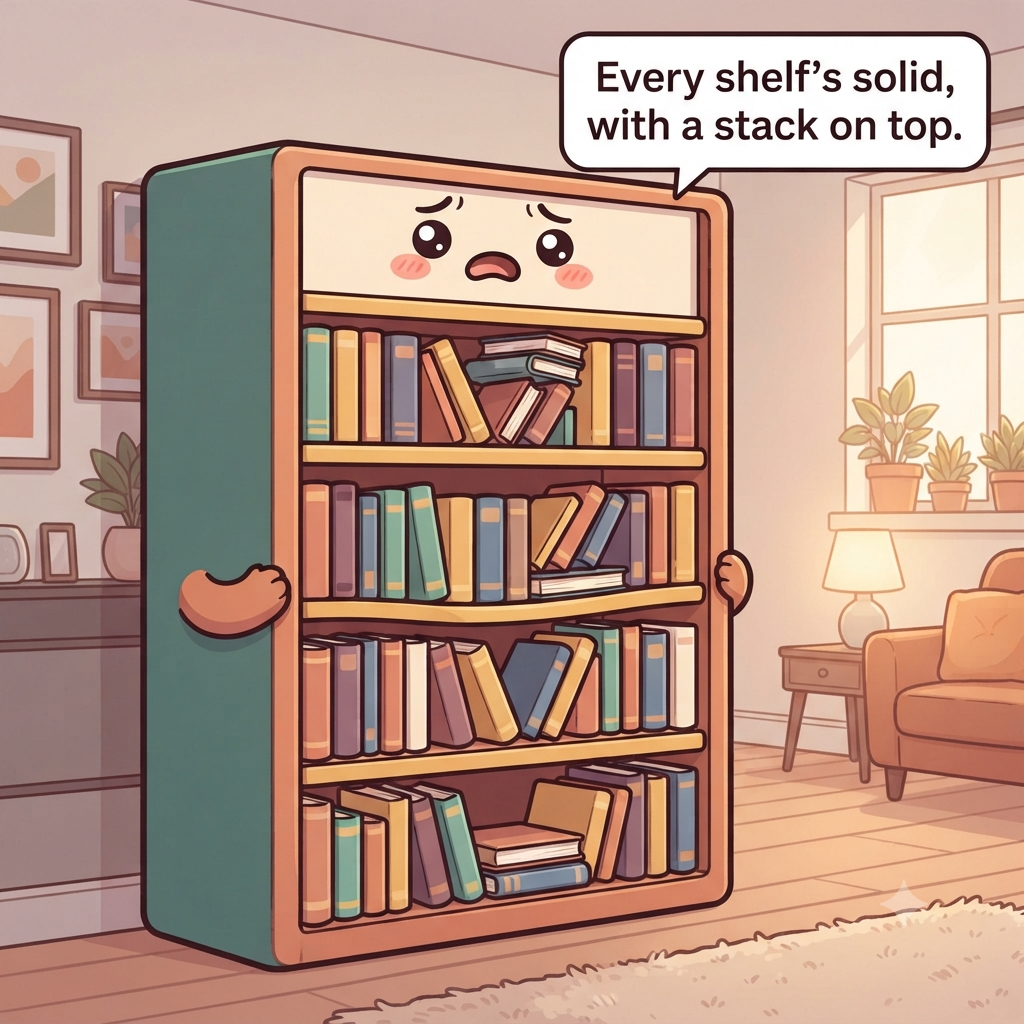
Group them the way you reach for them
Choose a retrieval system that matches your habits: fiction by author, cookbooks by cuisine, children's books by reader, reference by subject, or a small current-reading zone. Keep labels or shelf markers only where they genuinely help; many household collections do not need library-level classification.
Avoid arranging solely by spine color if that makes books difficult to find. If several people share the shelves, dedicate one section per person or broad topic and keep a separate return shelf for books that need to be refiled.
Choose an order that matches retrieval: author or subject for reference-heavy shelves, series order for collections, or broad themes for casual reading. Keep frequently consulted books where titles are easy to scan. If a system needs constant alphabetizing to stay usable, broaden it. The point is not to make every spine obey a decorative scheme; it is to let you find a book, remove it, and put it back without disturbing a second row.
Load heavy low and leave breathing room
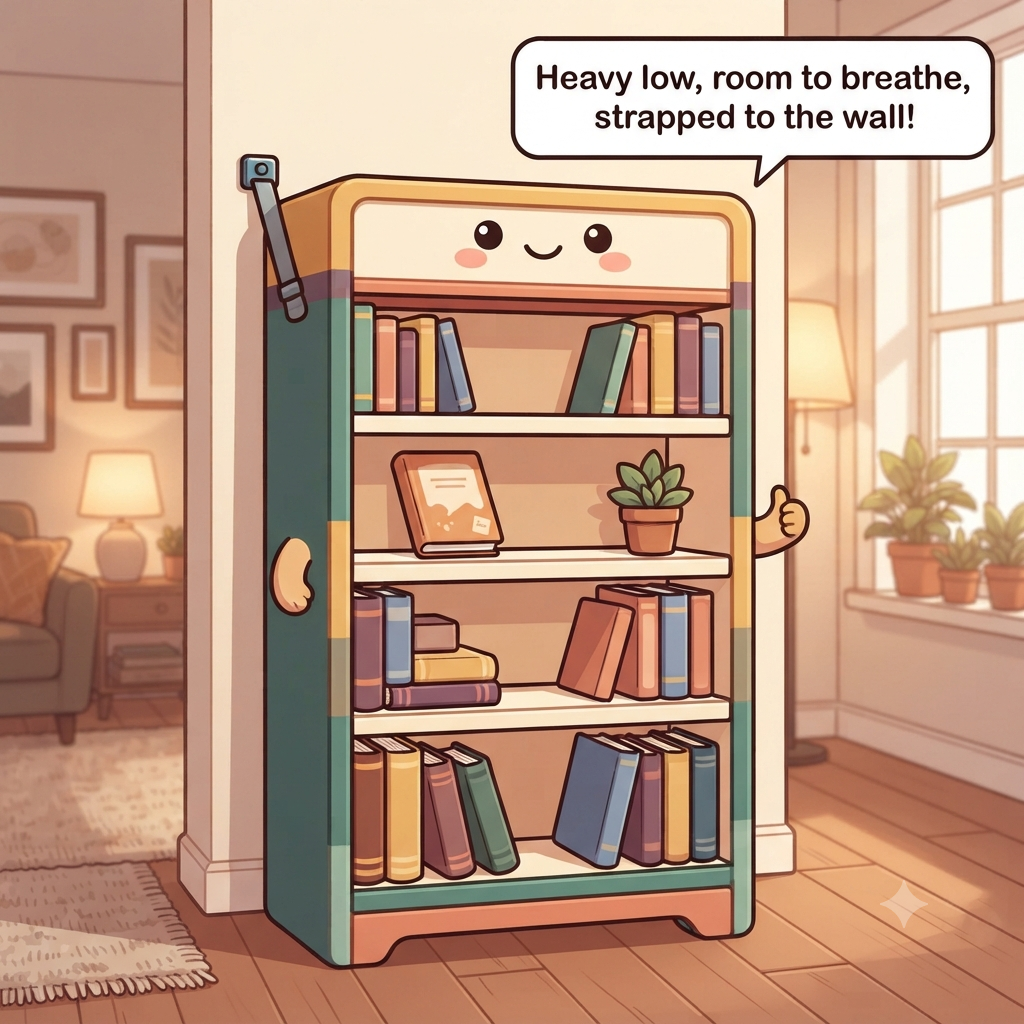
Put art books, large hardcovers, binders, and other dense volumes on lower shelves. Lighter paperbacks and display objects can sit higher. Follow the manufacturer load rating for each shelf; there is no universal safe number of books because book weight, shelf span, material, and construction vary widely.
Keep one row deep when possible so every spine is visible. Leave enough horizontal slack to remove and replace a book without forcing the row. If shelves bow, reduce the load or shorten the unsupported span according to the furniture design rather than squeezing in more books.
Put the densest books and large volumes on lower shelves and distribute weight instead of concentrating a stack at one end. Leave enough open space for fingers to grasp a spine and for new books to enter without double-stacking. If a shelf begins to bow, unload it immediately and check its rating or support. Decorative horizontal stacks should stay small and stable; they should not become improvised risers carrying a second heavy row. Keep especially large atlases and art books flat only when the shelf can support them without overhang or an unstable pile.
Anchor it to the wall
Secure a freestanding bookcase to the wall using the manufacturer's anti-tip kit or appropriate anchoring hardware for the wall type. Keep heavy objects low and do not place toys, remotes, or other tempting items high where a child may try to climb the shelves to reach them.
Anchoring is especially important in homes with children, but adults can also be injured by unstable tall furniture. Do not use a decorative object or the weight of the books as a substitute for a real anti-tip connection.
Anchor a freestanding bookcase according to the manufacturer's anti-tip instructions and use hardware appropriate to the wall structure. CPSC recommends anchoring furniture that can tip, especially in homes with children. Do not assume the weight of books makes a tall case safer; loaded drawers, climbing, pulling on shelves, or a child reaching for an object can change the forces on the unit. Keep heavier books low and never encourage climbing for retrieval.
Mix in a little display and keep a donation shelf
If you want visual breathing room, reserve small gaps or a few shelf sections for lightweight art, framed photos, or objects that are stable and easy to dust. Do not place heavy stone or glass decor on a high shelf above seating or children's play areas.
Keep one small donation or 'finished with' shelf near the bottom. When it fills, move the books out of the house. A fixed exit zone prevents unwanted books from being refiled simply because there is a narrow gap available.
Reserve only a small portion of the shelf for display so decorative objects do not hide titles or tempt you to stack books in unstable arrangements. A dedicated donation shelf or basket gives unwanted books a temporary destination with an exit rule: when it fills, donate, sell, or recycle appropriately. This keeps editing continuous. Sentimental or collectible volumes that need special environmental protection can live separately from the daily-use shelf. Keep fragile display objects minimal on shelves used by children, and never place a tempting collectible high enough that a child may climb the case to reach it. If a shelf is mainly decorative, still preserve the same anchoring and load rules as the book-heavy sections.
Where bookshelves go wrong
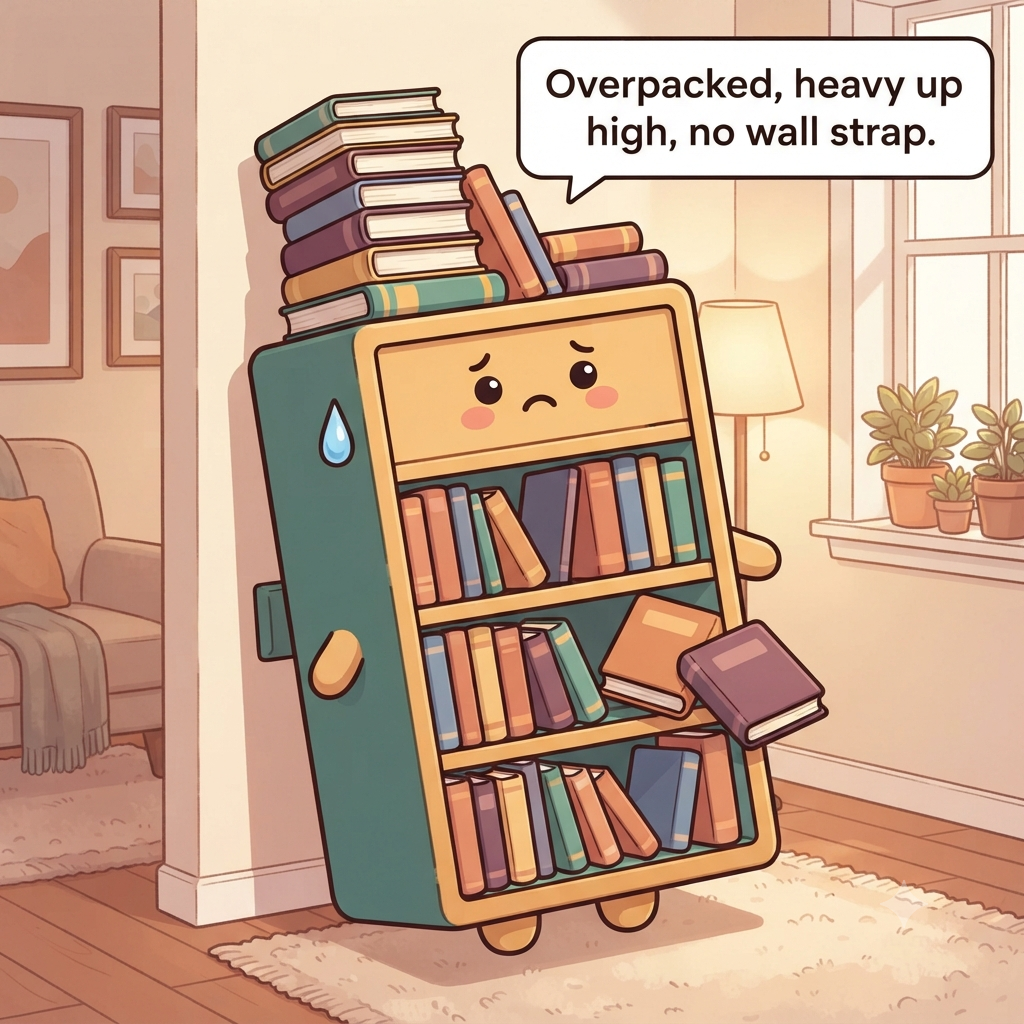
Do not double-row books until the back row is invisible, overload a long shelf until it bows, put the heaviest volumes at the top, or leave a tall bookcase unanchored. Avoid high display objects that can fall and storage arrangements that invite children to climb.
Another mistake is choosing a visual sorting method that no one in the household can maintain. Retrieval is the primary job of a bookshelf; decoration should not make finding a book harder.
When the bookshelf looks crowded again, identify whether the problem is acquisition, poor grouping, or inaccessible shelving. Double rows usually mean the collection has outgrown the visible capacity; piles on the floor often mean an easy donation or return path is missing. Do not solve a bowed shelf with bookends or a second stack. Reduce the load, repair or replace the shelf as needed, and keep the route to every frequently used book simple.
The seasonal reset
Every few months, return wandering books to their sections, empty the donation shelf, dust exposed surfaces, and check for shelf bowing or loosened anchoring hardware. Move newly frequent reference books into easier reach.
If books begin forming a second row or lying horizontally across every shelf, edit the collection before adding another bookcase. Capacity is safer and more useful when each shelf remains within its rated load and visible in one layer.
Once a season, pull obvious donations, return books that migrated to other rooms, dust exposed shelf surfaces, and inspect anchors and shelf supports. Rebalance any unusually heavy run of books and remove objects that interfere with retrieval. Leave deliberate open inches rather than packing the row tightly from end to end. That reserve space absorbs normal additions and keeps the shelf browseable without requiring a full re-sort whenever one new book arrives. If you keep borrowed books, give them one visible return spot so library or friends’ books do not disappear into the permanent collection.
Bookcase stability
- Anchor tall or heavy bookcases securely to the wall using appropriate hardware.
- Store heavier books and objects on lower shelves.
- Avoid putting toys or attractive items high enough to encourage a child to climb.
Source: U.S. CPSC — Anchor It
30-second success check
- The bookcase is anchored appropriately and heavier volumes stay low.
- No shelf is bowing or loaded beyond the manufacturer’s rating.
- Frequently used books are visible and can be removed without unloading a second row.
- High shelves do not hold tempting child-climb targets or unstable heavy decor.
- The donation or exit zone is small enough that it actually leaves the house when full.
Questions that come up
Frequently asked questions
Part of Paper, Electronics & Small-Item Systems — 7 guides.