The short answer
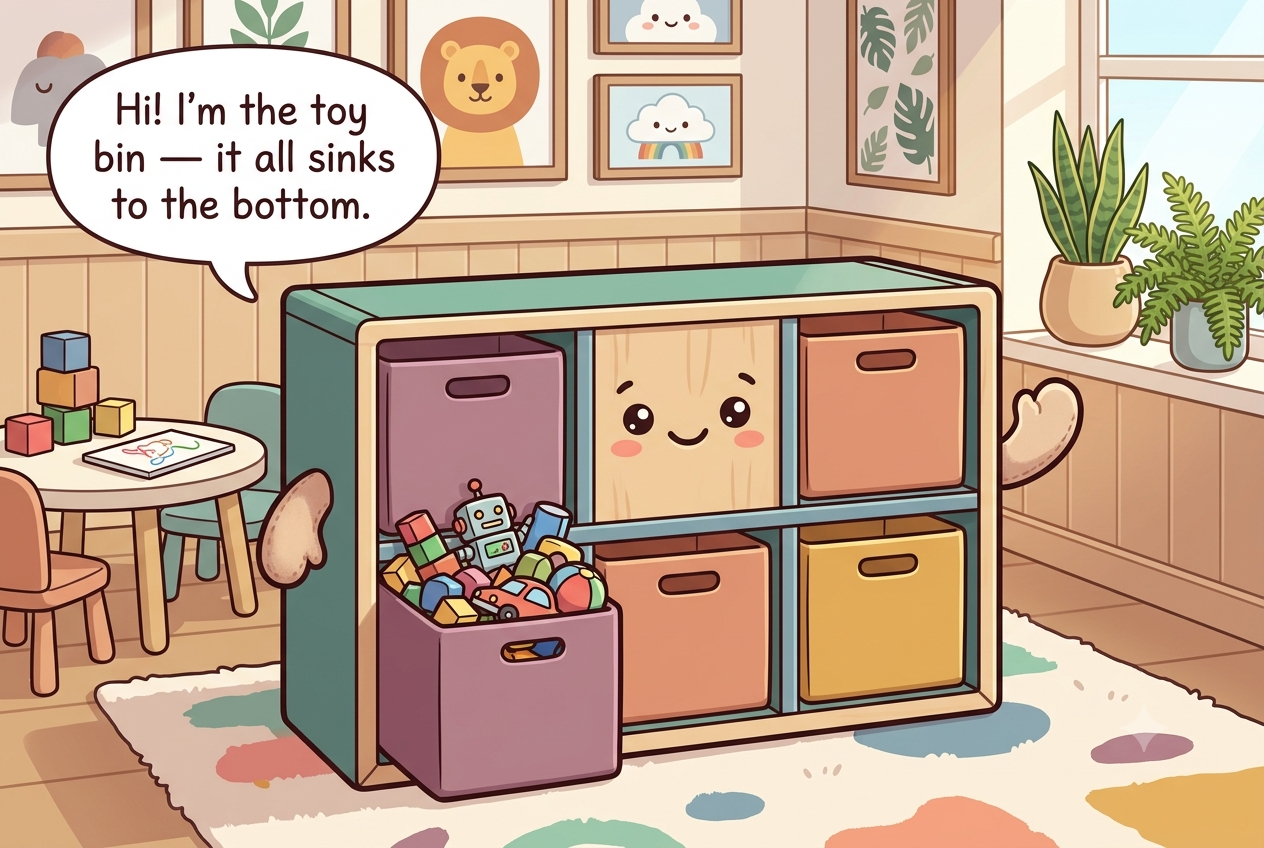
Use a small number of broad, child-understandable categories in low open bins rather than one deep toy chest. Keep small-piece sets in separate lidded containers managed at an appropriate age, rotate part of the collection out of sight, keep heavy items low, and anchor any tall or freestanding shelving so children cannot pull it over or climb it.
What to gather before you start
- Several open, shallow bins a child can carry
- A low shelf or cube unit at child height
- Picture-and-word labels for every bin
- Closed containers for small-piece sets
- A bin for donations and one for repairs
- Anti-tip hardware for any tall shelf unit
Measure first. Buy only the pieces that solve a specific access problem.
Tip it all out and cull with clear eyes
Empty one toy area at a time and sort by what children actually play with: building, pretend play, vehicles, art, puzzles, dolls, sensory toys, and small sets. Remove broken toys, incomplete toys that no longer work as intended, and age-inappropriate items. Set sentimental toys aside from the daily play inventory so memory does not determine how much a child must tidy each day.
Check recall and safety information for questionable toys rather than assuming an old favorite is still appropriate. Keep tiny parts away from children who may mouth objects, and discard damaged battery compartments, exposed sharp edges, or other hazards according to manufacturer guidance.
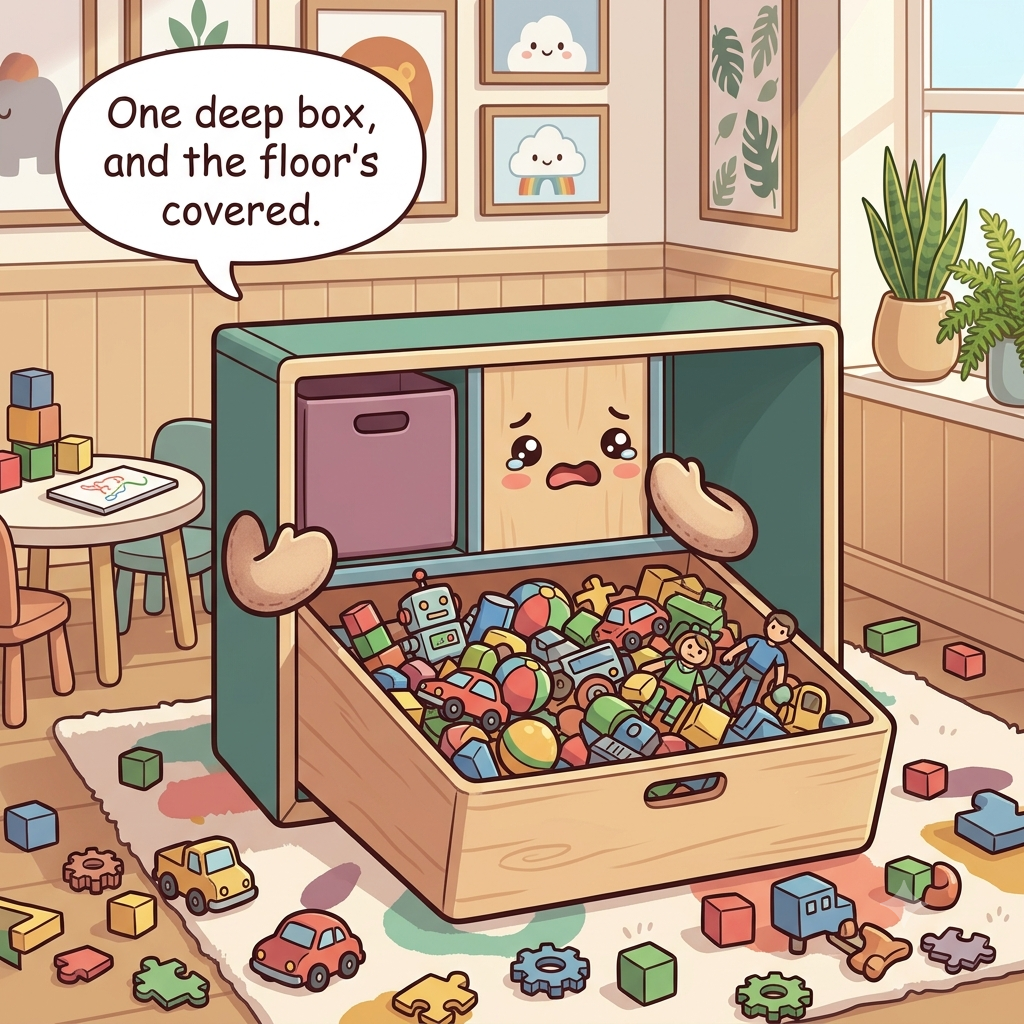
Use the empty-floor moment to check whether the storage furniture itself is part of the problem. A bin that is too deep for the child, a cubby that tips when climbed, or a chest with an unsafe falling lid should not go back into service simply because it holds a lot. CPSC warns that falling or latching toy-chest lids can injure or trap children; open bins avoid that lid hazard and also make the contents easier to see. Before children return to the room, confirm that low bins do not create a tripping pinch point in the main play path and that any recalled product is removed from use.
Sort into categories a child understands
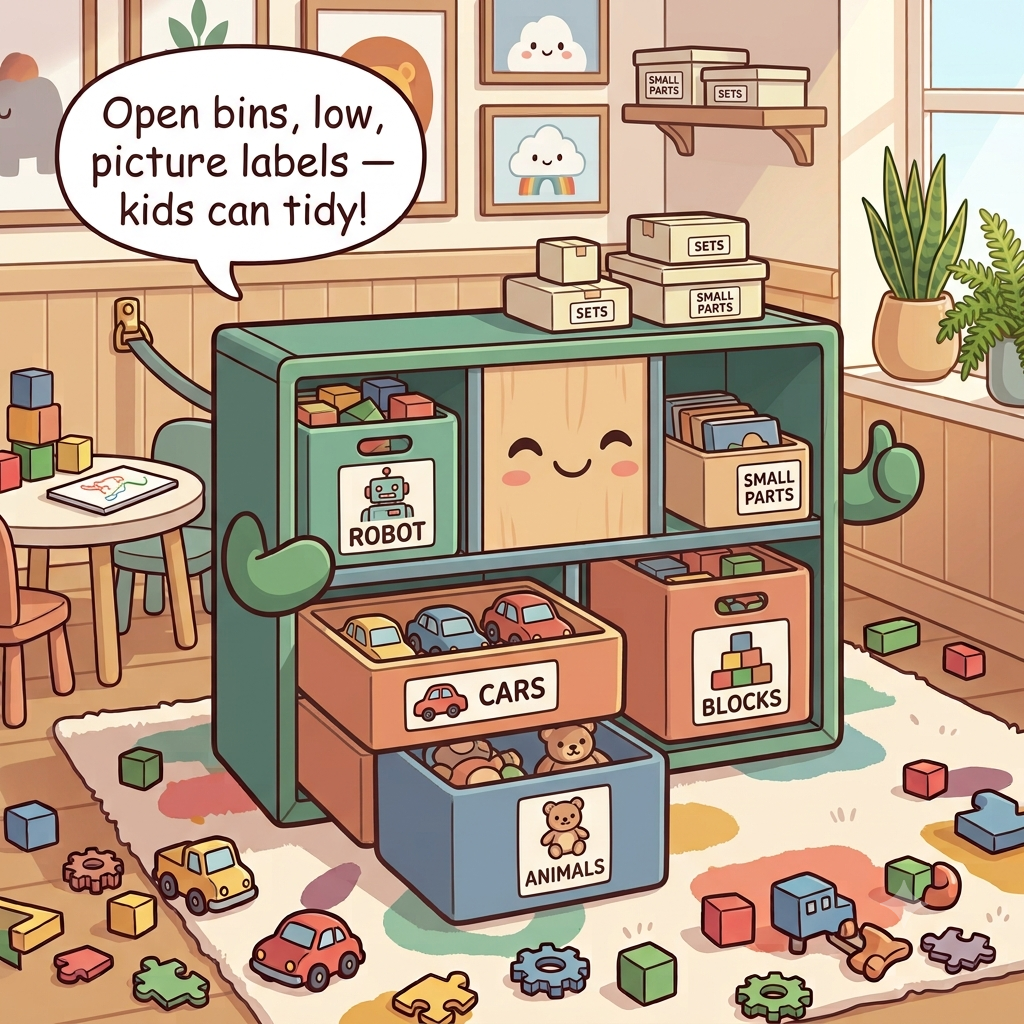
Use simple labels such as 'cars,' 'blocks,' 'animals,' 'dress-up,' or 'art' instead of adult categories like 'STEM materials.' Add a picture label for children who do not read yet. Keep the number of categories small enough that cleanup means choosing between a few obvious homes rather than solving a filing system.
If two categories are constantly mixed during play, consider storing them together. The best category reflects how the child plays, not how the toy was sold. A broad bin that reliably gets used is more successful than a detailed organizer adults must maintain.
Keep labels concrete enough that a child can make the decision without asking an adult. One picture of a car on the vehicle bin and one block icon on the building bin often work better than six subcategories. If cleanup still stalls, combine categories that are used together before adding more labels. The test is whether the child can look at one toy, recognize its home, and return it without moving another container.
Use open bins low, not a deep toy box
Place frequently used toys in low open bins, shallow baskets, or cubbies that children can see and reach from the floor. Open storage removes the extra step of lifting a heavy lid and prevents small toys from disappearing under a deep pile. Keep each bin light enough for the intended child to handle safely.
Avoid large heavy-lidded toy chests that can trap fingers or encourage a child to climb inside. If you use existing storage furniture, make sure it is stable and suitable for children. Anchor tall bookcases, cubby units, or other tip-prone furniture to the wall according to the manufacturer's anti-tip instructions.
Choose low open bins and shallow cubbies for the active collection, then reserve lidded storage for adult-managed sets or rotation stock. If you already own a toy chest, inspect its latch, ventilation, and lid support rather than assuming every chest is child-safe. CPSC specifically warns against lids that can fall freely or latch a child inside. Any tall cubby or bookcase used in the play area should be anchored according to its anti-tip instructions.
Contain the small-piece sets separately
Keep puzzles, construction sets, beads, doll accessories, and other small-part collections in their own secure containers so pieces do not spread into every bin. Use clear boxes or photo labels to show what belongs together. Put age-restricted small parts where younger siblings cannot access them.
Store instructions with the set if they are needed for play. Do not mix loose button batteries, magnets, or other hazardous small components into general toy storage; follow product safety guidance and secure them from children.
Treat the youngest child who can enter the room as the safety benchmark for small pieces. CPSC's small-parts rules focus on choking hazards for children under three, but household storage also has to account for siblings and visiting children. Keep beads, tiny construction pieces, button batteries, strong magnets, and similar hazards in secured adult-controlled storage when appropriate, and return a whole set to that location instead of leaving loose pieces in an open play bin.
Rotate some toys out of sight
Move a portion of intact, age-appropriate toys into labeled reserve bins and keep a smaller selection in the active play area. Every few weeks or when interest drops, swap a few categories rather than replacing the whole room. Rotation reduces visual load and the number of items a child must put away after play.
Keep reserve bins in a secure adult-managed location if they are heavy or stored high. Do not stack bins where children can pull one down. Rotation is not a reason to keep every unused toy indefinitely; if a toy repeatedly returns and still gets ignored, consider donating it.
Rotate by category rather than hiding random single toys. For example, keep one vehicle bin and one pretend-play set active while a second set rests in labeled reserve storage, then swap when interest fades. This makes the change noticeable to a child and makes it easy for an adult to see whether a reserve category was actually missed. Reserve bins stored high should be light and handled only by adults; heavy toys belong low.
Habits that undo toy storage
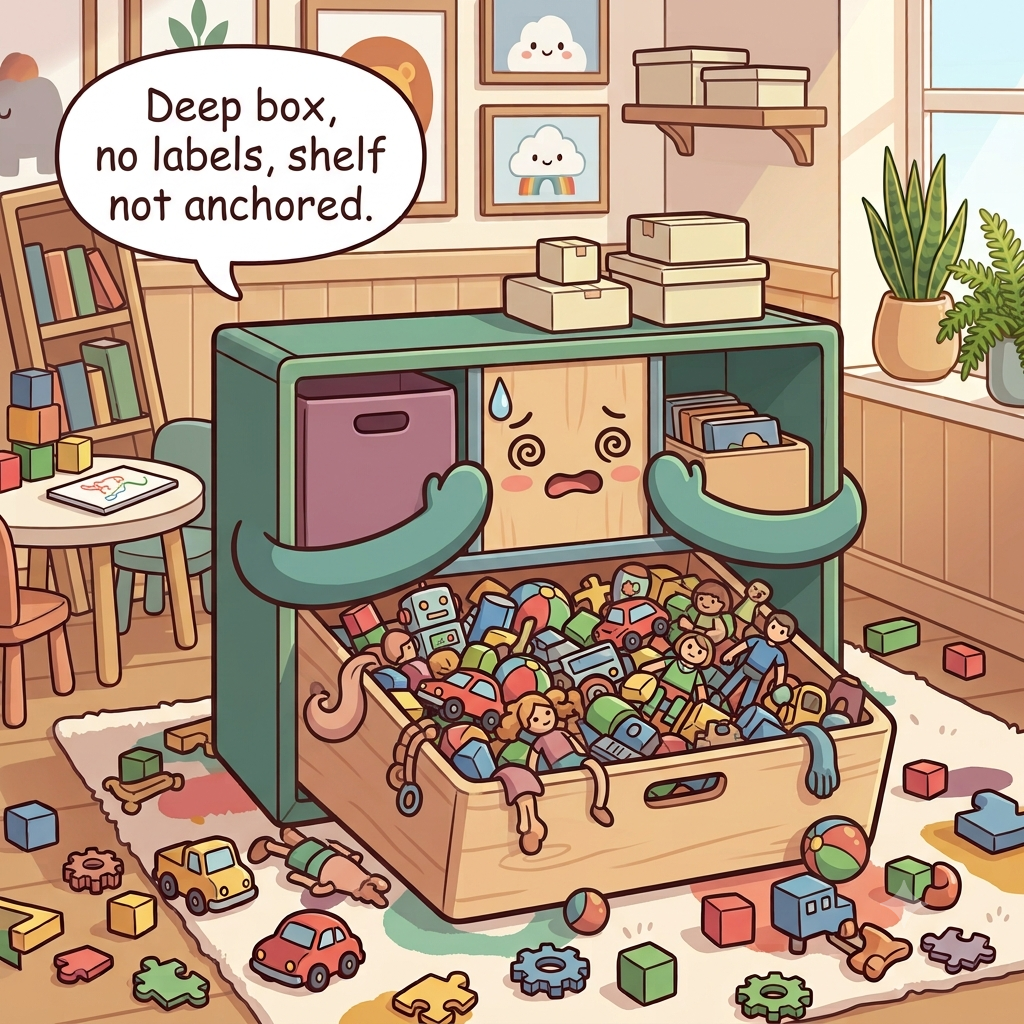
Do not use one giant toy box for every category, stack heavy bins above children, or put desirable toys on high furniture that encourages climbing. Avoid tiny labels a young child cannot interpret and deep lidded bins that add steps to cleanup. Do not leave small-part sets accessible to children who are too young for them.
Another mistake is keeping so many toys active that every bin is full before play begins. Reduce the visible inventory until a child can realistically return the room to order with simple help.
When the system fails, look at what is physically left on the floor. If all the dress-up pieces miss one tiny basket, that category needs a larger open home; if every puzzle is scattered, the puzzle boxes may be too hard to close; if everything lands beside a full cubby, the active inventory is too large. Fix that specific friction point instead of adding another catch-all bin, because a second catch-all recreates the same cleanup problem.
The tidy-up-time reset
At the end of play, reset one broad category at a time: cars into cars, blocks into blocks, books onto the shelf. Keep cleanup short and predictable, and give children only the number of choices they can manage. Adults can handle small-part counting, high reserve storage, and broken-toy decisions.
Once a week, remove migrated pieces and check for damaged toys. When bins begin overflowing, edit or rotate before buying another storage unit.
Use the reset to inspect safety as well as neatness. Return small-part sets to secured storage, remove broken toys, confirm wall anchors and furniture hardware are still tight, and make sure bins have not become so heavy that a child cannot handle them. Then rotate or donate enough toys to leave a little unused capacity in each active category. That empty space is what lets a child put a toy away without forcing or balancing it on top.
Toy-storage safety
- Prefer open low bins over deep toy chests with heavy lids where a lid could fall on a child.
- Keep small-piece sets contained and matched to the age of the children using the space.
- Anchor any tall or climbable storage furniture and keep heavy items low.
Sources: U.S. CPSC — Dangers of Storage and Toy Chests; U.S. CPSC — Anchor It
Renter-friendly option
Use low freestanding open bins and shallow floor-level cubbies rather than adding permanent wall storage. If any freestanding furniture is tip-prone, follow its anti-tip instructions and obtain permission for proper anchoring rather than relying on adhesive as a substitute.
30-second success check
- A child can identify a toy’s home and return it in one simple step.
- Active bins are low, open, and light enough for the intended child.
- Small-part sets are managed to the youngest child who can access the room.
- Any tall or climbable storage furniture is secured and heavy items are low.
- No unsafe heavy-lidded toy chest remains in active use.
Questions that come up
Frequently asked questions
Part of Entryway, Kids & Family Flow — 4 guides.