
The short answer
Edit the closet to the clothes you actually wear, then divide the hanging rod by garment length instead of treating every inch the same. Use the space below short items for low storage, keep long garments unobstructed, and give the top shelf clearly labeled containers for light, less-used items.
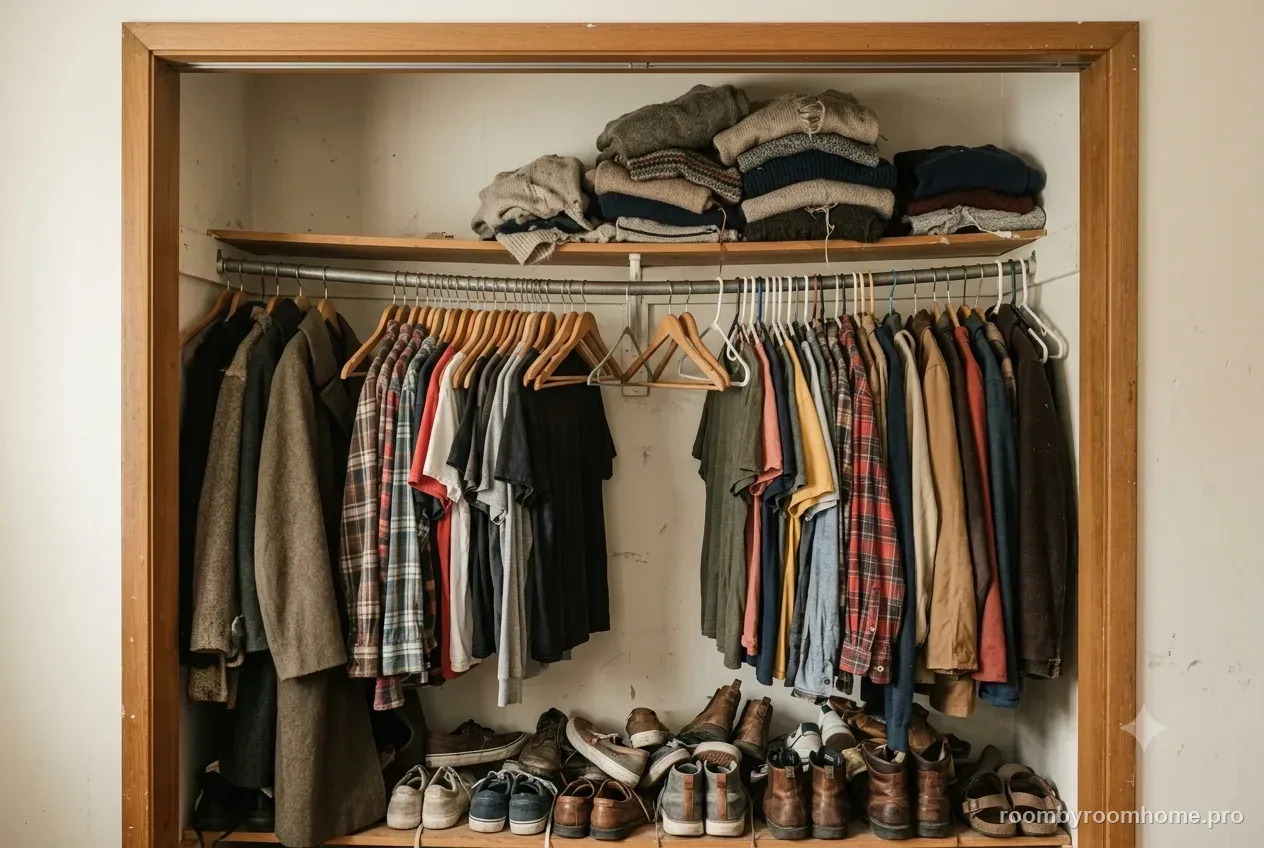
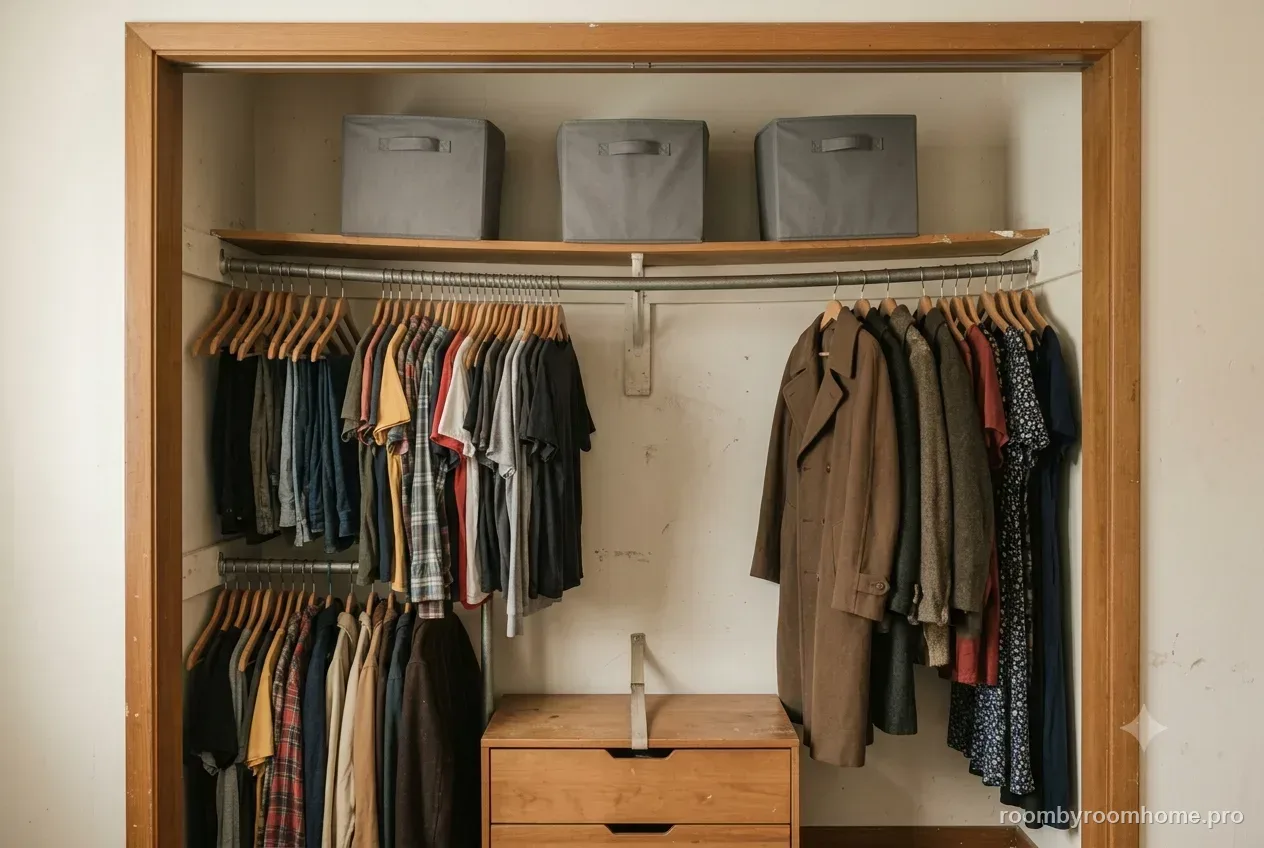
What to gather before you start
- Matching slim hangers you already own or will use consistently
- A tape measure
- Shelf bins with handles
- A freestanding drawer unit or hanging shelf, if it fits the closet
- A low shoe rack or shoe bins
- A few removable hooks for light accessories
- Labels and a donation bag
Measure first. Buy only the pieces that solve a specific access problem.
Measure the closet by garment drop, not just wall width
A reach-in closet fails when storage added below or above the rod collides with the clothes themselves.
- Measure rod length and the usable opening between the door jambs.
- Measure from the rod to the hem of your actual longest garment.
- Measure the clear floor height under the short-hang section before choosing drawers or shoe racks.
- Measure top-shelf depth and confirm a container can be lifted through the doorway.
- Test a proposed second rod with real shirts or folded trousers before installing it.
Empty it out in clothing groups
Take clothing out by category—shirts, pants, dresses, jackets, shoes, bags—so you can see how much of each type you own. Keep the categories separate on the bed or floor instead of creating one mountain. As you empty the closet, remove empty hangers, dry-cleaning plastic, broken storage pieces, and anything that clearly belongs in another room.
Use the empty closet to check the rod, shelf, door swing, and floor. Measure hanging height under the shelf and note where the door frame makes the side inches hard to reach. Those real dimensions determine whether a second rod, shoe rack, or shelf riser will help; buying components first often sacrifices the hanging space you were trying to save.
Record the dimensions that control usable storage: rod length, shelf depth, door opening, the drop needed by your longest garments, and the clear floor under shirts or folded trousers. Measure the actual opening as well as the inside width. A drawer unit or bin that fits behind the door frame but cannot be pulled through it is not useful storage.

Edit for the closet you actually have
Keep clothing that fits, is in wearable condition, and earns space in your current routine. Separate repair, donation, and off-season pieces before rehanging anything. If a special-occasion garment is worn once a year, it does not need the same prime location as work shirts or the jacket you reach for every morning.
Do not use thinner hangers as an excuse to keep unlimited volume. A rod works best when hangers can move enough to browse; if every hanger must be compressed sideways to remove one shirt, the closet is functionally over capacity. Move true archives and bulky seasonal items to another appropriate storage area rather than forcing them into daily space.
Use hanger movement as the capacity check. You should be able to slide garments apart far enough to see what is there and remove one piece without crushing the next five. If that is impossible, edit the category or move true off-season storage elsewhere before trying to manufacture more hanging space.
Split the rod by garment length
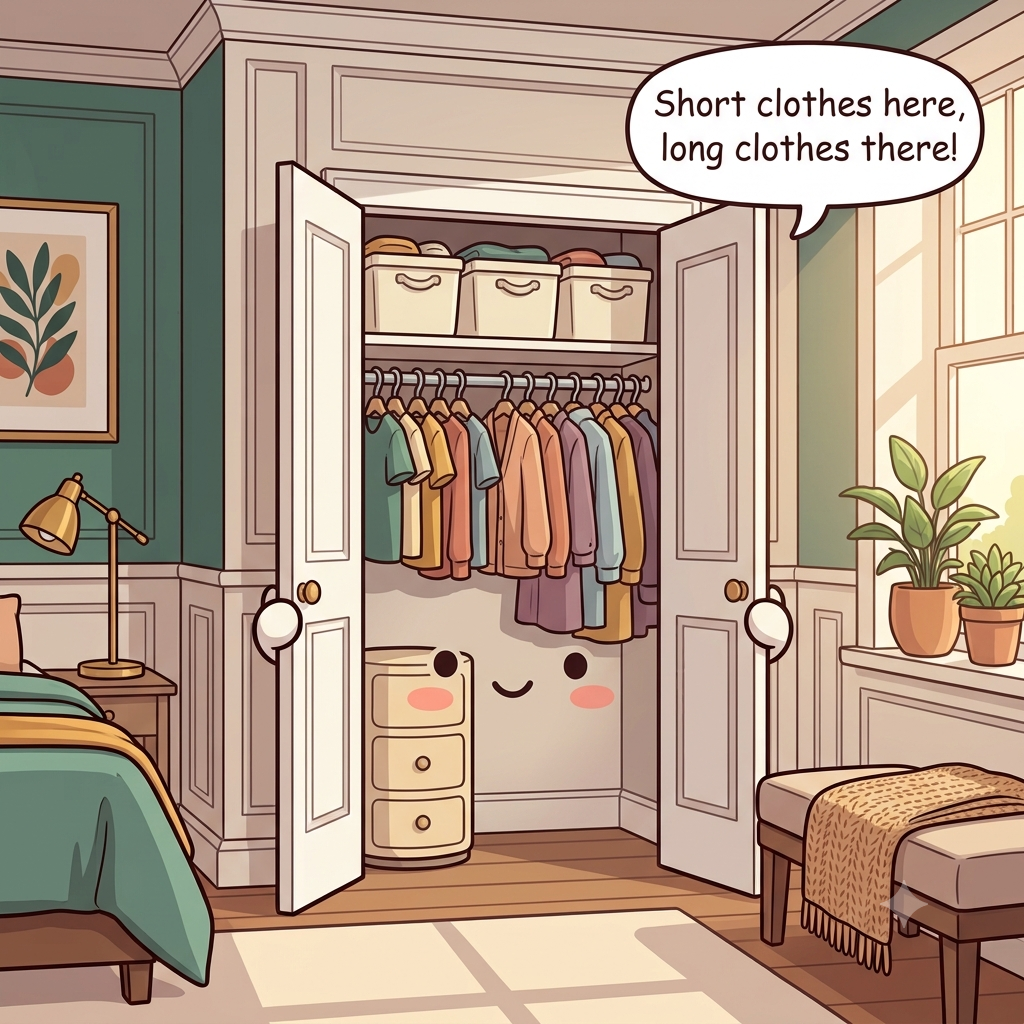
Group hanging clothes by length so short shirts and folded-over pants occupy one section and long dresses or coats occupy another. This creates a predictable open area under the shorter garments without letting a shoe rack crush the hems of long pieces. Within each length group, sort in the order that makes dressing fastest—by type, work versus casual, or another simple system you can maintain.
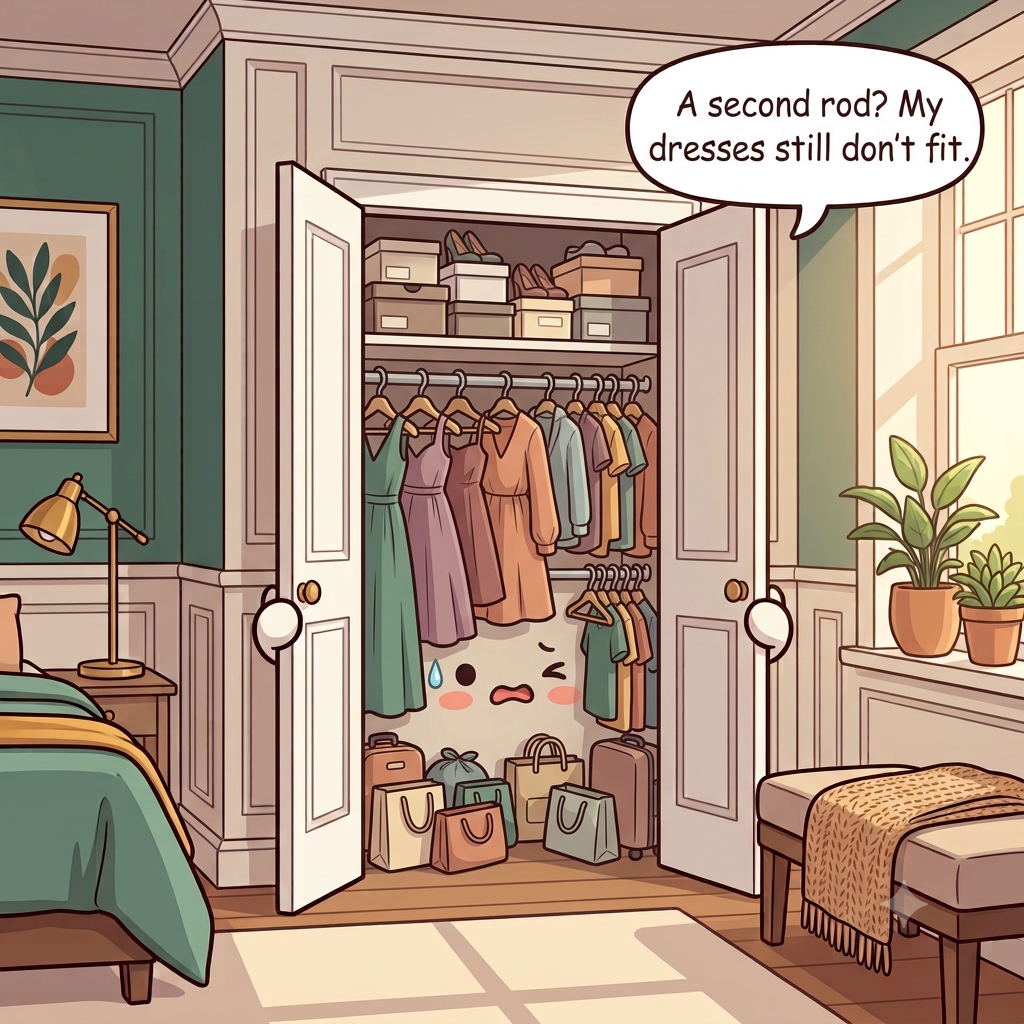
A second hanging rod can be useful only in the section where both rows have enough vertical clearance for the garments. Test with your actual shirts before installing one. For renters, a hanging double-rod accessory provides the same idea without drilling, but remove it if its bulk makes the closet harder to reach or overloads the existing rod.
Before adding a second rod, hang the actual clothes in the proposed upper and lower rows and check hem clearance. Double-hang works best for shirts, skirts, and folded trousers; it is a poor fit where coats or dresses need the full drop. A removable hanging rod is a practical renter option because it can be tested before making any permanent change.
Use the space under short clothes carefully
Use the floor below short garments for low shoe shelves, a narrow drawer unit, or one or two pull-out baskets. Keep frequently worn shoes closest to the opening and contain small accessories rather than letting them spread across the entire floor. Leave enough clear floor to vacuum and to reach anything stored at the back.
Avoid tall floor towers that block half the hanging clothes or make the closet feel like a tunnel. Heavy items belong low, but do not stack boxes so high that they can topple into the doorway. In a rental, freestanding racks and baskets are usually more flexible than a fixed built-in and can move with you.
Keep floor storage low enough that hangers remain visible and garments do not brush shoes or bins. A one- or two-tier shoe rack, a short drawer unit, or two pull-out baskets usually keeps this area more usable than a tall tower. Leave a strip of floor accessible for vacuuming so dust does not become the price of using every inch.
Give the top shelf one job per container
Use the top shelf for light, less-frequent categories such as off-season accessories, spare bedding, handbags, or a small amount of backstock. Put one category in each handled or clearly labeled bin so you can pull it down without rummaging through loose piles. Keep the everyday items you need to see lower in the closet.
Do not place dense, heavy boxes overhead or stack unstable bins above eye level. If you need a step stool, use a stable one and keep the retrieval path clear. A shelf that is too deep for loose stacks benefits from bins that act like drawers: pull the whole category forward, take what you need, then return the bin.
Choose containers you can safely control from below. Light seasonal accessories, spare linens, or handbags make more sense overhead than dense books or heavy backstock. Put the label on the front edge and avoid stacking so high that the lower bin cannot be removed without first balancing another container above your head. If you cannot read the label or control the bin safely from the floor, the category is too high; move it lower rather than relying on stretching or climbing furniture.
Where reach-in closets go wrong
Avoid filling the entire closet with one type of organizer before you know your clothing mix. Common space-wasters include a full-width second rod when you own long dresses, deep fabric cubes that hide shoes, piles of sweaters above eye level, and dozens of specialty hangers that create more bulk than they save.
Do not hang heavy bags from a weak closet rod or load a freestanding unit beyond its manufacturer rating. Keep floors and the doorway clear enough to enter safely. If you add a tall freestanding organizer, follow its anchoring instructions; in homes with children, large furniture should be secured so it cannot tip if climbed or pulled.
Do not solve every shortage with thinner hangers or another hanging accessory. If long garments lose their drop, the floor becomes inaccessible, or the rod starts carrying more weight than the hardware is rated for, the closet has gained capacity on paper but lost function. Keep the doorway and floor path clear enough to enter and retrieve clothing safely.
The one-in, one-decision reset
When a new garment comes in, make one decision about the category it joins: remove a worn-out equivalent, relocate an off-season piece, or confirm that there is genuinely open space. This is less rigid than forcing a one-for-one discard, but it prevents every purchase from quietly increasing the closet's volume.
Once a month, slide the hangers along the rod, put stray items back in their zones, and pull anything that needs repair or donation. At seasonal changes, swap only the pieces the weather actually requires instead of emptying and rebuilding the whole closet.
Make the reset small and tied to normal clothing flow. When laundry goes back, pull empty hangers, return shoes to their zone, and move repair or donation pieces out of active space. At a seasonal change, swap only what the weather actually requires so the closet does not become a twice-yearly demolition project.
Use the rod for what benefits from hanging
Keep here
- Wrinkle-prone shirts, jackets, dresses, and trousers that fit the available drop
- Current-season clothes you reach for regularly
- A small number of daily bags if the hardware is designed for the load
Store elsewhere
- Off-season overflow that crowds active clothes
- Heavy boxes on an overhead shelf
- Floor towers tall enough to block hanging clothes
- Items kept only because thinner hangers make them physically fit
Closet furniture stability
- Anchor tall or tip-prone freestanding storage furniture according to the manufacturer’s instructions.
- Keep heavier items on lower shelves and avoid placing tempting items high where children may climb.
- Do not substitute an adhesive or improvised restraint for required anti-tip hardware.
Source: U.S. CPSC — Anchor It
Renter-friendly option
Try a freestanding low drawer unit, over-door organizer, removable shelf divider, or tension-style second rod only after checking the rod’s rated use. Avoid permanent closet-system drilling unless the lease or landlord allows it.
30-second success check
- The door opens fully and the longest hanging garment does not drag on the floor or a lower rack.
- Hangers can slide enough to remove one garment without forcing the row apart.
- Short-hang storage does not press into hems, and the top shelf holds only controllable light reserve items.
- Any tall freestanding unit is stable and anchored as required.
Questions that come up
Frequently asked questions
Part of Closets, Clothing & Personal Storage — 13 guides.