The short answer
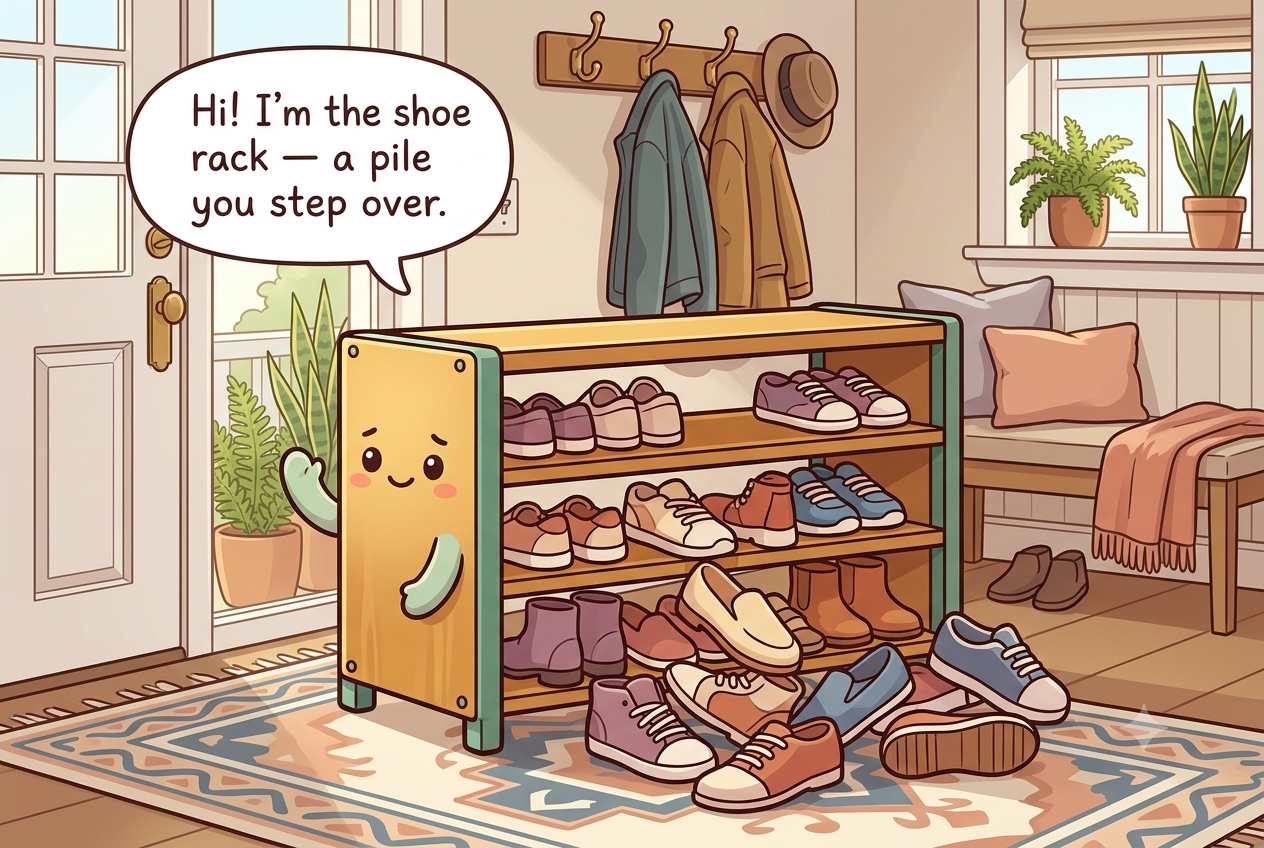
Keep only the shoes your household is actively wearing this season near the door. Give each person a defined number of spots, use a washable tray for wet or muddy pairs, place everyday shoes at the easiest reach, store tall boots where they stay upright, and rotate occasional or off-season footwear to another dry location instead of expanding the entryway pile.
What to gather before you start
- A boot tray or waterproof mat for wet and dirty shoes
- An open shelf rack or cubbies near the door
- A bin or box for off-season shoes stored elsewhere
- An over-the-door shoe rack or wall hooks if floor space is tight
- A donation bag and a bag for shoes to repair
- A long-handled shoe horn by the door (optional)
Measure first. Buy only the pieces that solve a specific access problem.
Pull every shoe out and be honest
Gather shoes from the entryway, closet floor, under benches, and nearby rooms so you can see the real inventory. Pair them, check condition and fit, and set aside shoes that need cleaning or repair. Donate wearable pairs that no longer serve anyone rather than using the entryway as a waiting room for decisions.
Clean the floor or rack before reloading. If wet shoes have caused staining, odor, or dampness, address the surface and drying problem now rather than covering it with a larger basket.
Measure the entry only after the floor is empty, including the clear path needed for the door and people carrying bags or groceries. The useful shoe-storage width is whatever remains after that path is protected. Count how many current pairs fit without stacking or blocking the exit, and treat that as the active capacity. A narrow rack that leaves the route clear is more useful than a larger cabinet that turns every arrival into an obstacle course. Also note where a stroller, pet leash, or bag already occupies the same landing area so shoe storage does not steal space from another daily function.
Sort by person, then by season
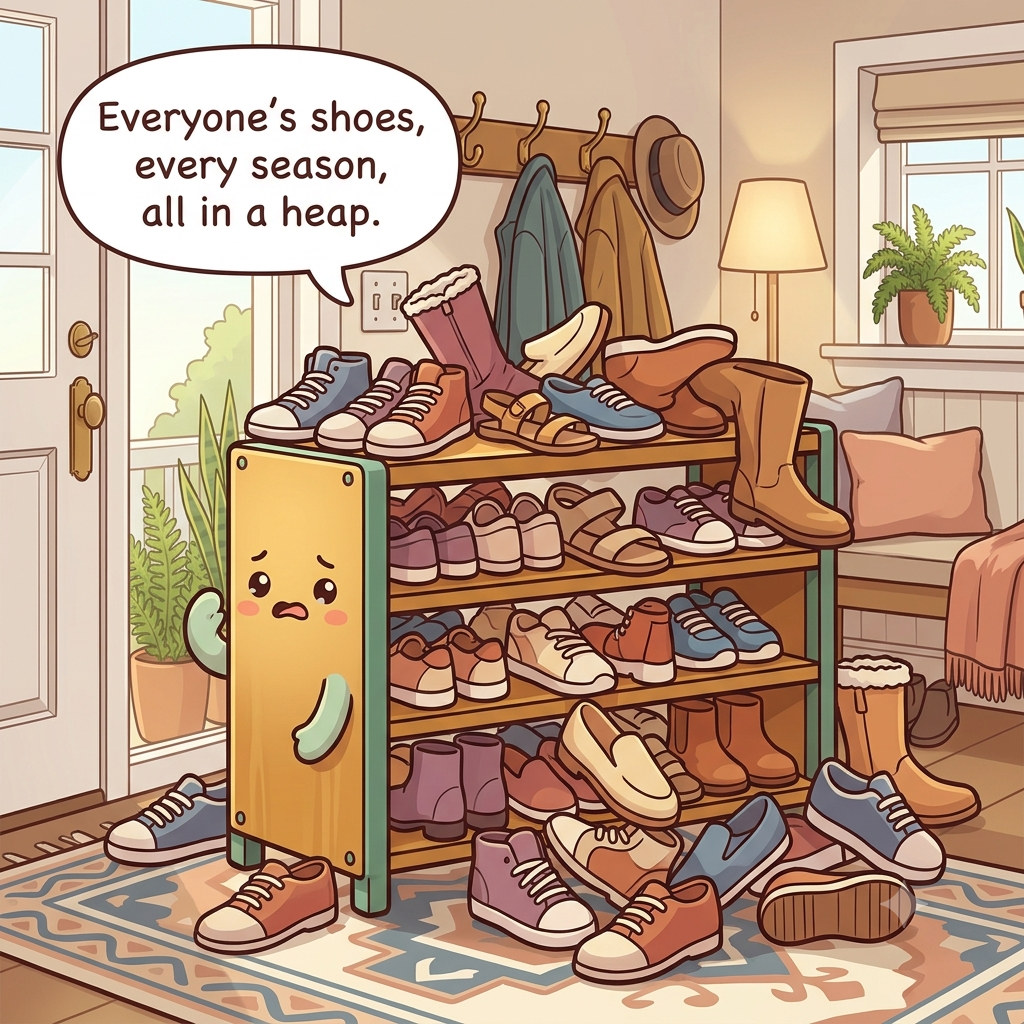
Give each regular user a defined section of the rack or a small basket for current footwear. Within that section, keep the pairs appropriate for the present weather and routine. Move off-season sandals, heavy boots, formal shoes, and specialty sports footwear to labeled storage elsewhere.
Avoid an arbitrary universal pair count. Let the physical zone set the limit: if a person's assigned row holds four daily pairs comfortably, a fifth pair must replace one or live elsewhere. This keeps the rule fair without pretending every household has the same needs.
Use the assigned space—not a universal number—to limit each person's current rotation. A household member who wears work boots daily may need more vertical room than someone rotating flats, and a child may need frequent size changes. When a person's zone is full, move a less-used or off-season pair elsewhere before adding a new daily pair. This keeps the entry predictable while allowing different footwear needs within the same footprint.
Give wet and dirty shoes a landing spot
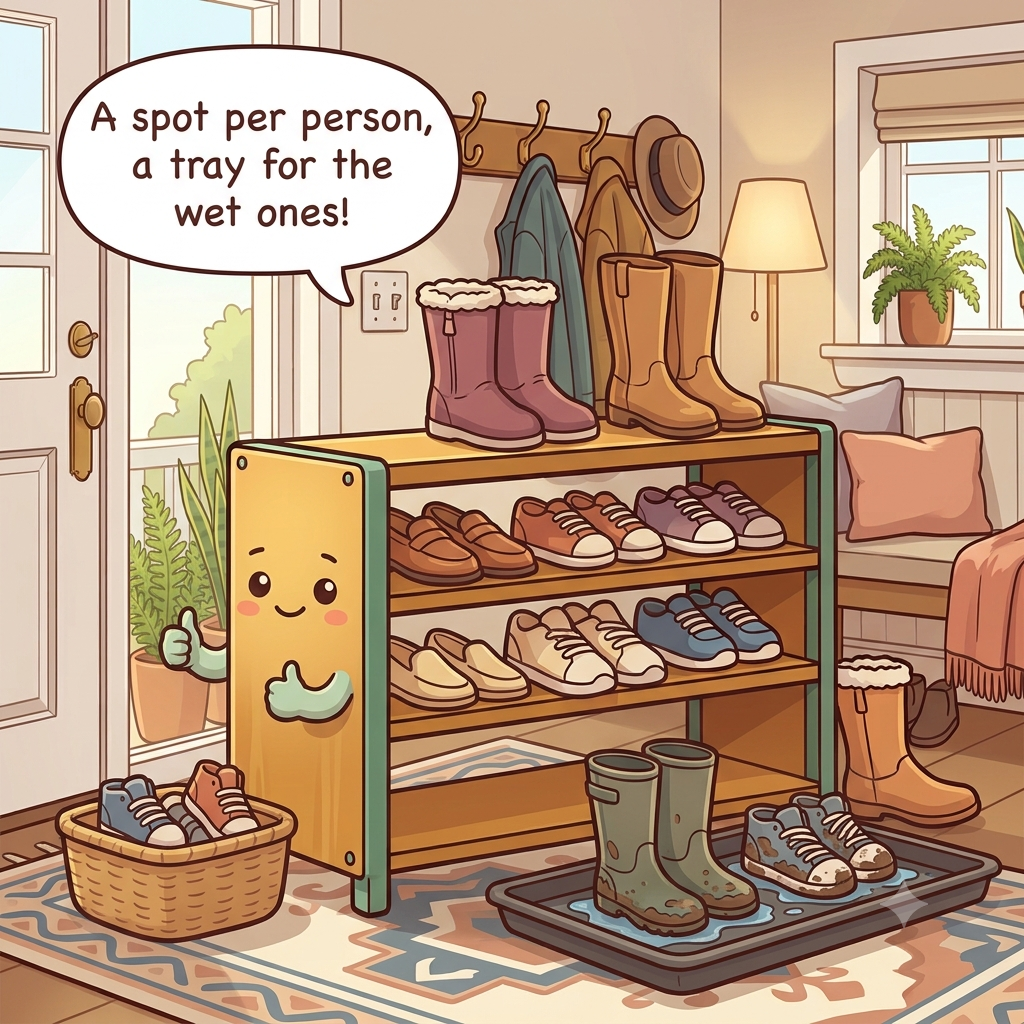
Place a washable boot tray, rubber mat, or other water-tolerant surface nearest the door for wet or muddy footwear. Let shoes dry with airflow before moving them into enclosed cabinets, and clean standing water, mud, and road salt so moisture does not remain under the storage unit.
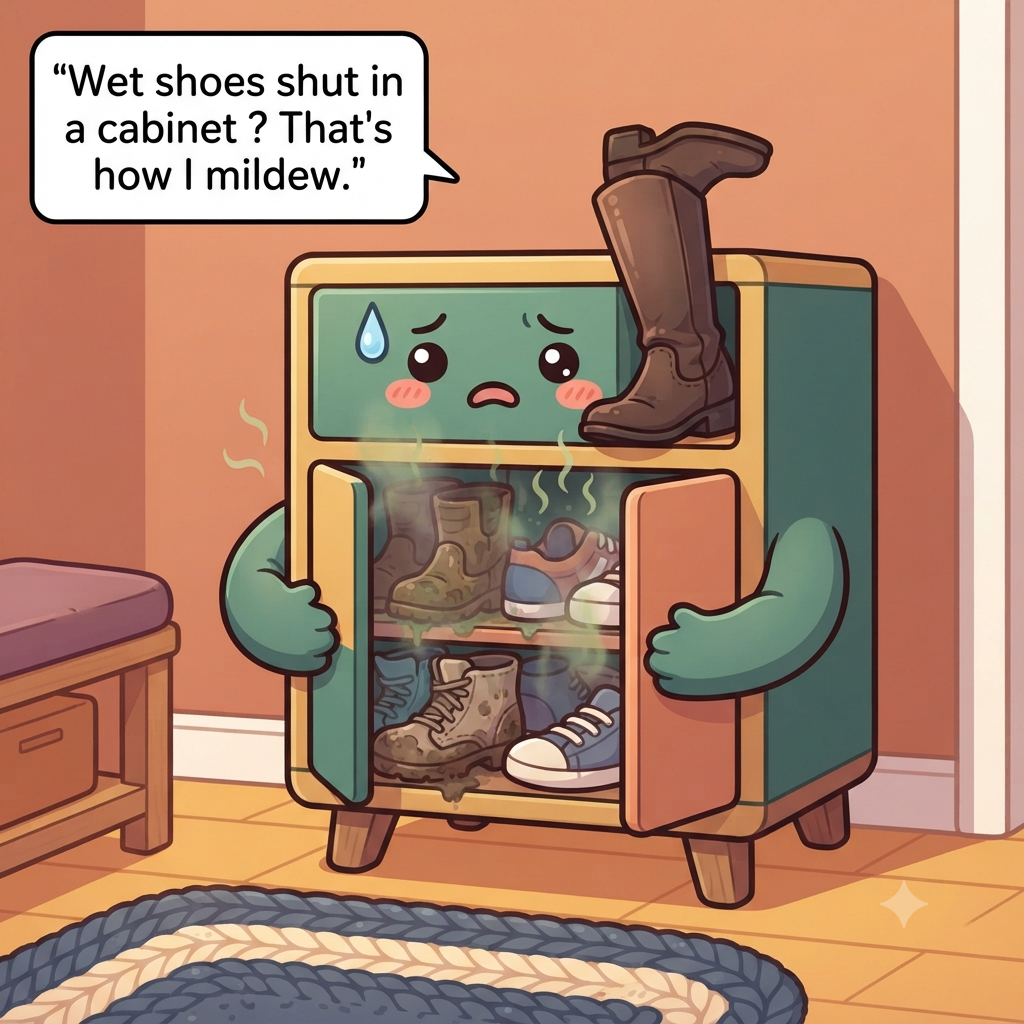
Do not seal soaked shoes into plastic boxes. For leather, suede, specialty athletic shoes, or footwear with specific care needs, follow the manufacturer's drying instructions and avoid direct high heat unless the maker permits it.
Choose a wet landing surface that can be lifted, washed, and dried. A boot tray with a lip or a washable mat protects the floor while shoes drip, but the shoes still need airflow before they enter a closed cabinet. Shake off snow and mud outside when practical, wipe pooled water promptly, and follow material-specific care instructions for leather, suede, or technical footwear rather than using direct heat that can damage adhesives or finishes. Place the tray where drips cannot run under a wood cabinet or across the walking route, and empty collected water instead of letting it evaporate beneath shoes.
Store by height and by how often you wear them
Put everyday sneakers, flats, and work shoes at the easiest hand or foot level. Reserve taller cubbies or open floor space for boots so shafts are not crushed. Place less-used shoes higher or farther back only when they remain stable and can be retrieved without pulling down a heavy stack.
Use shoe shelves with enough vertical clearance that footwear slides in without rubbing. Avoid stacking one pair directly on another if dirt transfers or the shape is damaged. A shelf riser can create two visible levels for low shoes in a tall cubby.
Match shelf height to the shoes instead of forcing every pair into identical cubbies. Low shoes can share a two-level riser if both rows remain visible, while boots need enough vertical room to stand without bent shafts. Put heavy or frequently worn footwear low and easy to reach. If retrieving a pair requires lifting another stack or pulling a heavy boot box from above shoulder height, that location is too inconvenient for daily use.
Use the door and wall, then rotate the rest away
In a tiny entry, use an over-door shoe organizer, narrow vertical rack, or wall-mounted shallow system for lightweight pairs if it does not interfere with the door. Follow hardware load instructions and keep the walking path clear. Renters can use over-door or freestanding storage rather than drilling.
Do not turn every wall into permanent shoe capacity. Rotate the rest to under-bed or closet storage that is dry, labeled, and appropriate for the material. Entry storage is for active footwear, not the whole collection.
Use doors and walls only when they improve the path. An over-door organizer can work for light shoes if the door still closes and the hardware is rated for the load; a slim freestanding rack is often easier in a rental. Do not use removable hooks for heavy boot-filled bags unless the product rating and surface instructions allow it. Keep off-season pairs in dry labeled storage elsewhere so vertical entry storage does not become permanent overflow. For pairs that are genuinely occasional but still needed, add a simple season or event label so they return to the same off-entry location after use.
What ruins shoe storage by the door
Do not leave wet shoes in a closed cabinet, build a floor pile that narrows the exit path, or keep every season by the door. Avoid over-door systems that prevent the door from closing properly and high shelves that require awkward retrieval of heavy boots.
Another mistake is adding a bigger shoe rack without setting a household capacity. A larger rack can simply make the pile taller. Define each person's active zone first.
If shoes keep collecting beside the rack, check whether the rack is already full before blaming household habits. A consistently full active zone means the seasonal edit is too generous or the storage is undersized for the number of daily users. If only wet pairs miss the system, improve the drying zone; if children's shoes scatter, lower or simplify their assigned area. Fix the pattern that actually appears rather than adding a general-purpose basket.
The weekly reset
Once a week, pair shoes, return strays to each person's zone, wipe the wet tray, and move special-occasion pairs back to their longer-term storage. Remove outgrown children's shoes or pairs waiting for repair so they do not consume daily spots.
At each seasonal change, clean footwear before storage and swap the active rotation. If the entry remains crowded after rotation, reduce the number of pairs kept there rather than adding another floor unit.
During the weekly reset, pair strays, wipe the tray, move dry shoes off the wet zone, and return special-occasion pairs to longer-term storage. At seasonal changes, clean and fully dry footwear before boxing it, check for outgrown children's sizes, and bring forward only the pairs that fit the coming weather and routines. Leave one or two open spaces in the active rack so an unexpected wet pair does not immediately create a floor pile. Check soles for grit before boxing shoes, because trapped dirt and moisture can damage both footwear and the storage container over a long season.
Renter-friendly option
Use a freestanding rack, narrow shoe cabinet designed not to tip, over-door organizer, or individual baskets rather than wall-mounted cubbies. Anchor any tall freestanding unit when required for stability.
30-second success check
- Only current-season frequently worn pairs occupy the entry zone.
- Wet shoes have a washable landing place and dry before entering closed storage.
- Each person’s assigned zone has enough room to return shoes without stacking a floor pile.
- The exterior door and walking path remain clear.
- Boots and delicate shoes are stored without crushing or rubbing damage.
Questions that come up
Frequently asked questions
Part of Closets, Clothing & Personal Storage — 13 guides.