The short answer
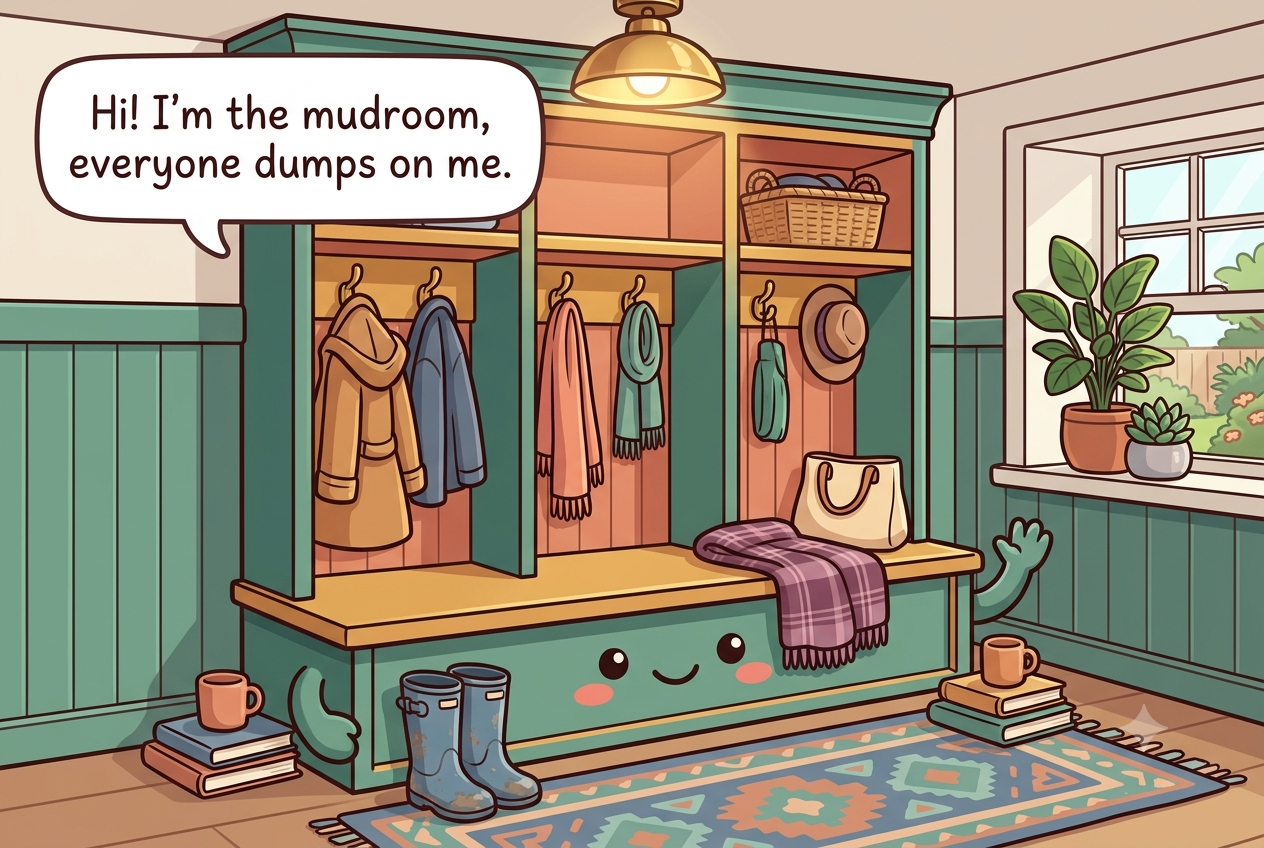
Build the mudroom around the household's real arrival pattern. Give each person one reachable hook-and-cubby zone, reserve a washable floor area for wet boots and umbrellas, keep current-season coats and bags in the daily lane, move occasional gear elsewhere, and leave the door and walking path clear.
What to gather before you start
- Sturdy wall hooks at adult and child heights
- A boot tray, slatted mat, or low shoe rack that handles water
- One cubby, basket, or bin per person
- Labels, or a color or tag per family member
- A bench, ideally with storage underneath
- Bins for seasonal gear and for outgoing items
Measure first. Buy only the pieces that solve a specific access problem.
Watch the daily pile-up for a week
For one normal week, notice what each person drops in the first minute after entering: shoes, coat, backpack, lunch bag, keys, sports gear, dog leash, or wet umbrella. Mark the natural landing points and the direction people walk next. This tells you where hooks and bins need to be far better than arranging storage by symmetry.
Keep exits, door swings, stairs, and utility access clear while you observe. If the room is narrow, favor wall storage and shallow furniture instead of a deep bench that forces everyone into one tight lane.
At the end of the week, compare the natural landing spots with the storage footprint. Measure the wall space, door swing, and floor lane that must stay open, then place hooks or shallow storage where people already release their gear. A deep bench is not an upgrade if it narrows the only path through the room. Track which items are wet or dirty as well as where they land. A backpack and a muddy pair of cleats may arrive together but need different storage surfaces. The final layout should separate clean hanging gear from the wet zone instead of forcing one cubby to handle both.
Give every person one zone
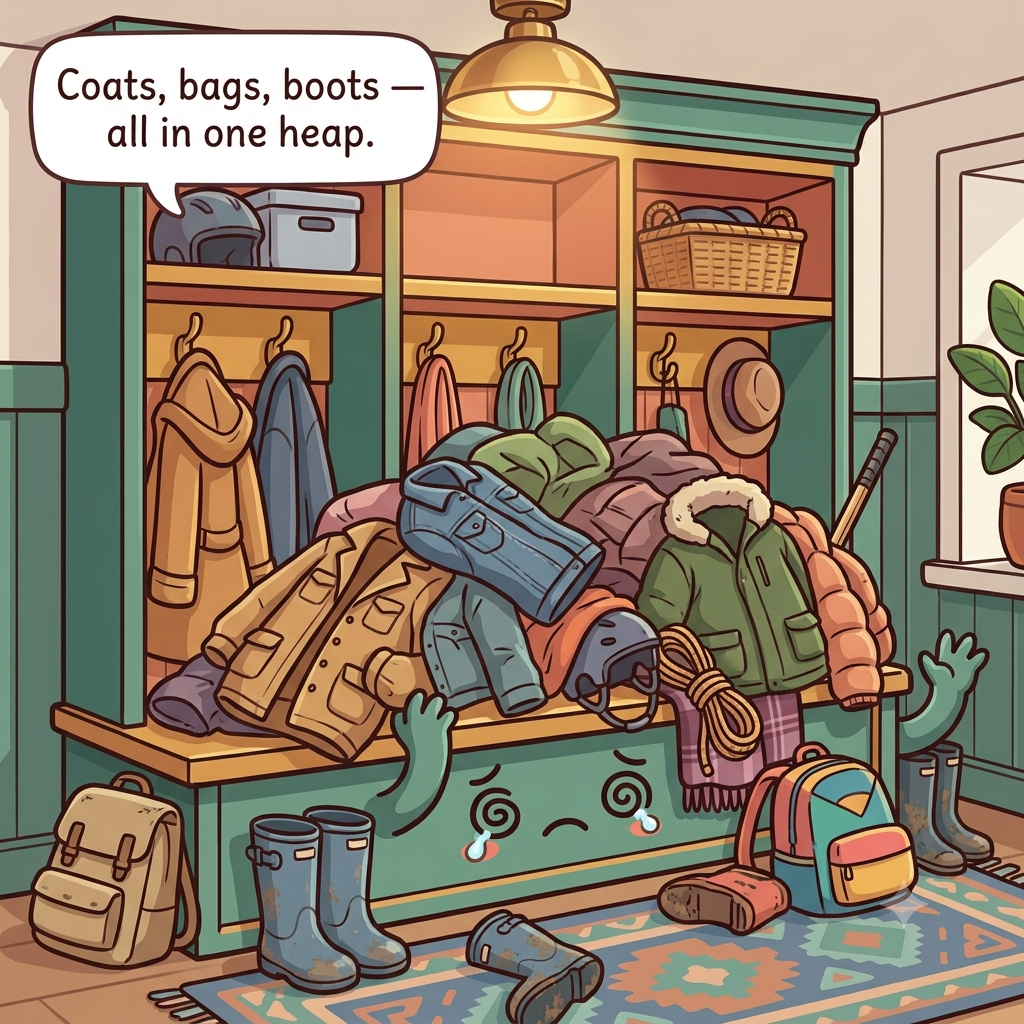
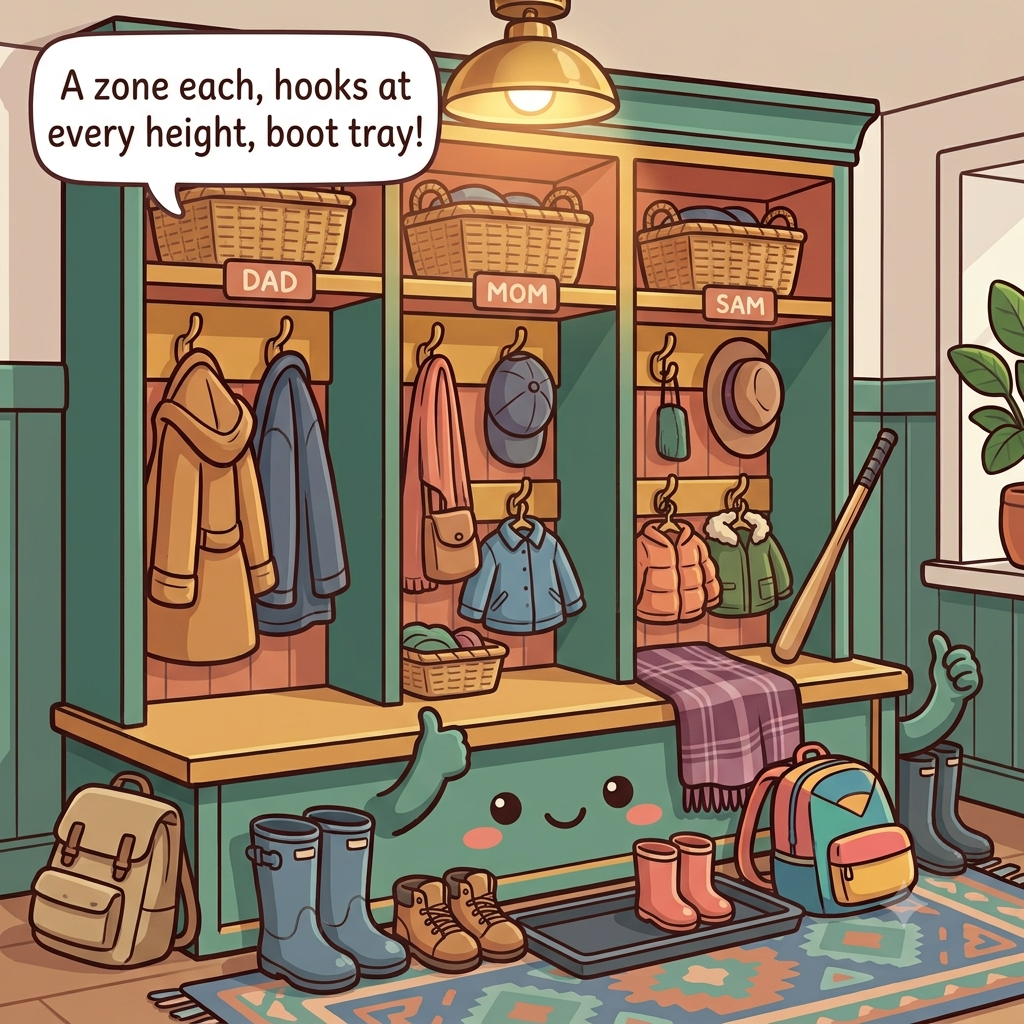
Assign each household member a hook, small cubby, basket, or vertical section. Keep the categories broad: daily outerwear, bag, and small accessories are enough. Use names, initials, colors, or picture labels depending on who uses the space.
Shared equipment such as umbrellas, dog gear, or reusable shopping bags should have one clearly separate communal zone. Do not let a person's cubby become long-term storage for everything they own; the mudroom is a daily transfer station.
Keep each person's active zone small enough to reset quickly: current coat, bag, shoes, and a few small accessories. Move backups and off-season gear out of the lane. Shared umbrellas, dog gear, or reusable bags should have one separate communal zone so personal cubbies do not become mixed storage. A person's zone should have a visible overflow signal. When shoes no longer fit on the assigned tray or hooks are double-loaded, rotate out a seasonal item before adding another container. Physical limits keep the shared room fair. Leave a little unassigned capacity for a guest coat, an unusually wet day, or a school project that arrives temporarily; a system filled to the edge during an ordinary week has no way to absorb real-life peaks without spilling into the exit path.
Set the heights to the people using them
Place children's hooks and open bins low enough to use from the floor and adult hooks higher. Put heavy objects low and light seasonal accessories higher. If the room contains tall cabinets, benches with shelving, or freestanding units, anchor tip-prone furniture according to the manufacturer's instructions, especially where children are present.
Use wall hooks rated for wet coats and loaded backpacks. Renters can use sturdy over-door racks, tension systems, removable hooks within their load limits, or freestanding units rather than drilling without permission.
Children should be able to return daily gear from the floor without climbing. Install hooks and shelves to their rated loads and anchor tip-prone cabinets or shelving according to the manufacturer's anti-tip instructions. In a rental, use stable freestanding, over-door, tension, or removable systems when permanent drilling is not approved. Check backpack straps and coat hems after installation so a low child's hook does not leave fabric dragging on the floor. Adjust hook height to the actual gear and user rather than copying a decorative mudroom measurement from a catalog.
Give wet and muddy gear a floor that drains
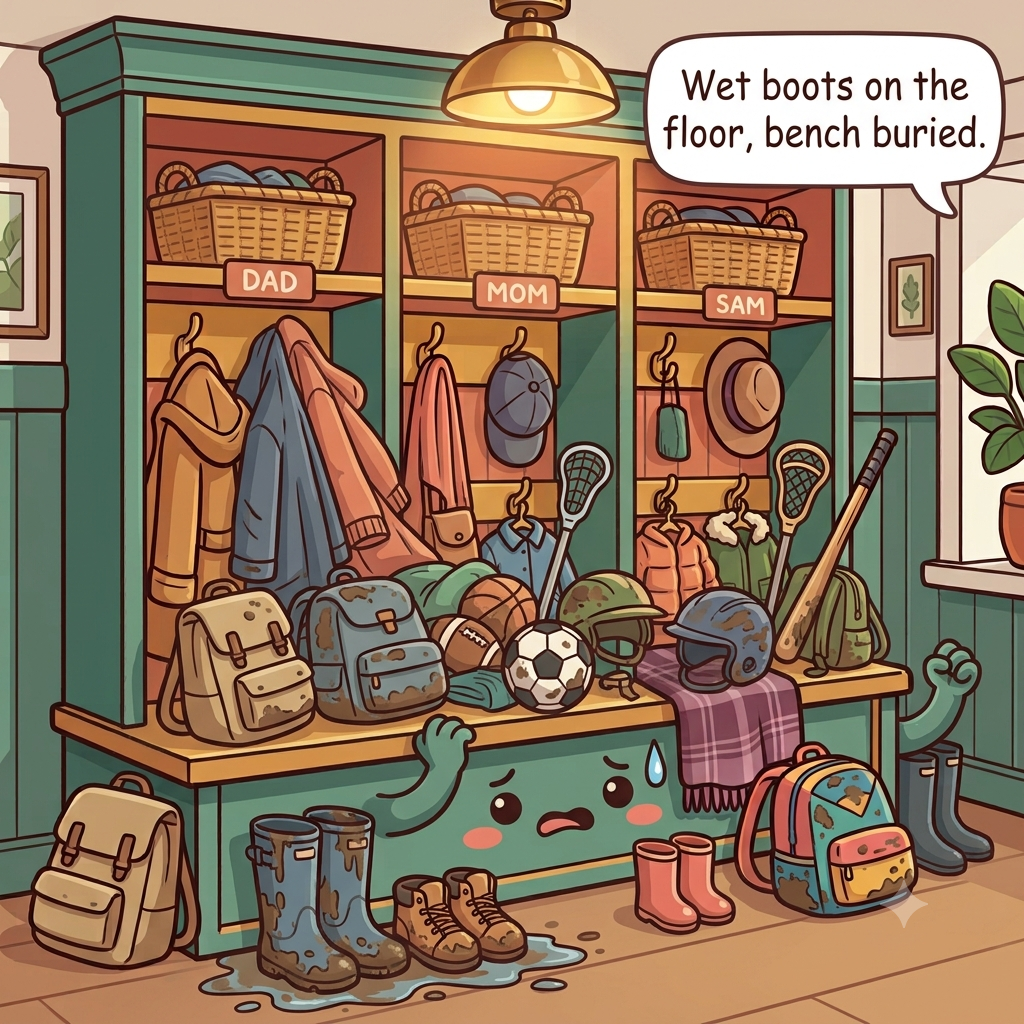
Use a boot tray, washable mat, or other water-tolerant surface where wet shoes can drip without damaging the floor. Allow soaked coats, gloves, and umbrellas to dry with airflow before they go into closed cabinets. Shake or brush mud outside when practical so it does not spread through the storage system.
Empty standing water and clean trays regularly. If a mudroom repeatedly stays damp, address ventilation or moisture rather than sealing wet gear into bins. Wet storage needs a drying step as well as a container.
Use a washable tray or mat that can be lifted for cleaning and keep soaked outerwear open to air until dry. Do not seal wet gloves, boots, or coats inside bins simply to make the room look tidy. Persistent dampness calls for better ventilation or moisture control, not additional closed storage. For snow, rain, or sports mud, keep a small brush or cloth nearby so the dirty layer can be removed before gear enters the rest of the house. The cleanup tool itself should have a washable, dry return spot.
Keep seasonal and occasional gear out of the daily lane
Move ski helmets, beach bags, off-season boots, bulk pet supplies, and other occasional equipment to a labeled high shelf or another storage area. Keep only current-season gear in the active zone. This preserves the floor and hooks for the things that must be returned every day.
If seasonal bins live high, keep them lightweight and retrieve them with a stable step stool. Heavy sports equipment belongs low and secure. Do not stack bulky items where they can fall into the walkway when a door opens.
Reserve high storage for light, infrequent items an adult can retrieve safely with a stable step stool. Dense sports equipment and heavy boots belong lower. If a seasonal category keeps leaking into daily hooks, reduce the active quantity or move the reserve to a more appropriate storage area. Label reserve bins with both the category and season if several look alike. At the next swap, the label should let you pull the correct bin without opening every container on the high shelf.
Where mudrooms fall apart
Do not give everyone one giant basket, place children's hooks at adult height, or let wet boots sit directly on vulnerable flooring. Avoid heavy gear on high shelves, unstable freestanding cubbies, and so many hooks that bags project into the walking path.
Another mistake is storing all seasons at once. The daily lane should reflect what the family uses now; rotation is what keeps the system small enough to maintain.
When the mudroom starts failing, identify the exact collision: bags project into the walking path, wet shoes spill beyond the washable zone, a child's hook is too high to use independently, or seasonal gear has occupied the daily lane. Correct that failure before adding furniture. The room succeeds when the exit path stays open at the busiest arrival time, not when every wall is filled with storage.
The nightly and seasonal reset
Each night, hang coats, pair shoes on the tray, empty lunch bags, and remove paper or trash that arrived with the household. The reset should take only a minute or two because each person has one obvious zone.
At each seasonal change, clean and move off-season gear, review sizes and condition, and bring only the next season's active items into the mudroom. Wipe the wet zone and check hooks and anchoring hardware for looseness.
Each night, return coats and bags, empty lunch gear, pair shoes, and clear paper or trash so the path is open again. At seasonal changes, clean the wet zone, remove outgrown or unused gear, and check hooks and anchors. Small daily resets keep the seasonal swap from turning into a full-room purge. If the room includes a floor drain, utility sink, or mechanical access, keep that route clear during every reset. A family drop zone should never grow across service access simply because the open floor looks convenient. If one person's zone repeatedly overflows, edit that person's active gear first rather than borrowing space from the walkway or another person's cubby.
Mudroom furniture stability
- Anchor tall or tip-prone cubbies, cabinets, or benches as their manufacturer requires.
- Keep heavier bags, bins, and footwear low.
- Keep the exit path clear and avoid high storage that encourages children to climb.
Source: U.S. CPSC — Anchor It
Renter-friendly option
A freestanding bench, boot tray, over-door hooks, narrow rolling cart, and removable wall hooks can create a mudroom without built-ins. Keep exits, door swings, and baseboard heaters clear.
30-second success check
- The main exit path remains clear when everyone arrives at once.
- Each person has an obvious zone and everyday hooks or bins are at a usable height.
- Wet gear stays inside a washable, draining or easy-dry boundary.
- Seasonal and occasional equipment stays out of the daily lane.
- Tall or tip-prone cubbies are secured and heavy items stay low.
Questions that come up
Frequently asked questions
Part of Entryway, Kids & Family Flow — 4 guides.