The short answer
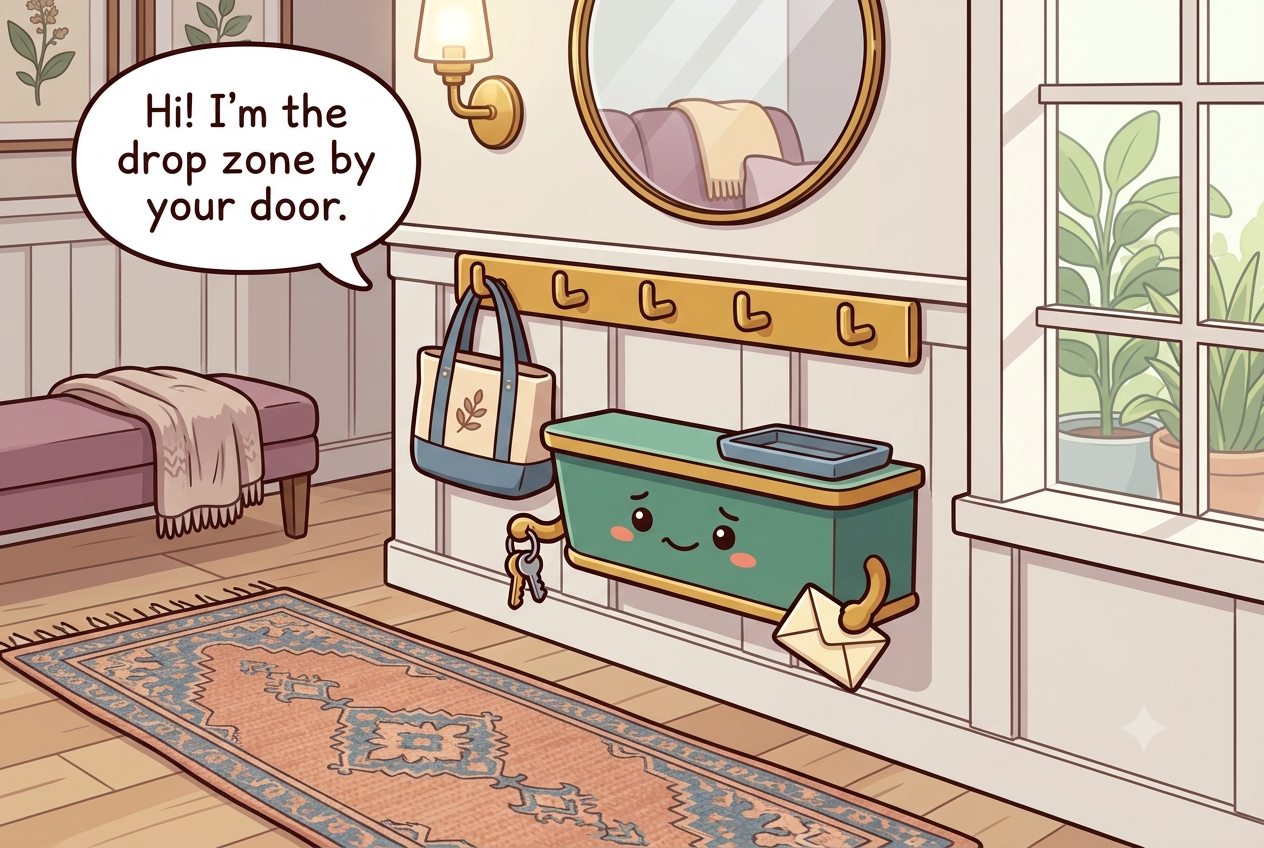
Build the drop zone around what actually lands by the door, not around decorative baskets. Give keys, mail, bags, shoes, and each person's daily gear one obvious home at a reachable height, keep the walking path and door swing clear, and cap any temporary 'deal with it' tray so it cannot become a second junk pile.
What to gather before you start
- A small tray or dish for keys and small daily items
- Wall hooks or a rack at a couple of different heights
- A slim vertical file, basket, or wall pocket for mail and papers
- A bin or basket per person for bags, or one shared drop basket
- A single small tray labeled for things that need action
- Command-style adhesive hooks if you can't or don't want to drill
Measure first. Buy only the pieces that solve a specific access problem.
Watch what actually lands here for a week
Before buying hooks or baskets, observe the entry for seven normal days. Notice what gets dropped first: keys, backpacks, dog gear, reusable bags, shoes, sunglasses, receipts, or unopened mail. Write down the repeat offenders and where people naturally reach when they come in. That traffic pattern is more useful than a staged entryway photo because the storage has to catch items at the moment they are released.
Keep the door swing, latch area, stairs, and main walking path unobstructed while you observe. A narrow entry does not need a console table if the floor space is already tight. In that case, plan upward with a slim wall shelf, hooks, an over-door rack, or a narrow shoe cabinet, and use removable hooks or a freestanding rack when drilling is not allowed.
At the end of the observation week, turn the notes into a footprint plan. Measure the wall or floor space that stays clear after the door opens, then match storage to the recurring items rather than to the empty wall. A narrow vertical solution is often more useful than a deep bench or console if the entry is also a circulation path.
Give each daily item one home
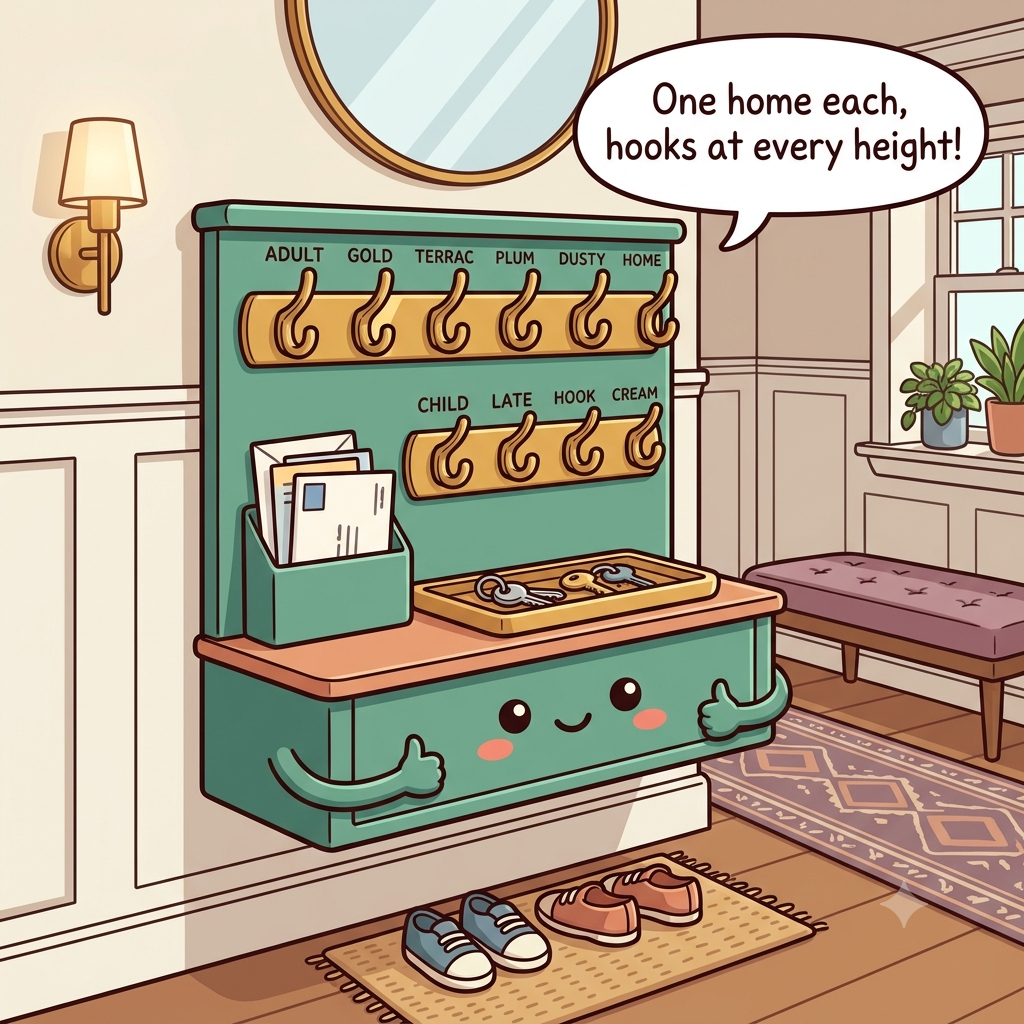
Assign one destination to each high-frequency item. Keys can live on a hook or in a small tray; outgoing mail can use one vertical slot; backpacks can hang on sturdy hooks; shoes can use a low rack or washable tray. Keep categories narrow enough that anyone can tell where an item goes without opening three containers. If a category needs explanation, simplify it.
Do not give the entryway long-term storage jobs it cannot support. Bulk paper, seasonal sports equipment, overflow pantry goods, and rarely used bags should move deeper into the home. The drop zone works best as a transfer point between outside and the rest of the house, so every item either has a permanent daily home there or a short route onward.
Keep the number of active categories small enough to understand at a glance. A hook labeled for a backpack or a single mail slot creates a clearer return cue than a large basket that accepts anything. Seasonal gear and bulk supplies should leave the entry so the daily zone still has room for tomorrow's arrivals.
Set the heights to the people who use it
Put each person's everyday hook, basket, or cubby where that person can reach it comfortably. A young child is more likely to hang a backpack on a low hook than place it neatly on an adult-height shelf. Keep grown-up-only items higher, and avoid placing heavy objects on high shelves where they could fall into the walkway.
Use hooks and wall hardware rated for the expected load and install them according to the manufacturer's instructions. If children use the area, avoid unstable freestanding furniture they can climb or pull over; anchor tall or heavy units as directed. In a rental, choose over-door hooks, tension systems, removable hooks within their rated load, or a stable freestanding unit instead of drilling without permission.
Test the setup with the actual users before calling it finished. A child should be able to return a backpack without climbing, while adult-only or hazardous items should stay where children cannot reach them. If a removable hook begins to peel, a freestanding unit wobbles, or a tall cabinet can tip, correct the hardware or anchor the unit instead of relying on careful use.
Add a leave-the-house lane and a come-home lane
Separate incoming items from things that must leave next. The come-home lane catches keys, shoes, and daily bags. The leave-the-house lane holds only items already decided for the next trip: a library return, a package, a permission slip, or the tote you need tomorrow. A small labeled basket or one hook is enough; a large bin invites backlog.
Keep outgoing items visible enough to trigger action but out of the walking path. If something waits more than a few days, move it to a task list or the room where it belongs instead of letting the entry become a holding warehouse. This two-direction system reduces the common problem of putting something 'by the door' and then burying it under new arrivals.
Make the two lanes visually distinct so one does not swallow the other. Incoming keys and shoes need permanent return spots; outgoing library books or parcels need a temporary location that is emptied on the next trip. If an outgoing item sits there long enough to become background clutter, move the task to a written reminder and clear the physical lane.
Keep a small 'deal with it' limit
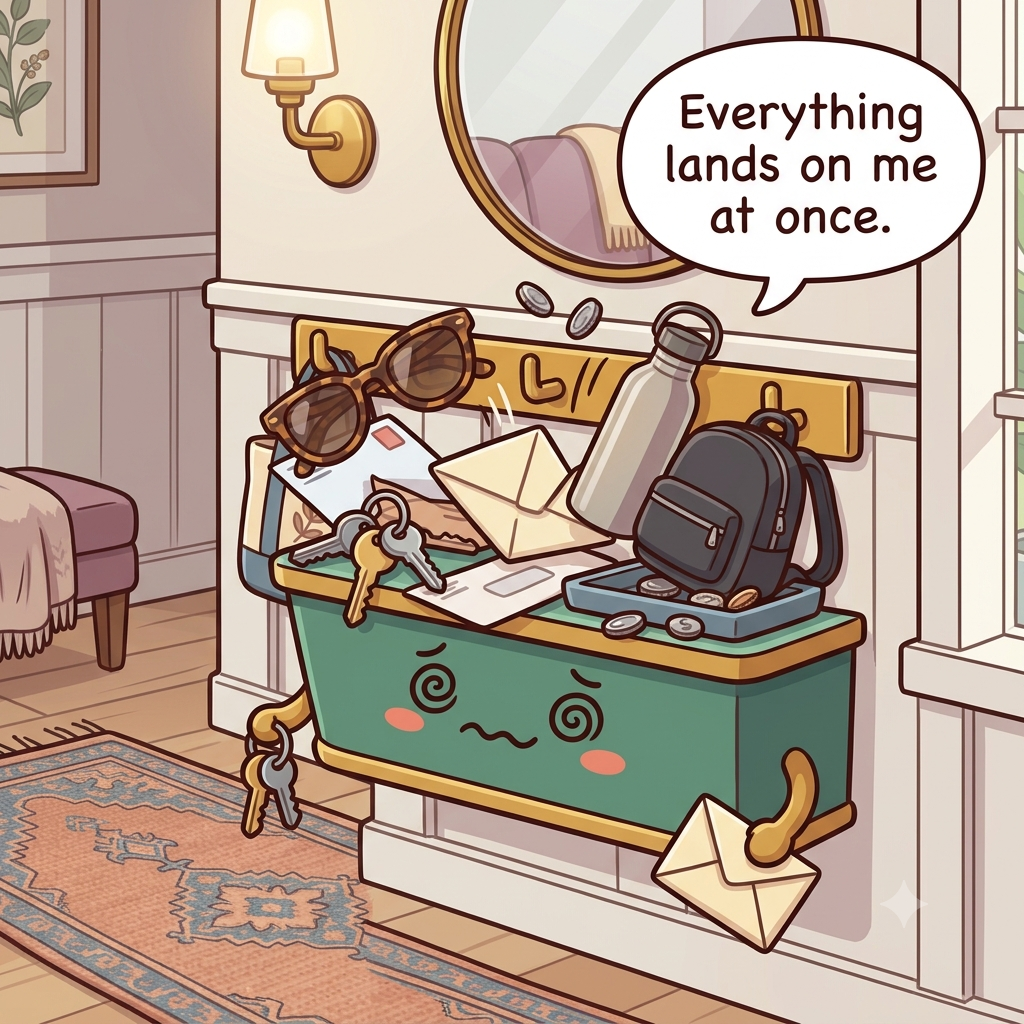
Allow one deliberately small tray or file for items that need a decision but cannot be handled at the door. Receipts, a form that needs a signature, or a small repair item can wait there briefly. The container should have a hard physical limit—when it is full, nothing else gets added until something leaves.
Mail needs an especially short path. Recycle obvious junk mail immediately, route bills or action items to the place where you handle them, and file only what truly needs retention. Do not let personal documents with account numbers or other sensitive information sit exposed in an open entryway basket where visitors or delivery workers can see them.
A temporary tray should hold decisions, not documents indefinitely. Route bills, tax forms, medical paperwork, and anything with account numbers to a more private paper system as soon as possible. When the tray reaches its physical limit, process it before adding another item; expanding the container only hides the backlog.
What breaks an entryway drop zone
Do not solve a narrow entry by adding deep furniture that pinches the walkway or blocks the door. Avoid one giant family basket, unlabeled bins with lids, hooks too high for the people expected to use them, and a bench piled so high that no one can sit. Do not hang heavy bags from hardware that is not rated for the load.
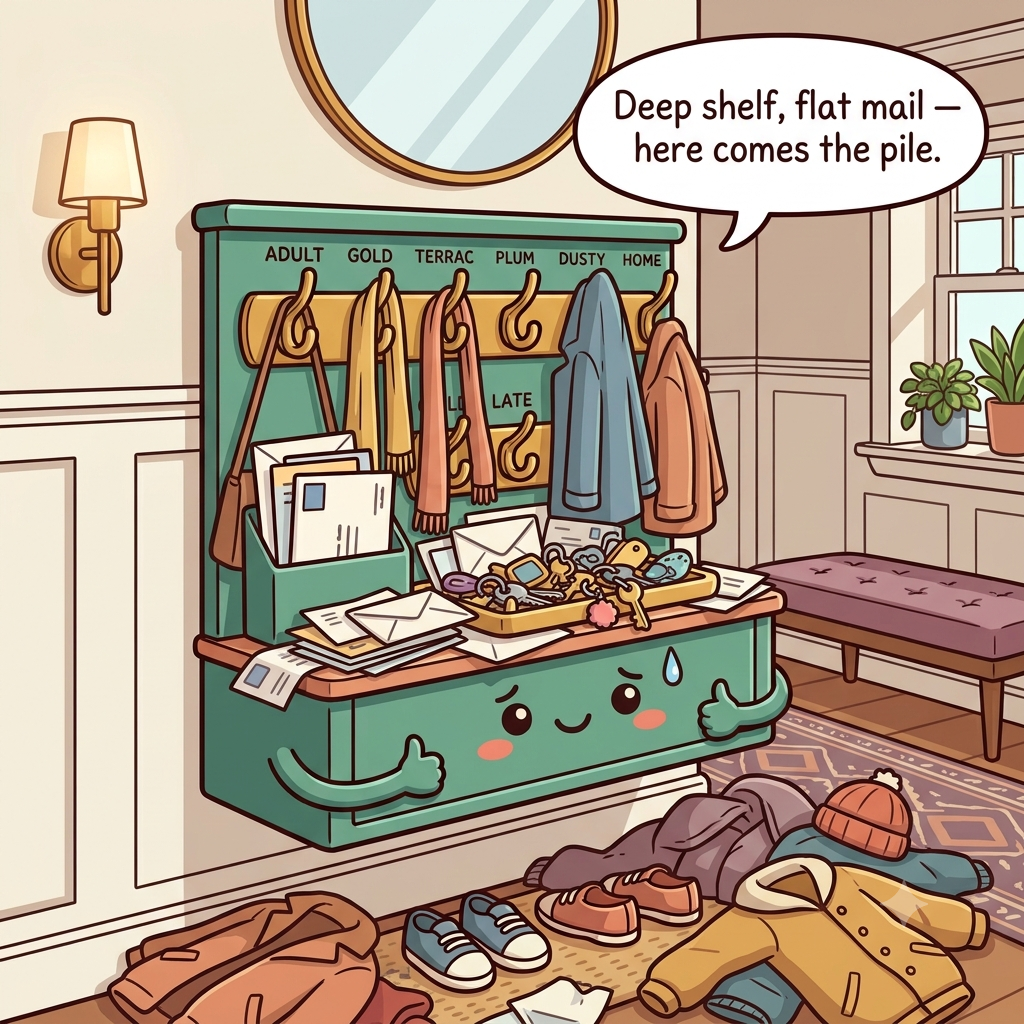
Another mistake is creating storage without an exit path. A mail sorter still becomes clutter if nobody processes mail, and a shoe rack still overflows if out-of-season pairs never leave. Keep the active inventory intentionally small and relocate anything that does not support arriving home or leaving the house.
Do not sacrifice the door swing or walking path for storage furniture. Avoid hooks that nobody can reach, one family bin that mixes everybody's gear, and a shoe rack that becomes year-round storage for every pair. If the entryway keeps overflowing, reduce the active inventory before adding another piece of furniture.
The 30-second nightly reset
Each evening, return keys to their hook, pair shoes, hang bags, and move paper out of the entryway to its next destination. Put anything from the temporary tray onto tomorrow's task list or into the room where it belongs. The reset should be short enough to happen even on busy nights.
Once a week, empty the shoe tray, shake out dirt, and remove items that drifted in from elsewhere. If the same object keeps landing in the wrong place, adjust the system to the behavior—move the hook, add a small tray, or eliminate a category—instead of relying on repeated reminders.
Use the nightly clear to prepare the next departure as well as reset the entry. Put keys back, move paper onward, return shoes to the rack, and place only already-decided outgoing items in the leave-the-house lane. A weekly shake-out of the shoe tray and removal of off-season gear keeps the system from slowly growing past its footprint.
Entryway stability & clear egress
- Keep the door swing and walking route clear instead of expanding the drop zone into the exit path.
- Anchor tall or tip-prone freestanding furniture as required and keep heavier items low.
- Do not place appealing items high enough to encourage a child to climb.
Source: U.S. CPSC — Anchor It
Renter-friendly option
Build the drop zone with an over-door rack, freestanding shoe bench, basket, slim cart, or removable hooks rated for the wall surface. Keep the walking and door-swing path clear.
30-second success check
- The exterior door opens fully and the main walking path remains clear at the busiest arrival time.
- Keys, bags, shoes, and mail each have one obvious home at a usable height.
- Incoming and outgoing items do not compete for the same tray or hook.
- The decision container has a hard capacity and is emptied before it overflows.
Questions that come up
Frequently asked questions
Part of Entryway, Kids & Family Flow — 4 guides.