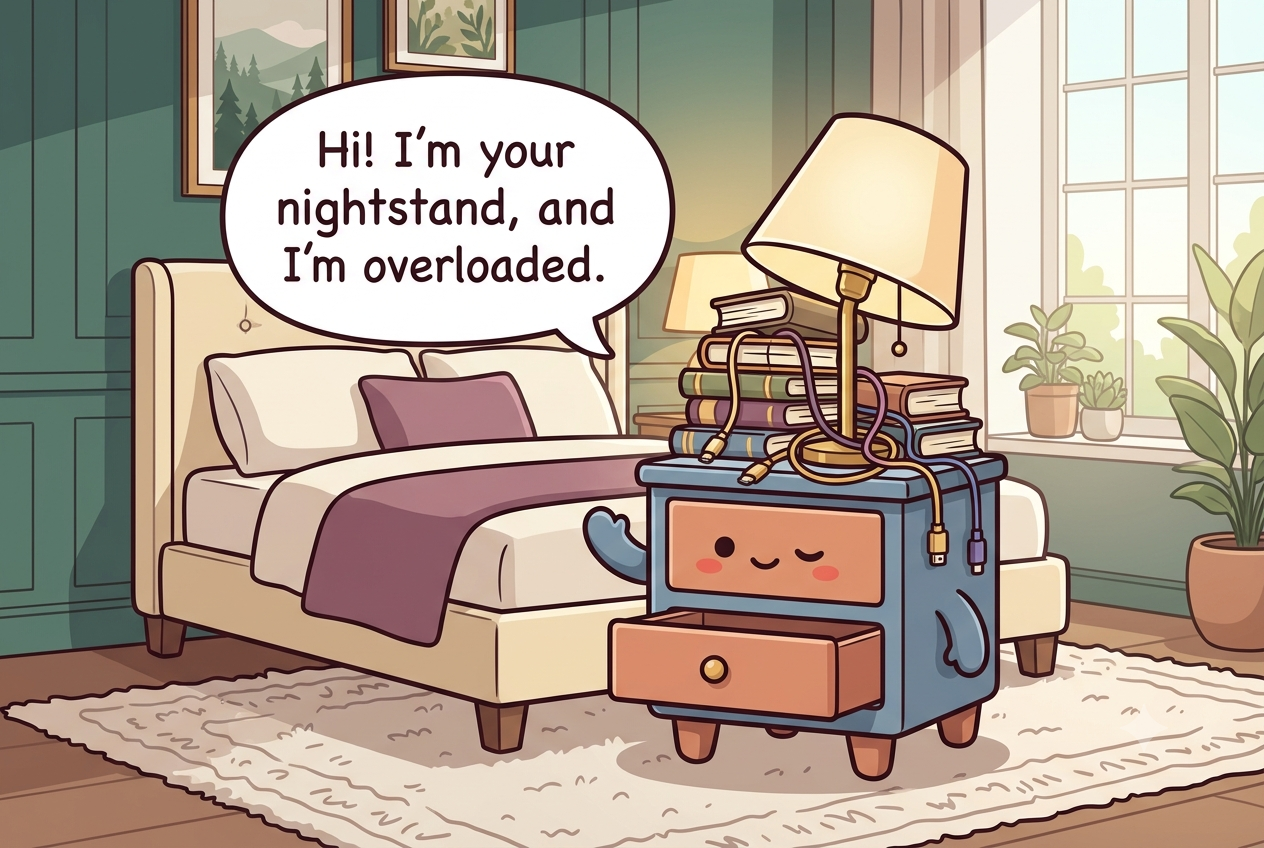
The short answer
Limit the nightstand to what supports sleep and waking: a lamp, water if wanted, current reading, and a few routine items. Keep small supplies in shallow drawer zones, route charging cords so they do not become a trip or snag hazard, and store medication according to its label in a secure place children and pets cannot access.
What to gather before you start
- A small drawer tray or a few dividers
- A cord clip or a short cable channel for the charger
- A coaster or small tray for a glass
- A shallow dish for glasses, earplugs, or small nightly items
- A slim book stop, or a one-book limit
- A latching or lidded box for medication if young children are in the home
Measure first. Buy only the pieces that solve a specific access problem.
Clear it off and watch what actually comes back
Remove everything from the surface and drawer, then return only the objects you genuinely use at bedtime or when waking. For several nights, notice what naturally comes back: glasses, a book, tissues, lip balm, a charger, hearing-aid supplies, or a glass of water. Everything else should have a home outside the sleep zone.
Use this observation period to catch clutter that belongs to another routine—mail, receipts, cosmetics, snacks, loose change, and daytime medication. A nightstand is small enough that one unrelated category can consume half the usable space, so protect the surface from becoming general overflow.
Use the first several nights as a behavior test rather than immediately filling organizers. If glasses, a book, tissues, or hearing-aid supplies return every night, they deserve a defined spot; daytime paperwork and cosmetics do not. The surface should remain easy to reach in low light and clear enough that a glass or electronic device is not balanced on clutter. Notice what you reach for without turning on a bright light. Items that are hard to find by touch may need a shallow tray or consistent position rather than another drawer organizer.
Decide what it is for: sleep, not overflow
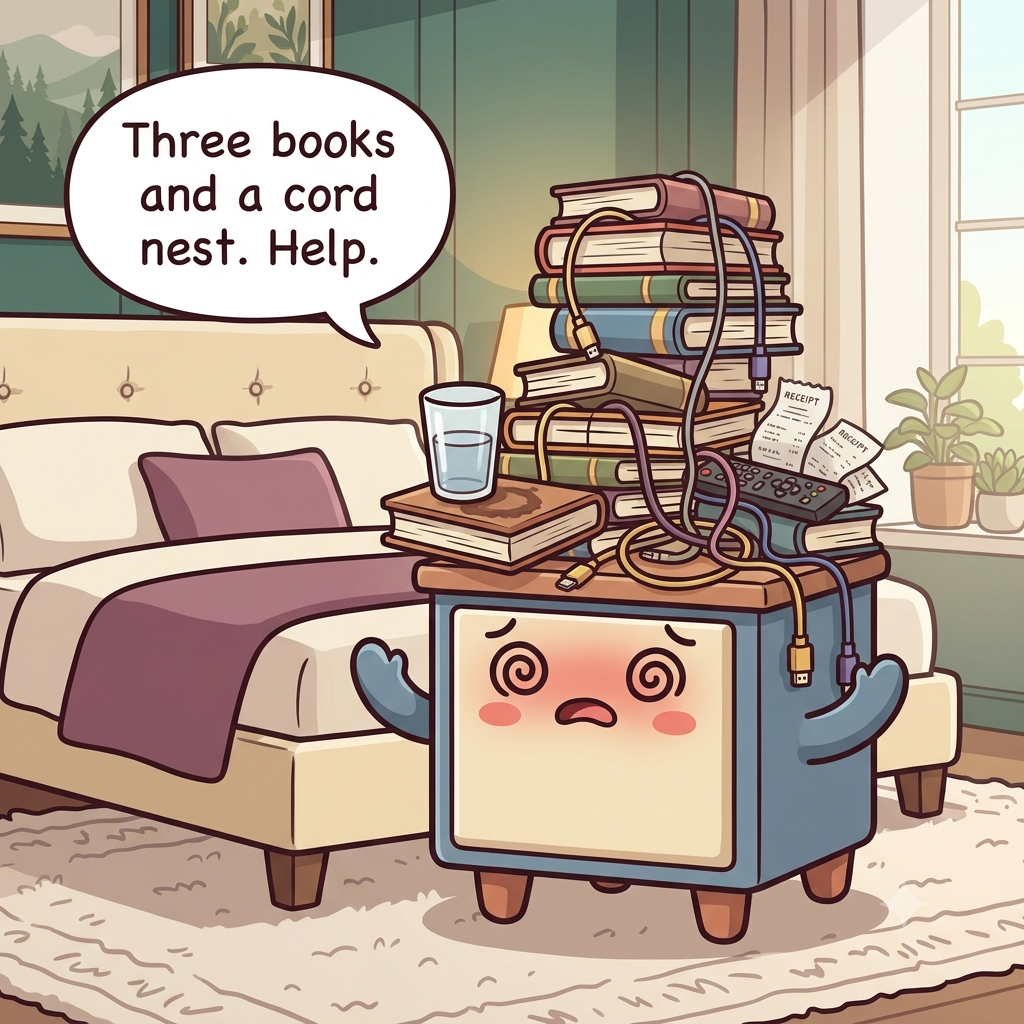
Set a simple capacity rule for the top: usually a lamp plus one small tray and one or two active items is enough. If you read several books at once, keep the current book bedside and store the rest on a shelf. If you use a water glass, give it a stable spot away from electronics.
Keep the area easy to wipe and reach in low light. Avoid tall unstable stacks or objects that can be knocked onto the floor. The goal is not a bare hotel table; it is a predictable surface where your hand can find essentials without sorting through daytime clutter.
Keep the surface visually and physically simple enough that the essentials can be found without searching. A lamp, water placed away from electronics, and the current bedtime item may be all the top needs; the exact list depends on the routine. Move work, mail, and long-term reading stacks elsewhere so the nightstand does not become a second desk.
Split the surface from the drawer
Keep the surface for items you need without opening anything, and use the drawer for small supplies that would look or feel cluttered on top. A shallow tray can separate glasses, earplugs, tissues, hand cream, or a pen. Put only one layer of small items in the easiest part of the drawer so nothing becomes a hidden pile.
If the drawer is deep, use a removable shallow bin rather than filling the depth with stacked pouches. Reserve the back for low-frequency items that still belong to the bedtime routine. A drawer that has to be rummaged through in the dark is carrying too much.
Do a low-light retrieval test after the drawer is loaded. Glasses, earplugs, tissues, or another true bedtime essential should be findable without digging beneath a second layer or moving unrelated objects. If the back half of a deep drawer becomes invisible, use it only for clearly separated low-frequency bedtime supplies or leave it partly empty rather than filling depth for its own sake.
Tame the charging cords
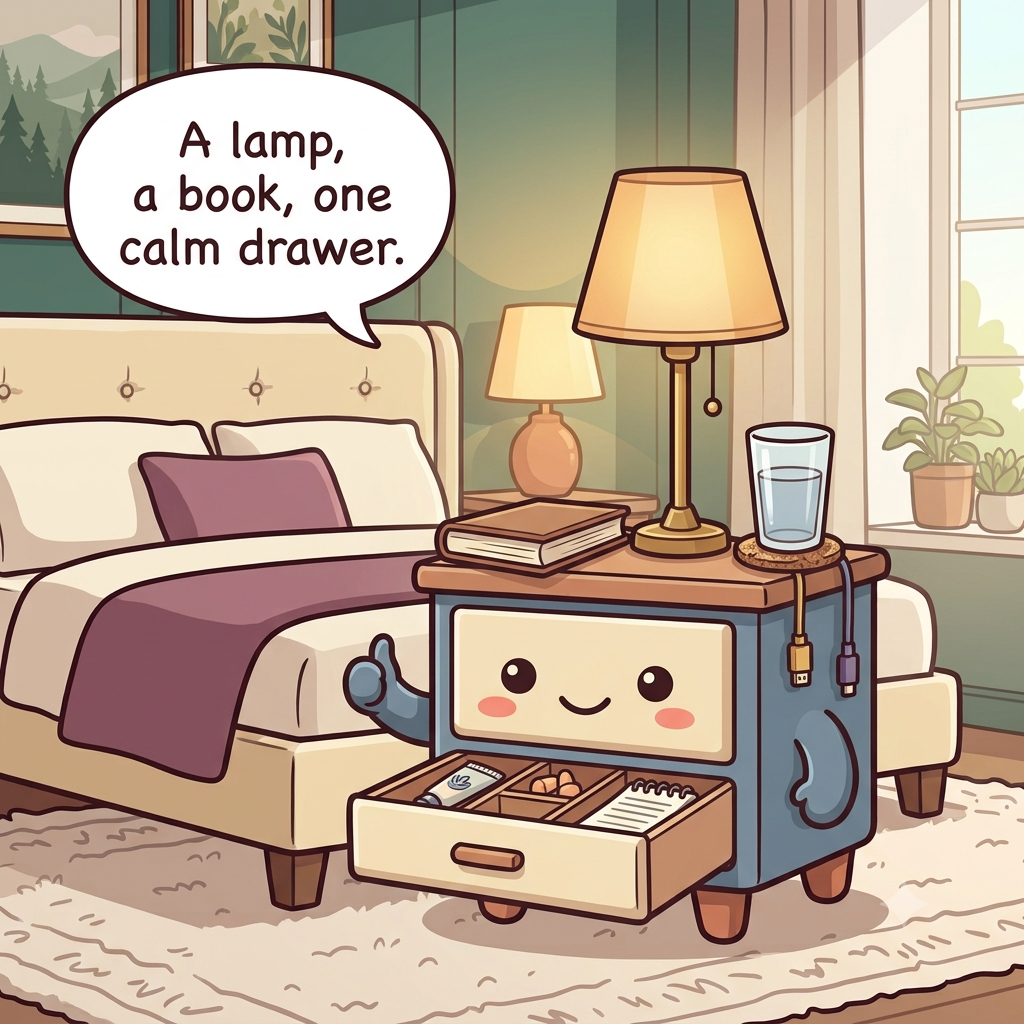
Route charging cables along the back or side of the furniture with removable clips, a cable sleeve, or a small weighted cable holder so the plug stays reachable. Leave enough slack to use the device comfortably without pulling the charger or power strip. Keep cords out of the walking path and away from places where bedding can repeatedly snag them.
Use listed, undamaged chargers and power strips appropriate for the device, and avoid daisy-chaining power strips. Do not run a cord where the nightstand crushes it against the wall. In a rental, removable adhesive clips or a simple bedside cable weight can control cords without drilling.
Keep plugs reachable without letting cords cross the walking path. Removable cable clips, a weighted cable holder, or a sleeve along the back edge can control slack without drilling. Use undamaged listed charging equipment, avoid daisy-chaining power strips, and reposition furniture if it is pinching a cord against the wall. Keep power connections where spilled water cannot run directly onto them, and replace frayed or heat-damaged cords instead of hiding them behind the furniture. Cable management should make damage easier to inspect, not conceal it.
Keep night-time medication reachable but safe
Follow the medicine label for storage temperature, light, and humidity. If you need a nighttime dose, choose a secure location that is convenient for the intended adult but inaccessible to children and pets; an unlocked open tray is not appropriate in a home where a child can reach the nightstand.
Keep medicine in its labeled container unless a properly managed pill organizer is part of the routine. Do not keep expired or discontinued prescriptions 'just in case.' Arrange take-back for unwanted medicine and keep water or other drinks far enough away that a spill cannot damage packaging or electronics.
A needed nighttime dose can be convenient for the intended adult without being left exposed. Follow the drug's storage label, keep the medicine identified, and use a locked or otherwise secure location when children, pets, or other unintended users could reach the nightstand. Arrange take-back for discontinued or expired medicine rather than letting it accumulate bedside. If a caregiver prepares doses, follow the prescription and pharmacy instructions and keep the original medicine accessible for identification. A bedside pill organizer should not become an unlabeled long-term storage container.
What sends a nightstand back to clutter
Do not turn the nightstand into a catchall for receipts, jewelry, dirty cups, cords, and half-finished projects. Avoid unstable towers of books, chargers stretched across the walkway, and liquids directly above power connections. Do not assume medicine is safe simply because it is inside a drawer.
Another mistake is hiding every object in one deep drawer. That trades visual clutter for rummaging. Keep only the bedtime category here, divide small items by use, and move low-frequency supplies to the room where they are normally used.
Do not trade surface clutter for one deep drawer full of unrelated objects. Avoid unstable book stacks, open drinks directly above power connections, charging cords across the walking path, and unsecured medicine. If an item is repeatedly used at night, give it a defined spot; if it belongs to daytime work, move it out of the bedside zone. Keep emergency aids such as glasses or hearing devices in a consistent reachable place rather than under stacks or inside mixed pouches. The bedside system should still work when you are tired, half-awake, or moving in low light.
The 20-second morning reset
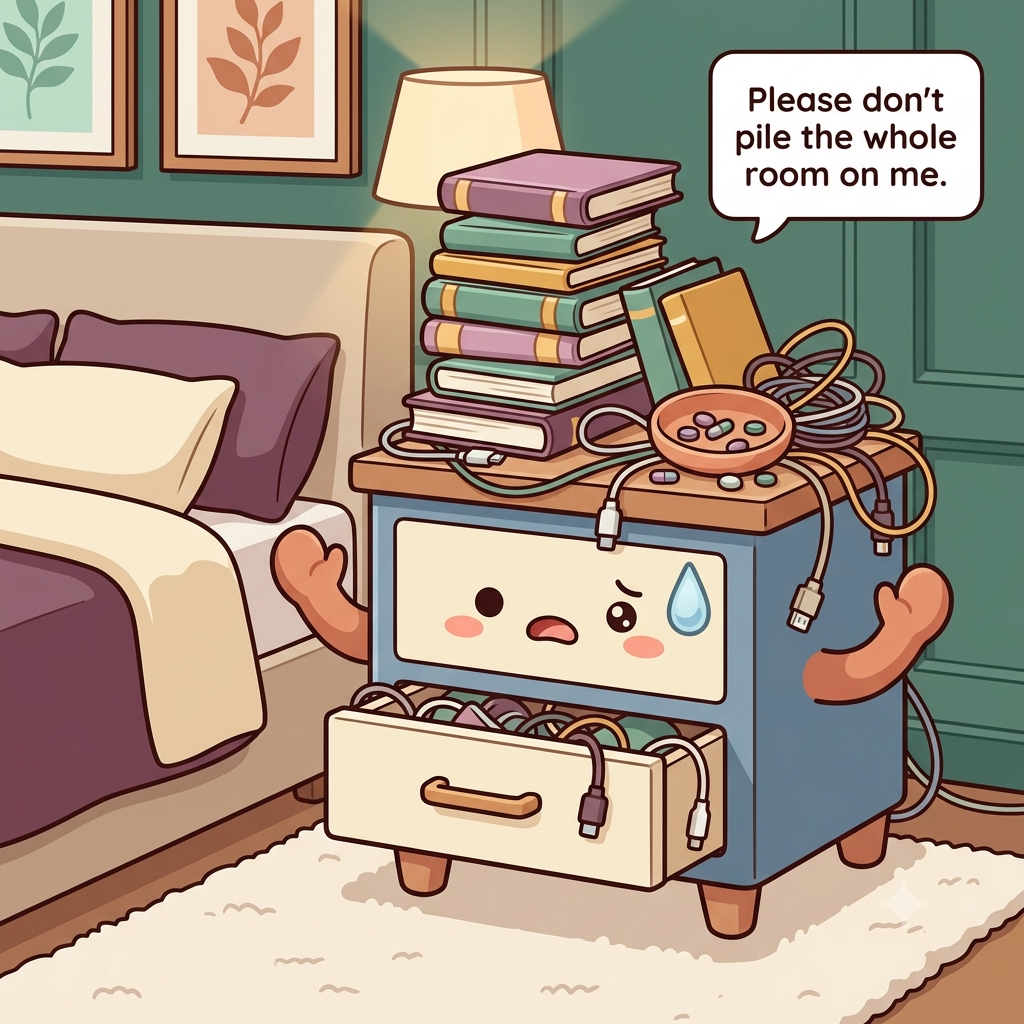
Each morning, return glasses and small items to their tray, take dishes out, put the charger back in its holder, and move finished books or stray objects to their real homes. The surface should return to a predictable state before the day starts.
Once a week, wipe the surface and empty the drawer of receipts, wrappers, and items that migrated in. If something repeatedly appears because you genuinely use it at night, assign it a permanent small spot instead of treating it as clutter.
The morning reset should remove yesterday rather than reorganize the whole table. Take dishes out, return glasses and small items to their tray, put the charging lead back where it can be found, and move finished books or papers away. A weekly wipe and drawer check catches the few items that migrate in despite the daily routine.
Bedside medication safety
- Convenient is not the same as child-safe: medication must remain inaccessible to children and pets.
- Avoid keeping medicines next to heat, humidifiers, drinks, or other conditions the label warns against.
- Use a closed, secured location when someone in the home may confuse, misuse, or accidentally access medication.
Sources: U.S. CPSC — Poison Prevention Information Center; U.S. FDA — OTC medicine storage guidance
30-second success check
- Bedtime essentials can be found in low light without digging through a second layer.
- Charging cords stay out of the walking path, are not pinched, and plugs remain inspectable.
- The surface has a stable place for any drink away from power connections.
- Any bedside medicine follows its label and remains inaccessible to unintended users.
Questions that come up
Frequently asked questions
Part of Closets, Clothing & Personal Storage — 13 guides.