The short answer
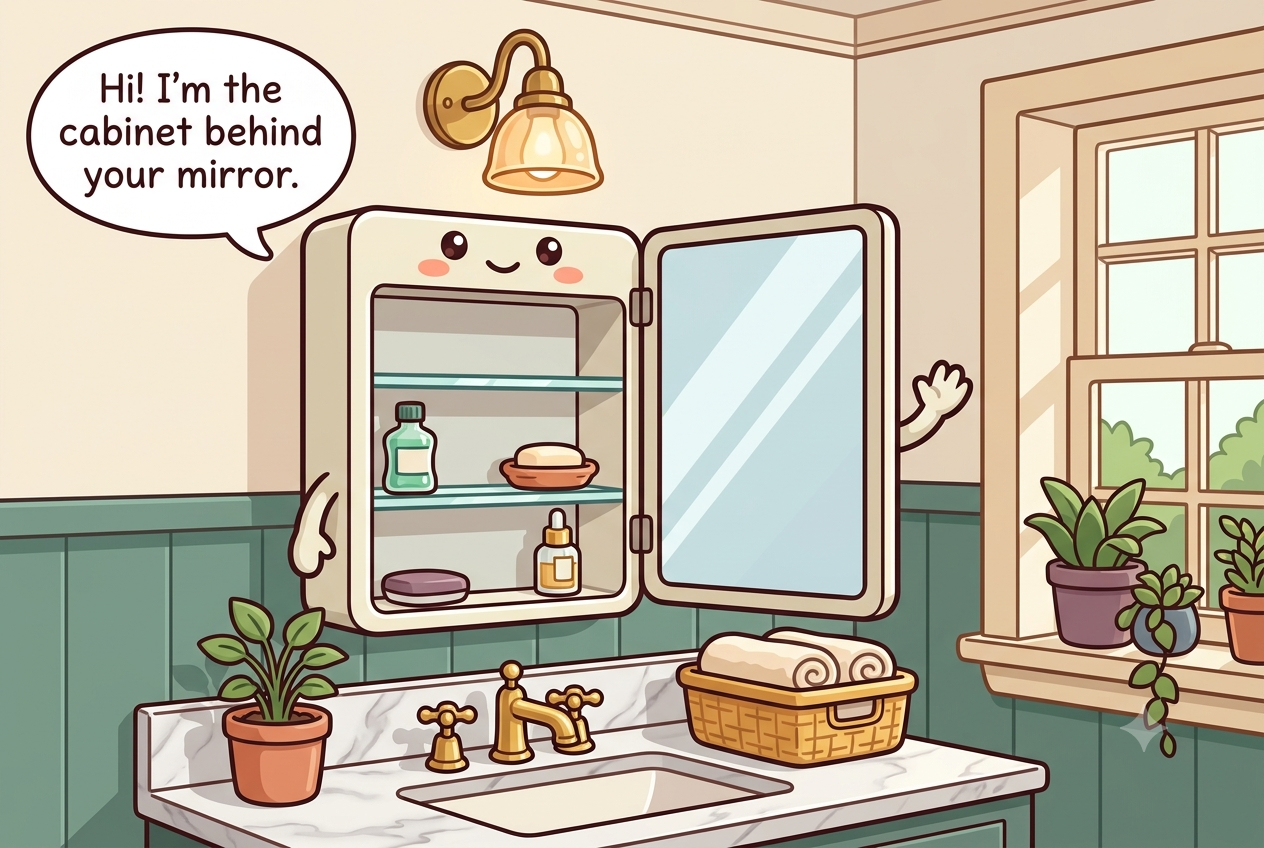
Use a shallow medicine cabinet mainly for non-sensitive daily care items unless each medicine label says bathroom storage is acceptable. Check dates, move heat- or humidity-sensitive drugs to a cool dry place, keep all medicine secured from children and pets, and use take-back programs for disposal whenever available.
What to gather before you start
- A trash bag and a container for medicine you're disposing of
- Two to four small, shallow bins that fit the shelf depth
- A tiered riser or a narrow shelf shim for tall bottles
- Labels and a marker
- A cooler, drier storage box for medicine that shouldn't be kept here
- A lock or a high shelf elsewhere if young children are in the house
Measure first. Buy only the pieces that solve a specific access problem.
Empty it and check every date
Remove everything and separate prescription medicine, over-the-counter medicine, first-aid supplies, dental care, skincare, and miscellaneous grooming items. Read each drug label for expiration and storage instructions rather than relying on the cabinet location. Set expired or unwanted medicines aside in a secure place while you arrange proper disposal so they do not drift back onto the shelf.
Check packaging as well as dates. A damaged seal, missing label, unidentified pill, or medicine transferred into an unmarked container should not remain in the active cabinet. Keep medicines in their original labeled containers whenever possible so dosage, warnings, and identity stay attached.
Keep expired and unwanted medicines secure while you arrange disposal; do not leave them loose on a counter where a child or pet could reach them. Check that each remaining product still has its identity, dosage directions, and storage instructions attached. A cabinet organizer cannot make an unidentified pill or damaged package safe to keep. Separate non-drug first-aid supplies from medicines while sorting so adhesive bandages, gauze, thermometers, and similar tools remain easy to find without rummaging through prescription bottles during an urgent moment.
Move heat- or humidity-sensitive medicine out
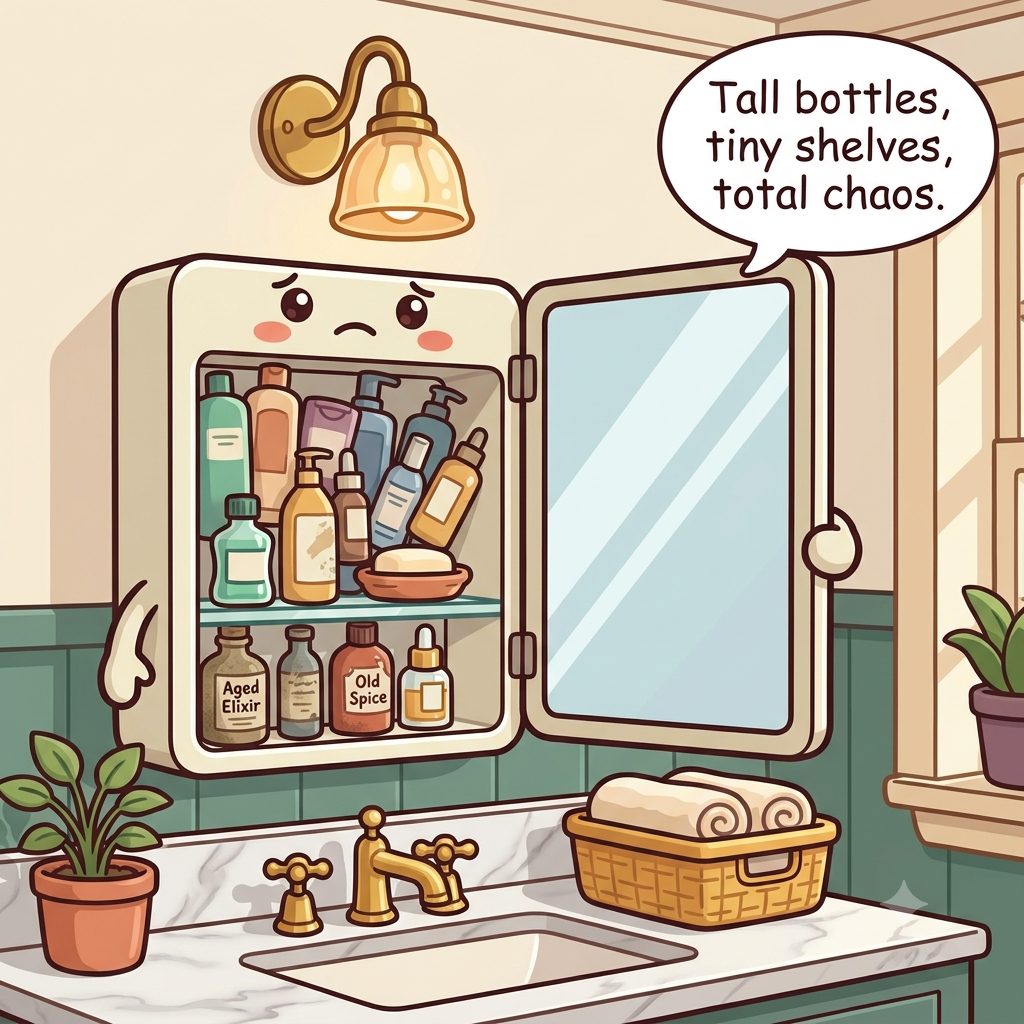
Bathroom heat and humidity can shorten the life of some medicines. Follow the storage statement on each label; when it calls for a cool, dry place, move the medicine to a secure cabinet outside the bathroom rather than trying to compensate with a sealed decorative box. FDA guidance notes that bathroom moisture and heat can damage some medications.
Choose a location away from sinks, showers, direct sun, stoves, and other heat sources, and still keep it inaccessible to children and pets. If a medicine has special temperature requirements, follow the pharmacy or manufacturer's instructions exactly. Organization never overrides the storage directions on the package.
FDA specifically warns that a damp bathroom cabinet can reduce medicine effectiveness before the printed expiration date. For products labeled for cool, dry storage, choose a secure location outside the bathroom and away from heat or sink moisture. Medicines with special temperature requirements should stay exactly within the pharmacy or manufacturer's instructions.
Group by person and by moment of use
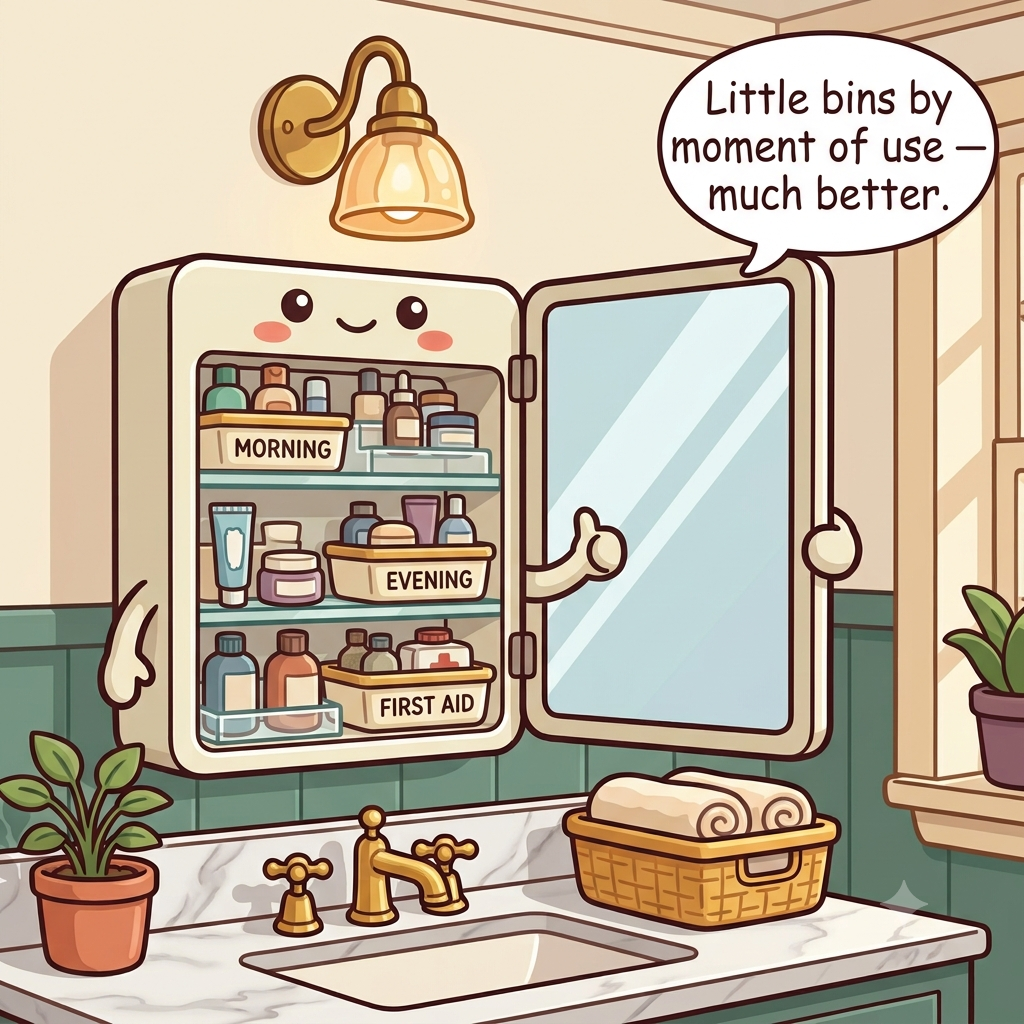
Within the items that can safely stay here, group by routine: dental care, morning skincare, first aid, or one adult's daily supplies. Use separate small bins when multiple people share the cabinet so similar tubes and bottles are not confused. Keep labels facing forward or upward so you can identify products without removing a row.
Do not create a bin so broad that unrelated drugs disappear together. Prescription medicines should remain clearly identified and controlled. If children, guests, or vulnerable adults can access the room, use a locked storage location for medicines rather than relying on shelf height alone.
Keep prescription identity and ownership clear even when the cabinet is grouped by routine. Separate bins can help adults avoid confusing similar packages, but the medicine should remain in its labeled container. Where children may enter, use locked medicine storage rather than treating a high shelf as the primary safety barrier. If several adults use the storage, avoid abbreviations or color systems that only one person understands. Clear names and intact pharmacy labels reduce the chance that similar bottles are returned to the wrong group.
Fit small bins to shallow shelves
Measure shelf depth, height between shelves, and the door clearance before choosing containers. Shallow acrylic bins, narrow trays, or small risers can keep tubes and bottles from forming a double row. Use the smallest container that keeps the category upright; a deep bin wastes the advantage of a shallow cabinet by hiding the back.
Adjust shelves if the cabinet allows it, but leave enough headroom to lift bottles out without tipping the row. Avoid adhesive organizers that prevent the mirrored door from closing or interfere with hinges. In a rental, choose removable bins and freestanding shelf inserts rather than altering the cabinet.
Use the cabinet's shallow depth as an advantage: keep one visible row instead of turning a narrow shelf into a deep box. A small riser can expose short packages behind taller ones, while a narrow tray can keep tubes upright. Test the mirrored door and hinge clearance after the organizer is loaded, not only when it is empty. Keep a separate clearly labeled first-aid zone for non-drug supplies so an urgent bandage or thermometer does not require moving rows of medicine bottles.
Put daily items at eye level and keep the rest safe
Place non-sensitive daily-use items at the easiest viewing height. Less-used first-aid supplies can go higher or lower, provided they remain dry and reachable to the intended adult. Keep a small amount of open space so new prescriptions or temporary care supplies do not immediately create a second row.
Child safety takes priority over convenience. Medicines and potentially harmful personal-care products should be locked or otherwise secured out of children's reach and sight. Do not place colorful pill organizers where a child can access them simply because they are part of a nightly routine.
Convenience applies only after safe storage is solved. Daily adult-use products can sit at the easiest viewing height when their labels allow the bathroom conditions, but medicines still need to be secured from children, pets, and unintended users. Leave some open shelf space for temporary prescriptions rather than creating an unlabeled overflow pile.
What ruins a medicine cabinet's safety and speed
Do not assume the traditional 'medicine cabinet' is automatically the best place for medicine. Avoid mixing pills in unlabeled containers, keeping old prescriptions 'just in case,' storing medicine within a child's reach, or decanting products so warnings and directions are lost. Never use an organizer to conceal leaking or damaged packaging.
Do not flush unwanted medicine by default. FDA recommends drug take-back as the preferred option. If take-back is not readily available, follow FDA disposal instructions for that specific medicine; only certain medicines on FDA's flush list are candidates for flushing under specified circumstances.
The name 'medicine cabinet' is not a storage instruction. Do not keep medicines there when the label calls for cooler, drier conditions, do not save discontinued prescriptions for future self-treatment, and do not transfer pills into unmarked containers. For unwanted medicine, use take-back when available and follow FDA's product-specific disposal guidance rather than flushing by default. Keep the national Poison Help number, 1-800-222-1222, accessible in the household rather than buried inside the medicine cabinet. In a suspected poisoning, use emergency or poison-control guidance instead of relying on home organization labels.
The monthly date-check reset
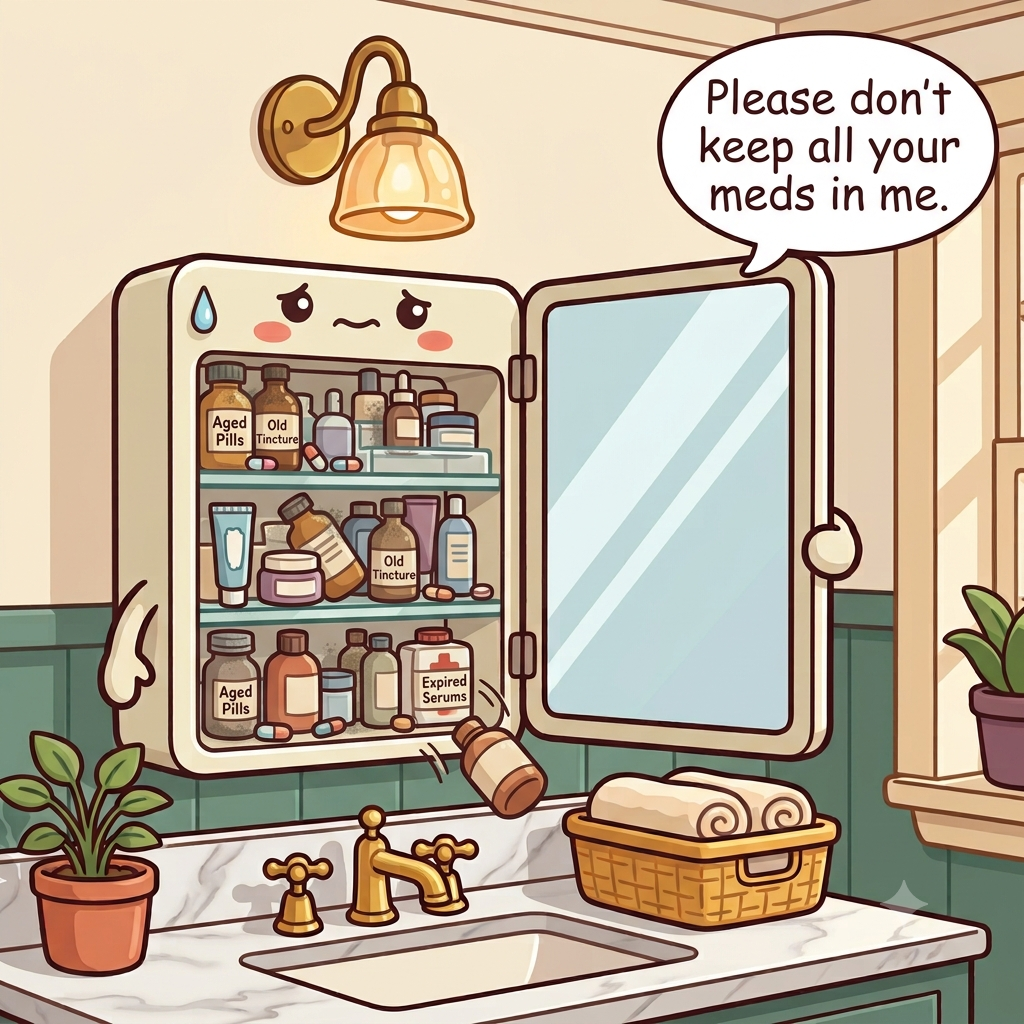
Once a month, scan the labels that face forward and remove anything expired, empty, duplicated, or no longer part of the routine. Wipe the shelves dry, check for leaks, and make sure stored medicines still meet their label conditions. Return every item to its assigned bin rather than creating a temporary stack.
At least when prescriptions change, review the whole medicine storage system and arrange take-back for medicines you no longer need. A short recurring check is safer than discovering years-old products during an emergency.
During the monthly check, read the labels rather than simply straightening the bottles. Remove expired or discontinued products to secure take-back storage, wipe shelves dry, and confirm that no medicine has migrated into a location that conflicts with its storage directions. Recheck the system whenever a prescription changes, even if the monthly date is still weeks away. Use the same check to confirm that child-resistant caps still close properly and that no liquid has leaked onto neighboring packages. Damaged packaging should be handled according to the pharmacist or product instructions.
Medication safety
- Follow the product label for storage temperature and moisture conditions; bathrooms can be too humid for some medicines.
- Keep medicines out of children’s and pets’ reach.
- Use an authorized take-back option for unwanted medicines when available; do not flush medicines unless the product is specifically on FDA’s flush list and no preferred disposal option is readily available.
Sources: U.S. CPSC — Poison Prevention Information Center; U.S. FDA — Disposal of Unused Medicines: What You Should Know; U.S. FDA — OTC medicine storage guidance
30-second success check
- Every medicine is identifiable and kept in its original labeled container or a deliberately managed dose organizer.
- Storage conditions match the label rather than the humidity or heat of the most convenient cabinet.
- Expired or unwanted medicine has moved to an appropriate disposal path instead of remaining in the cabinet.
- Children and pets cannot access the medicine storage.
Questions that come up
Frequently asked questions
Part of Closets, Clothing & Personal Storage — 13 guides.