
The short answer
Edit makeup by age, condition, and actual use before adding organizers. Keep the daily routine in one shallow tray, separate liquids, powders, lip, and eye products so leaks stay contained, wash and dry brushes and sponges on a regular schedule, and move heat-sensitive cosmetics out of hot, humid storage when the label or product guidance calls for a cooler, drier place.
What to gather before you start
- A shallow divided tray or a set of small acrylic bins
- A brush cup or holder, kept separate from products
- A marker to date products when you open them
- A small bag for daily or travel makeup
- A bin for the expired and unwanted products leaving
- A cooler, drier drawer if the bathroom runs hot and humid
Measure first. Buy only the pieces that solve a specific access problem.
Empty it and check every product's age
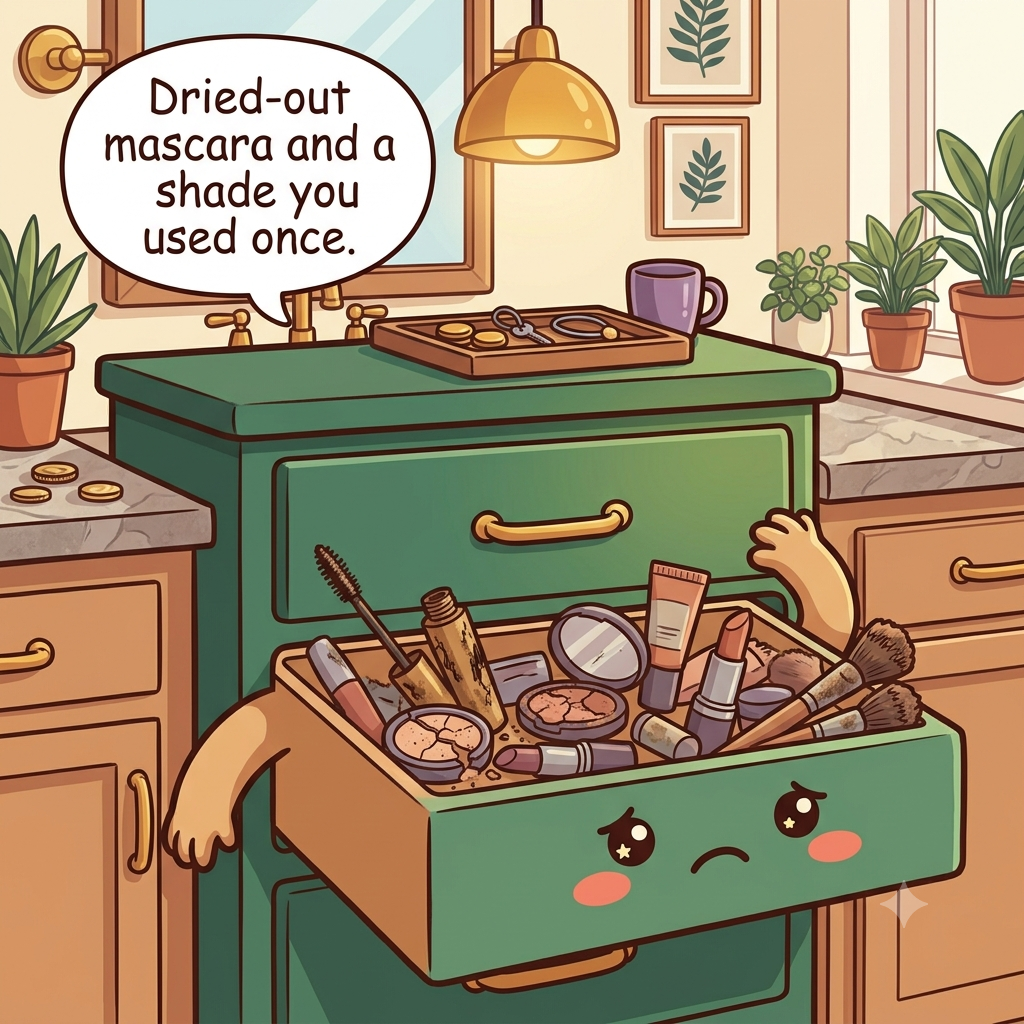
Take every product out and inspect the label, package-after-opening symbol if present, purchase date if known, smell, texture, color, and container condition. FDA notes that cosmetics can deteriorate and become contaminated over time; mascara in particular has a short useful life, with manufacturers commonly recommending replacement within a few months after purchase. Discard products that smell off, have changed markedly, or have contaminated applicators.
Do not add water or saliva to dried makeup to extend its life; FDA warns this can introduce microorganisms and dilute preservatives. If you cannot remember how old a repeatedly opened eye product is, err on the side of replacing it, especially after an eye infection.
Use the maker's label or package-after-opening guidance where available, and pay special attention to eye products. FDA notes that manufacturers commonly recommend discarding mascara about two to four months after purchase. Products that smell wrong, change texture, separate abnormally, or have contaminated applicators should not return to the active drawer. Keep purchase or opening notes only where they help real decisions; a small sticker on mascara or liquid eyeliner is enough. Do not create a complicated spreadsheet for inexpensive daily products if a visible opening month will prevent accidental overuse.
Group by where it goes and how often
Create one daily group for the products used most mornings, then secondary groups such as face, eyes, lips, and occasional color. The daily group should be small enough to lift out or scan in seconds. Keep backup products and special-occasion items away from the prime tray so they do not hide the routine.
If more than one person shares the space, separate applicators and products by person where hygiene matters. Do not share eye makeup or other products that contact mucous membranes; FDA advises against sharing cosmetics because contamination can spread.
Keep the true daily routine in one easy-to-lift tray and move backups or special-occasion color away from prime space. Separate products or applicators by person when sharing would create hygiene problems. FDA advises against sharing cosmetics, especially eye-area products where contamination can spread. Keep backups sealed until the active product is finished whenever possible. Opening several similar mascaras, foundations, or creams at once starts multiple shelf-life clocks and increases clutter without improving the routine.
Stand the tall, lay the flat, in shallow sections
Stand pencils, tubes, and bottles only when the organizer supports them without tipping; lay palettes and compacts flat in shallow sections where they can be seen from above. Use washable trays that can contain a leaking foundation or broken powder. Measure drawer height before buying tall acrylic towers.
Avoid deep bins that mix liquids, powders, and tools in a single layerless pile. Keep caps fully closed and give liquid products a stable upright zone when their packaging requires it. A little empty space is useful for putting products back after a rushed routine.
Measure drawer height before buying acrylic towers or upright cups and use washable trays that can contain a leak or broken powder. Palettes and compacts should stay visible rather than buried in a deep bin. Leave a little open space so the morning routine can be returned without exact packing. Keep pump bottles and liquids upright when their packaging is designed that way and use a tray that can be washed after spills. Loose powder should not sit directly above an open drawer of clean brushes where a broken compact can contaminate tools.

Keep brushes and sponges clean and apart
Store clean brushes so bristles stay dry and are not crushed against dirty makeup residue. Wash brushes and reusable sponges according to the product or maker's care directions and allow them to dry completely before returning them to a closed container. Keep visibly dirty tools separate from clean ones.
Do not store damp sponges sealed in an airtight cup or pouch where moisture stays trapped. Replace tools that are deteriorating, cannot be cleaned adequately, or develop persistent odor. Hygiene should determine storage, not just how decorative a brush holder looks.
Give clean tools a dry, protected zone and keep used or damp applicators separate until they are washed and fully dried. Do not seal a wet sponge in an airtight container. Replace deteriorating tools that retain odor or cannot be cleaned adequately instead of using storage to hide their condition. Let washed brushes dry in the position recommended by the brush maker so water does not sit where it can loosen glue or trap moisture. Store them only after the handle and bristles are fully dry to the touch.
Store it somewhere cooler and drier than the counter when needed
FDA notes that heat can shorten cosmetic shelf life and break down preservatives; hot cars and very warm storage are poor choices. In a steamy bathroom, keep sensitive or infrequently used products in a cooler, dry location when their labeling or maker guidance recommends it. Keep lids tight to limit moisture exposure.
Do not store cosmetics in direct sun or near radiators, hair tools, or other heat sources. If you move daily makeup outside the bathroom, use one portable tray so the routine remains easy to bring in and return rather than creating duplicates in two rooms.
FDA warns that heat and moisture can shorten cosmetic shelf life and make microbial growth more likely. Do not leave cosmetics in a hot car; eye cosmetic guidance specifically warns about prolonged storage above 85°F. Follow product labels and move sensitive items out of steamy or sunlit locations when appropriate. If the bathroom is the only practical location, keep cosmetics away from the shower's direct steam path and out of a sunlit window. Close containers promptly after use so normal bathroom humidity has less opportunity to enter.
What sends makeup storage back to clutter
Do not keep mascara indefinitely, share eye makeup, add water or saliva to dried products, or return damp brushes to a closed drawer. Avoid storing makeup in a hot car and do not ignore changes in smell, texture, or color because a product was expensive.
Another mistake is buying a large organizer before editing. Expired and unused products will simply fill the new compartments. Reduce the collection first, then choose shallow washable storage that fits the surviving routine.
Use the monthly pass to look for the failure signs that organization can hide: a mascara kept past its short recommended life, a product whose smell or texture has changed, damp applicators sealed into a drawer, or several near-identical items that are never used. Remove the unsafe or unwanted product first, then resize the organizer. More compartments should never be the reason an old cosmetic remains in rotation.

The monthly date-check reset
Once a month, scan eye products and other frequently opened cosmetics for age and condition, wipe organizer surfaces, and remove empty or deteriorated items. Check the daily tray for products that have stopped being daily and move them out of prime space.
When opening a product with a short useful life, mark the opening month discreetly if the packaging does not make age obvious. A simple date habit is more reliable than trying to remember when a tube first entered the drawer.
Mark the opening month on short-life products when the packaging does not make age easy to track. During the monthly pass, inspect daily eye products first, clean organizer surfaces, and remove anything deteriorated or no longer used. The goal is a routine that makes age and condition visible before clutter hides them. Check makeup bags and travel kits during the same pass; old eye products often survive there after the main drawer has been cleaned out. A duplicate in a rarely used pouch is still subject to the same age and hygiene concerns.
30-second success check
- Product age or opening date is trackable where it matters, especially for short-life eye cosmetics.
- Anything with an unusual smell, color, texture, separation, or contamination leaves the daily rotation.
- Brushes and sponges return to storage only after they are clean and fully dry.
- Eye cosmetics are not shared or re-wetted with water or saliva.
- Makeup is kept away from prolonged high heat and excessive bathroom moisture when a cooler, drier location is available.
Questions that come up
Frequently asked questions
Part of Closets, Clothing & Personal Storage — 13 guides.