The short answer
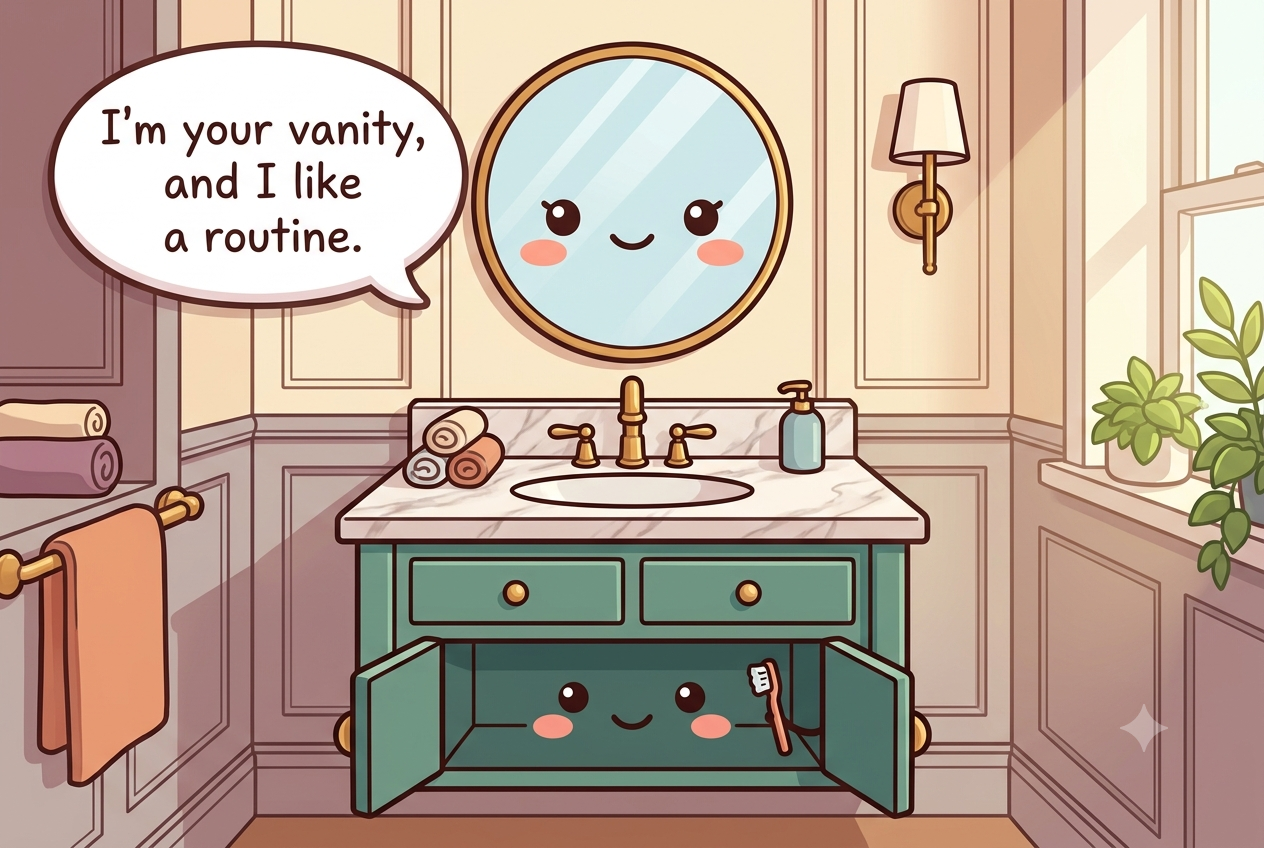
Sort the vanity by routine, person, and frequency, then give daily items shallow visible zones and occasional products a less-prime location. Fit removable bins around plumbing, keep the counter to true daily essentials, and move medicines or other heat- and humidity-sensitive items to a cool, dry, secure place.
What to gather before you start
- Small washable drawer trays or adjustable dividers
- Handled pull-out bins or caddies
- A low open bin for items that fit under the plumbing
- A heat-safe holder for styling tools once they've cooled
- Labels for shared or opaque containers
- A relocate basket for duplicates and things used elsewhere
Measure first. Buy only the pieces that solve a specific access problem.
Empty one storage type at a time
Work on the counter, drawers, and under-sink cabinet separately so you do not create one giant bathroom pile. Empty a single drawer, wipe it, discard empty packaging, and set aside expired or unusable products before moving to the next space. This lets you keep the bathroom functional while you organize.
Measure drawer depth, cabinet openings, and the space around pipes before buying trays or pull-outs. Bathroom storage products often fail because tall bins collide with plumbing or drawer dividers sit higher than the drawer box. Fit the organizer to the vanity, not the vanity to the organizer.
Measure drawers and the sink cabinet separately because they solve different problems. Record drawer height and depth, then note pipe positions, hinge swing, door opening, and shutoff-valve access below the sink. Bathroom organizers are often wasted because they fit the cabinet interior but collide with plumbing or cannot pass through the door. Keep a small towel nearby while measuring so any hidden moisture around supply lines or the trap is obvious before bins go back. Persistent dampness needs plumbing or ventilation attention, not a tighter organizer.
Sort by routine, person, and frequency
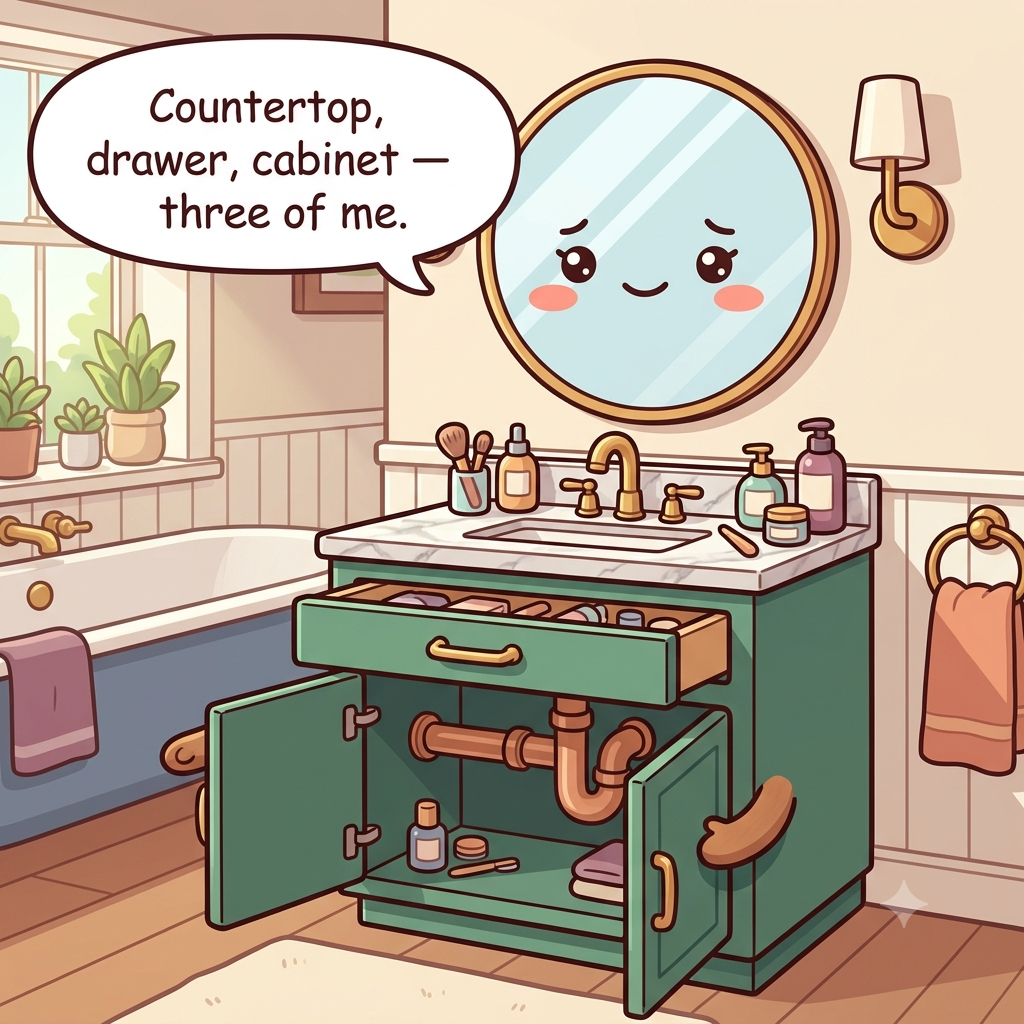
Group products first by when they are used—morning skincare, dental care, hair, shaving, makeup, first aid—and then by person if several people share the vanity. Put daily categories closest to where they are used and move backups or occasional tools farther back. Keep each person's small items in a distinct tray or bin if sharing causes mix-ups.
Do not keep every sample, duplicate bottle, and out-of-season product in prime space. Keep the vanity aligned with the routines that actually happen there rather than treating it as backlog storage. If you cannot remember when you last used a product, decide whether to finish it soon, relocate it, or let it go.
Create an active zone for what is used now and a small backstock zone for sealed replacements. Samples, duplicates, and products used only occasionally should not compete with toothbrushes or daily skincare for prime space. In a shared vanity, one tray or bin per person can prevent the same category from being searched in several drawers.
Give drawers shallow, visible categories
Use low trays so products stay in one layer whenever possible. Lay flat items such as compacts, razors, floss, and hair accessories in compartments sized to them, and reserve taller spaces for bottles only where the drawer has clearance. Labels are useful in shared bathrooms, but clear category boundaries matter more than decorative matching sets.
Deep drawers need height control: use a shallow removable tray for daily small items and keep taller bottles upright below only if the drawer is designed for them. Avoid stacking loose products in two or three invisible layers. If you have to unload half the drawer to reach a toothbrush refill, the category is too deep or too full.
Size the organizer to the product, not the other way around. Short trays suit razors, floss, clips, and compacts; taller bottles need a drawer or cabinet section with enough headroom to stand upright. If a deep drawer hides items below another layer, use a removable top tray or split daily products from backups instead of piling them.
Fit the cabinet around the pipes
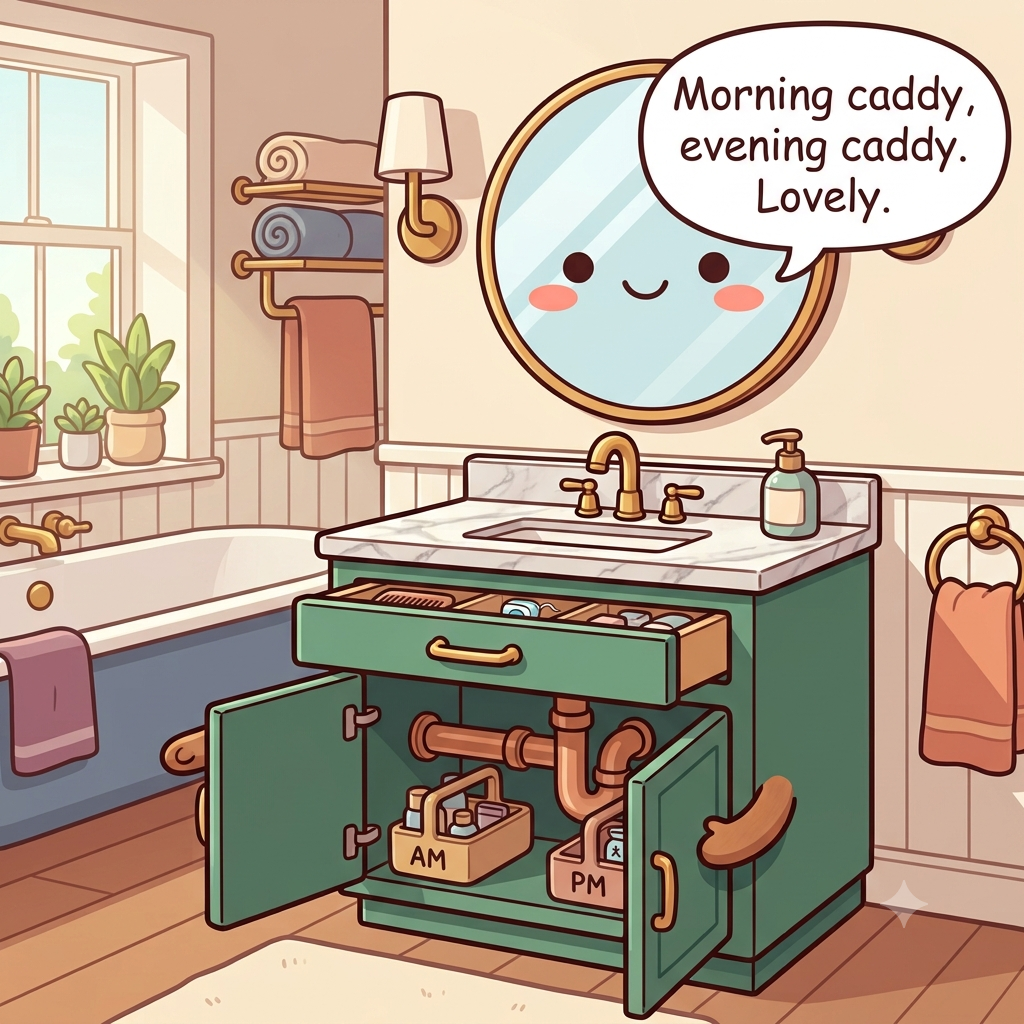
Treat supply lines, valves, and the drain trap as permanent access zones. Use narrow caddies or removable pull-outs on either side, and keep the floor visible enough to spot a leak. Store towels, toilet paper, electrical devices, and anything easily damaged by water away from the plumbing if another location is available.
Cleaning products should remain in original labeled containers and, where children can access the bathroom, in locked storage or somewhere truly out of reach. Do not build a fixed shelf that blocks shutoff valves. A cabinet that can be emptied quickly is safer and easier to maintain than one packed to maximum capacity.
Keep the plumbing zone visually open after the bins go back. A narrow caddy on each side of the trap is often more practical than a wide fixed drawer across the cabinet. If you rent, freestanding or removable systems let you work around the pipes without drilling and can be lifted out quickly for a leak or repair.
Clear the counter by building a return path
Keep only the items you use every day and can return in one motion: perhaps hand soap, toothbrushes, and a small tray for a limited skincare routine. Everything else needs an obvious nearby home. If a hair tool is used daily, give it a heat-safe storage spot only after it cools and follow the manufacturer's instructions.
A clear counter is not maintained by discipline alone; it needs a frictionless return path. The drawer or bin for a daily item should open easily and have spare capacity. If putting something away requires moving another object first, it will eventually live on the counter.
Test the return path during the routine itself. If the moisturizer drawer can be opened with one hand and has a clear spot, the bottle is likely to go back; if another bin must be moved first, it will migrate to the counter. Give hot hair tools a manufacturer-approved cooling place before storage and keep electrical items away from wet sink edges. For shared bathrooms, test the evening routine with everyone using the space normally. If two people must move each other's products to reach theirs, split the drawer or assign separate caddies before clutter returns.
What ruins a bathroom vanity setup
Do not store medicines in a damp bathroom simply because the cabinet is called a medicine cabinet. FDA notes that humidity and heat can reduce medicine effectiveness; most medicines are better in a cool, dry place unless their label says otherwise. Also avoid keeping expired cosmetics, leaking bottles, duplicate hotel minis, and loose razors mixed with everyday toiletries.
Do not buy organizers without measuring, block plumbing access, or hide spills under fabric liners. Keep electrical devices away from water, and do not store harsh cleaners where a child can reach them. The vanity should support the routines performed there, not become a catchall for every personal-care product in the house.
Do not confuse a bathroom cabinet with an automatically safe medicine location. FDA warns that a damp bathroom cabinet can reduce the effectiveness of medicines even before the printed expiration date. Also avoid fabric liners that hide leaks, loose razors, overfilled deep drawers, and harsh cleaners where children can reach them.
The counter-closing reset
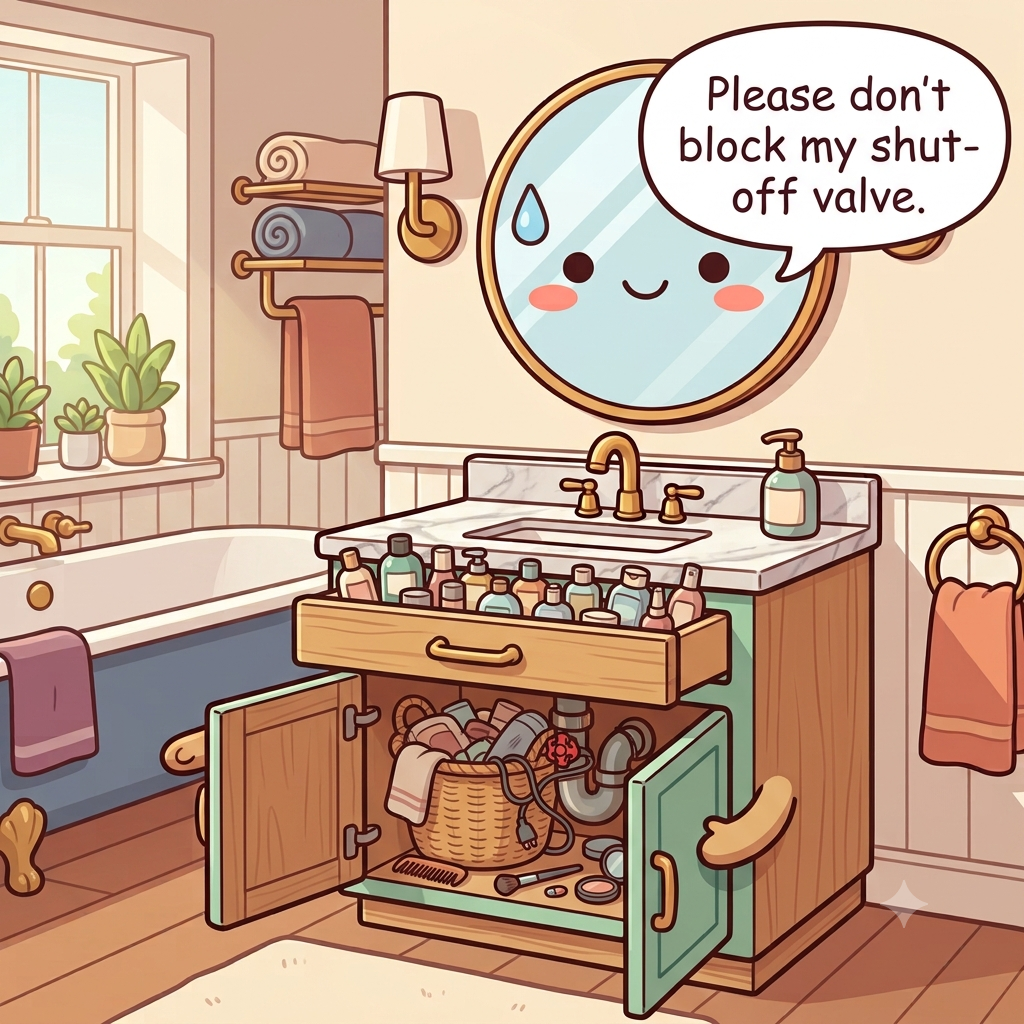
At the end of the evening, return every product to its drawer or bin, wipe the sink area, and leave the counter ready for the morning. Put caps back on, hang damp cloths where they can dry, and move empty containers out. This should take less time than searching through a cluttered counter the next day.
Once a month, check medicine and personal-care expiration dates, clean trays, and remove products that have changed smell, color, or texture. If moisture appears inside the cabinet, inspect for plumbing or ventilation problems before refilling the storage.
Use the monthly part of the routine to clean the organizers themselves and inspect the cabinet for dampness. Recheck expiration dates and storage labels, especially on medicine and products that may have been moved into the bathroom for convenience. A vanity that stays dry and easy to reset needs less aggressive decluttering later. If one product is repeatedly left out because its assigned bin is hard to reach, move the bin rather than treating the behavior as a discipline problem.
Bathroom storage constraints
- Move medication that is sensitive to heat or humidity to a drier location unless its label says bathroom storage is appropriate.
- Keep cleaners, sharp grooming tools, and other hazardous items out of children’s reach and secured where needed.
- Keep plumbing shutoffs and drain connections accessible inside a sink-base vanity.
Sources: U.S. CPSC — Poison Prevention Information Center; U.S. FDA — OTC medicine storage guidance
Renter-friendly option
Use shallow drawer trays, freestanding pull-outs, handled caddies, and removable door hooks instead of permanent rails. Keep any adhesive away from finishes that may peel when removed.
30-second success check
- Daily routine items are reachable in one visible layer without unloading reserve products.
- Pipes and shutoffs remain accessible and the cabinet floor is easy to inspect for leaks.
- Medication follows its label storage instructions in a secure place away from excessive heat or humidity.
- The counter can be reset without leaving a pile of products with no return path.
Questions that come up
Frequently asked questions
Part of Closets, Clothing & Personal Storage — 13 guides.