The short answer
Treat plumbing, shutoff valves, and any disposal or filter lines as permanent no-storage zones. Group only kitchen-use supplies in removable caddies or shallow pull-outs, keep the cabinet floor visible enough to spot a leak, and store anything water-sensitive somewhere else.
What to gather before you start
- A tape measure and painter's tape
- Two or three washable caddies or open bins
- A shallow tray or water-resistant cabinet mat
- A narrow tiered shelf or pull-out bin, only if it clears the pipes
- Simple labels and a marker
- A small container for dishwasher tablets or small refills
Measure first. Buy only the pieces that solve a specific access problem.
Measure before you buy an under-sink organizer
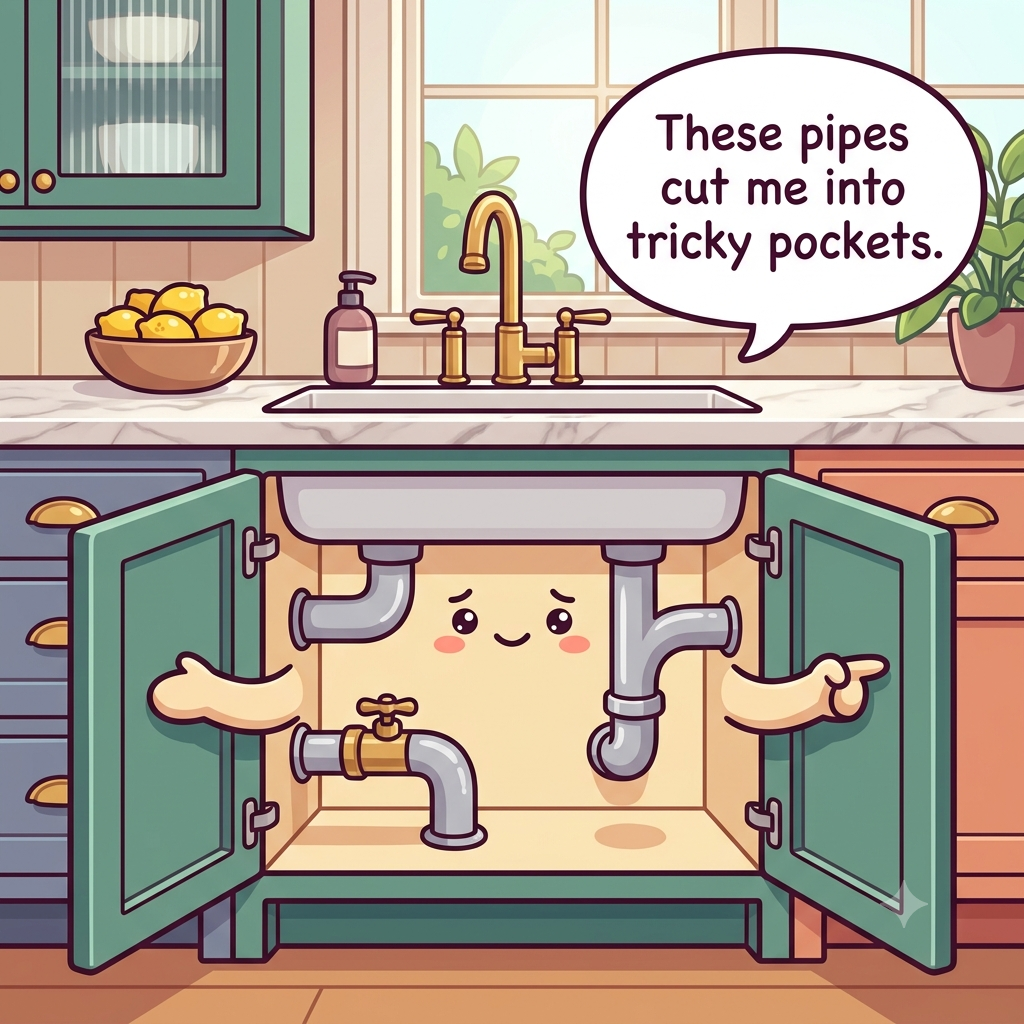
Treat the cabinet as several usable rectangles around the plumbing, not one empty box.
- Measure the clear width on both sides of the drain trap or disposal.
- Measure usable depth from the closed door to the back wall without blocking shutoff valves.
- Measure the door opening and hinge swing; an organizer that fits inside may still be too wide to pass through the opening.
- Note the lowest pipe, hose, filter, disposal body, or reset button that an organizer must clear.
- Keep enough open floor or a liftable liner so new moisture is easy to see.
Empty it out and map the obstacles
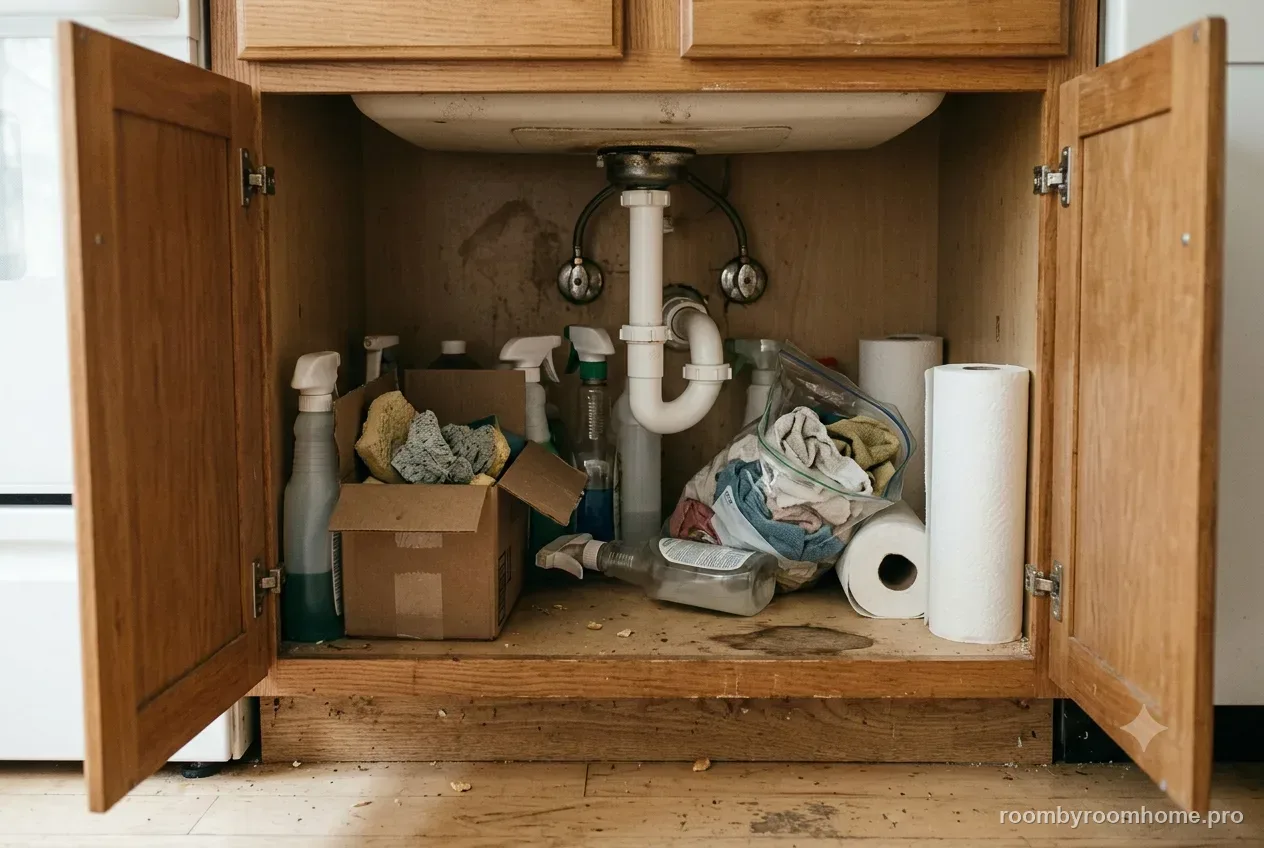
Empty the cabinet completely, wipe the floor dry, and look at the plumbing before you buy an organizer. Mark the drain trap, supply lines, shutoff valves, garbage-disposal body, filter hoses, hinges, and any low points where a bin would snag. Measure the usable rectangles around those obstacles rather than measuring the cabinet as one empty box.
Keep every shutoff valve reachable by hand and make sure a plumber could remove the trap without first dismantling a fixed storage system. If the cabinet floor shows staining, swelling, or dampness, deal with the leak before putting supplies back. A clean, visible floor is also your simplest early-warning system for a slow drip.
Write the measurements down before shopping: clear width on each side of the drain, usable depth, door opening, hinge swing, and the lowest pipe or disposal point. A product can fit the cabinet's nominal width and still be unusable if it cannot pass through the door or clear a hinge. Take a photo of the empty cabinet so you can compare organizer shapes to the actual plumbing layout. If you see mineral tracks, warped particleboard, rust around fittings, or a recurring damp smell, photograph the condition and fix the moisture source before restoring storage.
Keep only kitchen-use supplies inside
Limit this cabinet to things used at the kitchen sink or for nearby cleaning: dishwasher products, trash bags, sponges, gloves, and a small stock of cleaners. Move bathroom cleaners, bulk refills, paper goods, pet supplies, medicine, and anything unrelated to the kitchen to another zone.
Cleaning chemicals should stay in their original labeled containers. In a home with children, CPSC guidance favors locked storage and keeping chemicals out of sight and reach; an under-sink cabinet therefore needs a reliable child-resistant lock if hazardous products remain there. Never decant cleaners into drink bottles or food containers, and never store products together if their labels warn against it.
Set a firm inventory boundary: if an item is not used for dishwashing, trash handling, or routine kitchen cleaning, give it another home. Bulk refills can live in a utility closet while one working bottle stays near the sink. This keeps hazardous products from multiplying in a low cabinet and preserves enough open floor to notice moisture quickly.
Build removable zones, not a fixed wall of storage
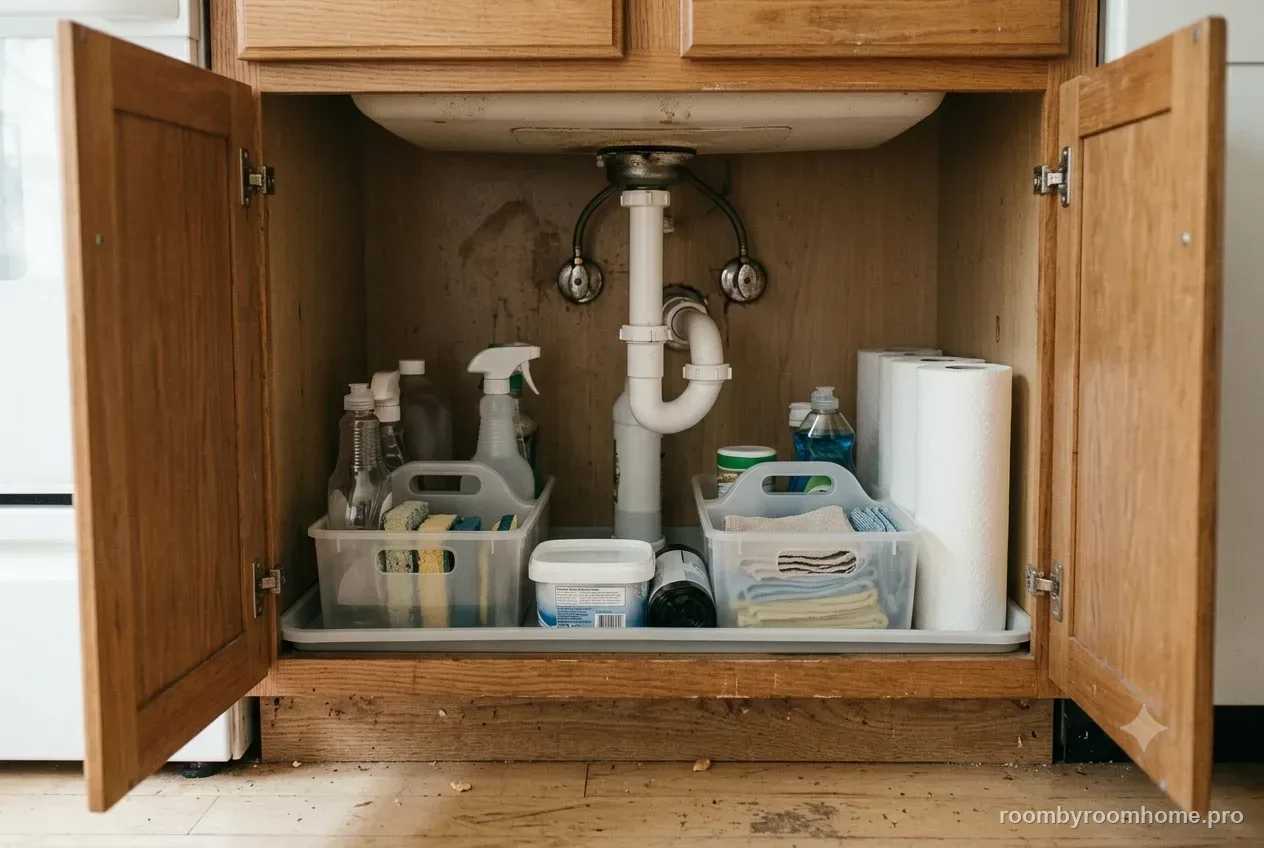
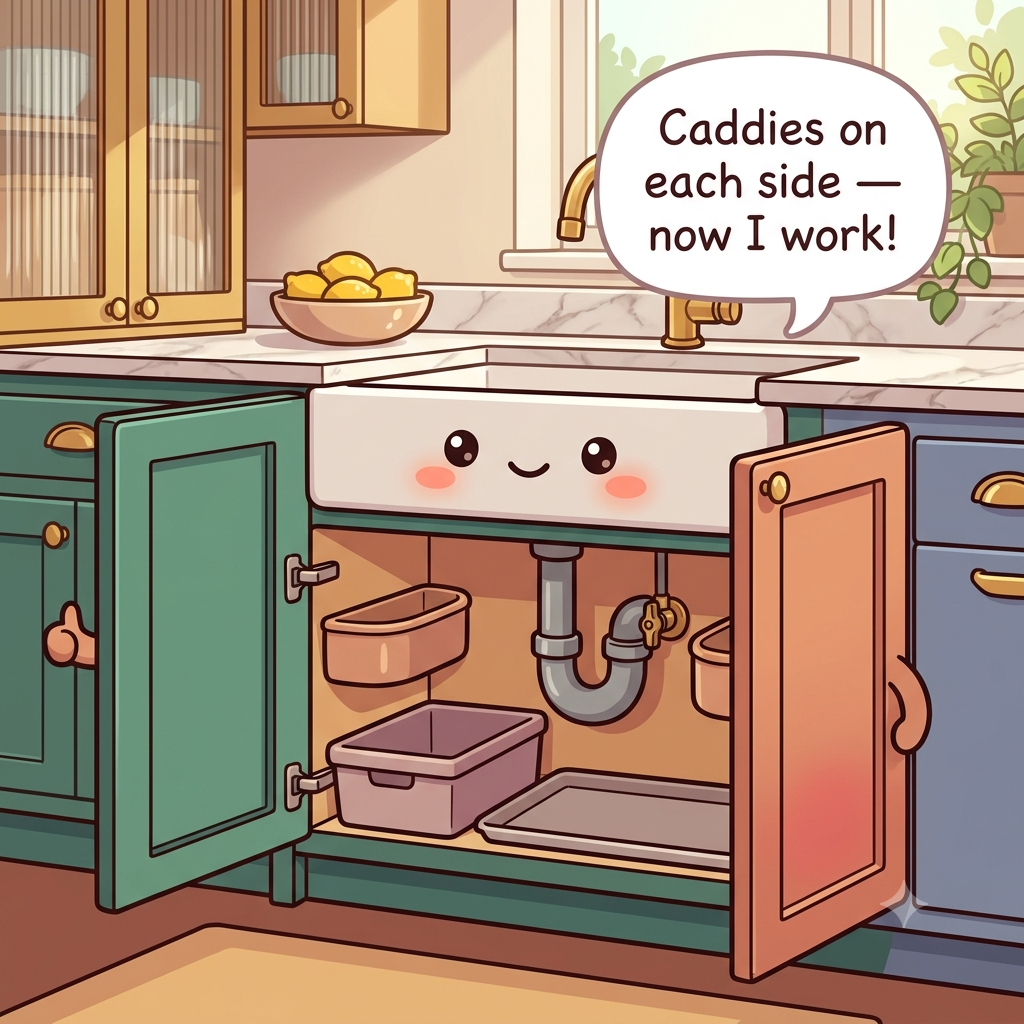
Use two or three removable zones instead of filling every inch. A handled caddy works well for spray cleaners, a shallow bin can hold dishwasher tabs and sponges, and a narrow pull-out can use a clear strip beside the plumbing. Choose pieces that lift or slide out without touching pipes, valves, or the disposal.
Removable storage is easier to clean after a spill and much faster to clear if a leak starts. Avoid a tall stack of interlocking drawers that traps the plumbing behind it, and do not wedge bins so tightly that a pipe has to carry their weight. If a renter cannot screw a rail into the cabinet, freestanding caddies, tension solutions, and removable hooks provide storage without permanent changes.
Favor organizers that can leave the cabinet with their contents still inside. A handled caddy is useful when you clean several kitchen surfaces; a shallow pull-out works in a narrow strip beside the trap; a washable tray can catch a small bottle leak without concealing the entire cabinet floor. Test each piece empty and full before committing to its position.
Keep plumbing access and leaks easy to see
Leave an open inspection lane under the trap and around supply connections. Do not line the entire base with cardboard, fabric, or a deep tray that can hide water; if you use a waterproof liner, choose one you can lift easily and check beneath it. Keep towels, paper products, wooden boards, and other items that would be ruined by a leak elsewhere.
Check that nothing presses against flexible supply hoses or interferes with a disposal reset button. When you put the cabinet back together, crouch down and verify that you can still see the floor at the back and reach each valve. The goal is not maximum capacity; it is organized storage that can be emptied in seconds when plumbing needs attention.
After reloading the cabinet, do a service-access test. You should be able to reach each shutoff valve, see the connections at the back, and remove the caddies without unloading a stack of unrelated supplies. If a plumber would have to dismantle the organizer before touching the trap or valve, the storage plan is too dense.
Put the things you use most at the front
Place daily or weekly items at the front edge: dishwasher detergent, trash-bag rolls, a sponge caddy, and your most-used spray. Put occasional products behind them only if the front container can be lifted out in one motion. Keep duplicates together so you can see when you already have a refill before buying another.
Avoid storing a frequently used bottle behind a pipe, because repeated reaching encourages spills and eventually pushes other items into the plumbing zone. Labels should face the door, and some working clearance around a caddy is more useful than a cabinet packed so tightly that every retrieval causes an avalanche.
Use frequency to break ties between otherwise similar items. The detergent or trash bags used every day belong at the front; specialty cleaners used monthly can sit behind a removable caddy. Keep labels facing the door and leave enough working room that you can return a bottle upright without pushing another product into a pipe.
What breaks an under-kitchen-sink system
Do not buy a large under-sink organizer before measuring the pipe layout, and do not screw shelves across a valve or trap. Avoid stacking products directly in front of the plumbing, keeping loose rags on the floor, or storing food, pet treats, medicine, batteries, or paper goods where a leak or chemical spill could affect them.
Do not mix cleaners or transfer them into unmarked containers. If children can reach the cabinet, a decorative latch is not enough for hazardous chemicals; use an appropriate lock or move the products to locked high storage. Also retire leaking spray bottles, swollen cardboard packaging, and duplicate products you no longer use instead of letting the cabinet become overflow storage.
Do not treat an under-sink cabinet as overflow just because the door closes. Overfilling hides drips, makes valves harder to reach, and increases the chance that a leaking bottle damages other supplies. If the cabinet repeatedly becomes crowded, reduce duplicate stock before adding another organizer.

The two-minute weekly reset
Once a week, lift out the caddies, wipe any drips, and look directly at the cabinet floor and pipe joints. Put bottles upright with caps closed, return each product to its zone, and move empty packages to recycling or trash. This check should be short enough to do while the dishwasher runs.
If you find moisture, a musty smell, fresh staining, or a swollen cabinet panel, stop treating it as an organizing problem and investigate the water source. Refill only the supplies you actually use, and keep the plumbing lane open after every reset so the system stays useful rather than gradually filling in.
Use the reset to verify the system, not merely straighten it. Confirm that caps are secure, no bottle is leaking, the floor is dry, and the valve and trap area are still open. If a refill has pushed the cabinet past its boundary, move the excess out immediately rather than waiting for the next full declutter.
What belongs here—and what should live elsewhere
Keep here
- Dishwasher products used at this sink
- Trash bags and sink-side cleaning tools
- A small working set of cleaners in original labeled containers
- Sponges, gloves, and a removable cleaning caddy
Store elsewhere
- Paper goods, wood items, and anything a leak would ruin
- Bulk refills that crowd plumbing access
- Medication or food
- Unlabeled chemicals or cleaners stored in food or drink containers
Safety & service access
- Keep cleaning chemicals in original labeled containers; never decant them into food or drink containers.
- In homes with children, hazardous cleaners stored in a low cabinet need secure child-resistant storage.
- Keep shutoff valves, the trap, disposal service points, and leak-prone connections reachable and visible.
Renter-friendly option
Use freestanding handled caddies, small turntables, tension solutions, or removable hooks rather than screwing rails through a cabinet you do not own. Keep adhesive products off finishes that the manufacturer or lease says they may damage.
30-second success check
- Valves, trap, supply lines, and the cabinet floor remain visible and reachable without removing fixed storage.
- The daily-use caddy or bin can be pulled out in one controlled movement.
- Nothing that would be ruined by a leak is stored on the cabinet floor.
- In a home with children, cleaners remain in original containers and secured out of reach.
Questions that come up
Frequently asked questions
Part of Kitchen Cabinets & Work Zones — 8 guides.