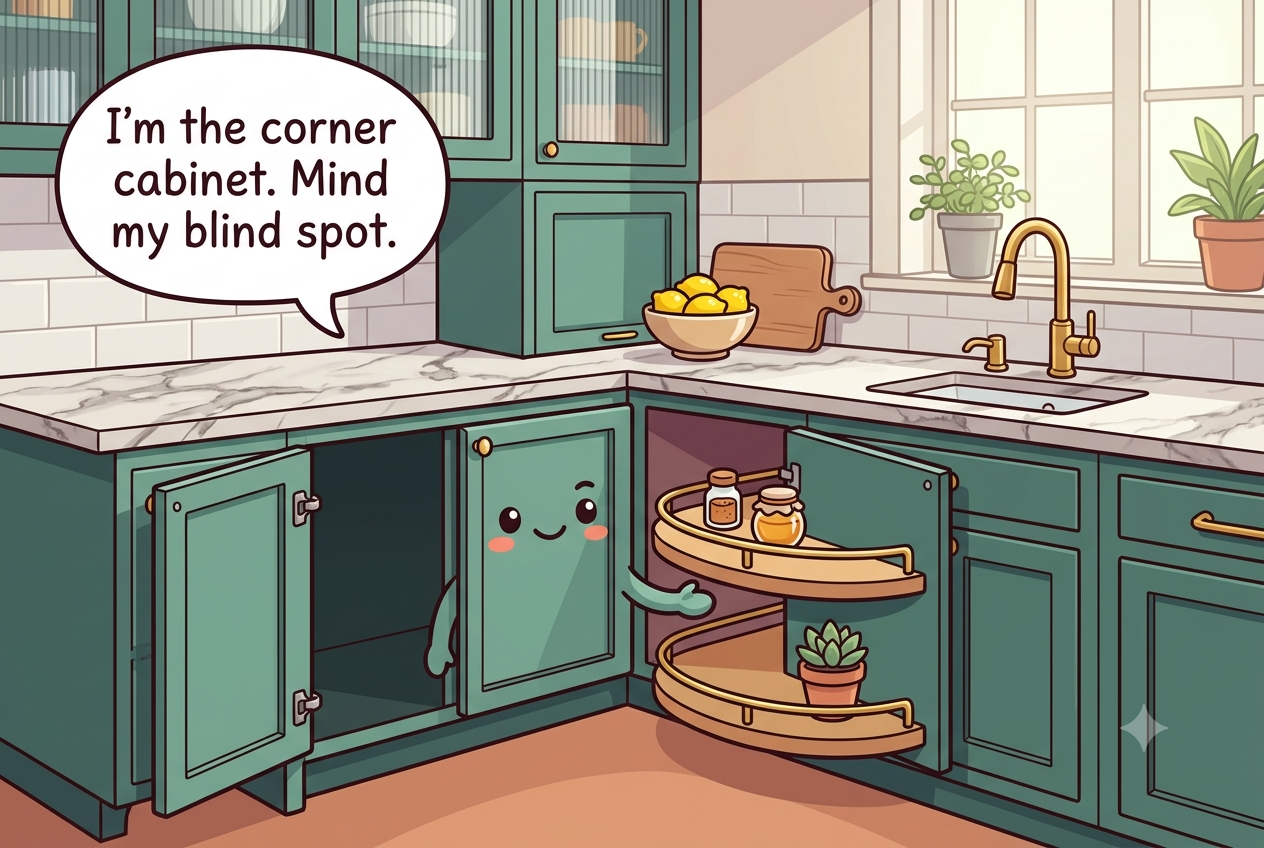
The short answer
Empty the cabinet and identify the true blind zone before choosing hardware. Match turntables, pull-outs, or handled bins to the way the doors and shelves actually open, keep everyday items in the reachable front area, and reserve the retrievable back for light or less-used pieces rather than loose heavy cookware.
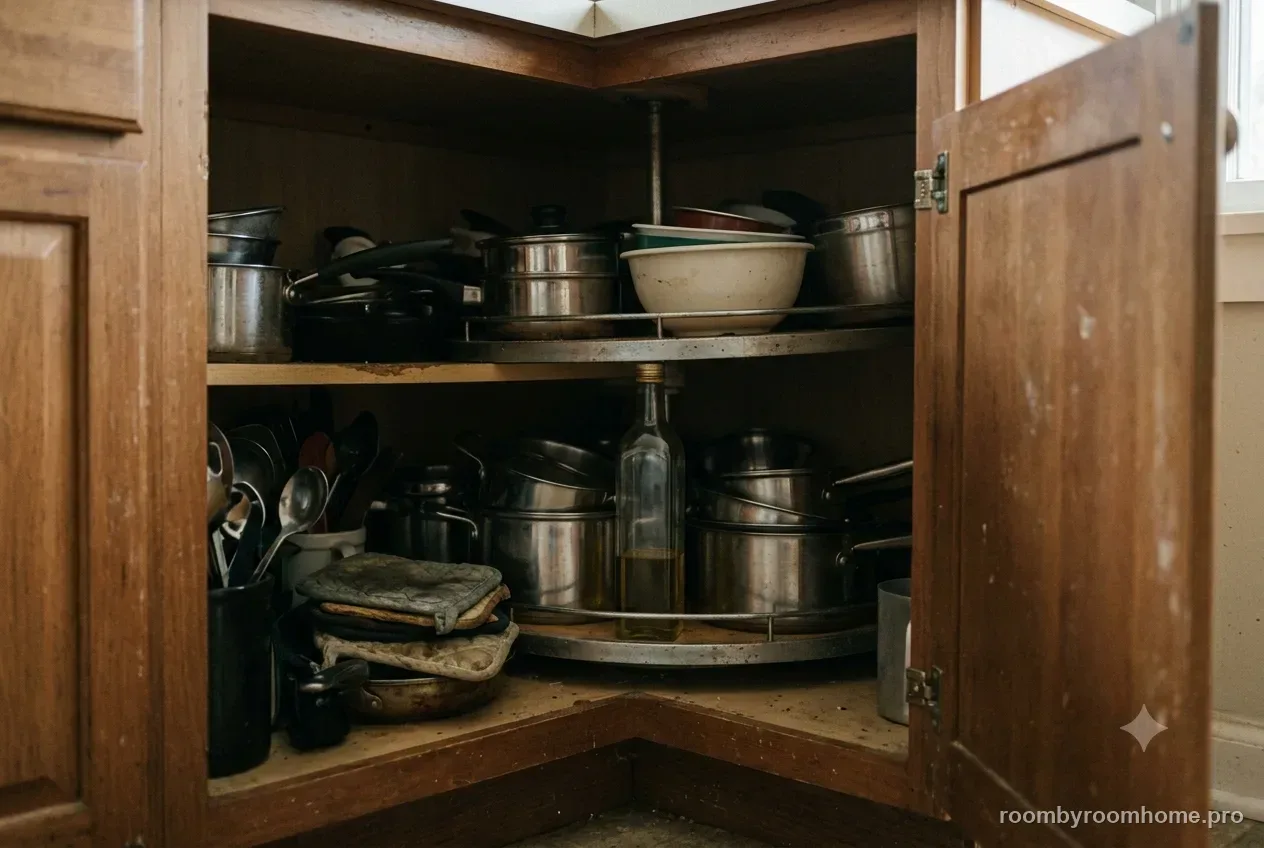
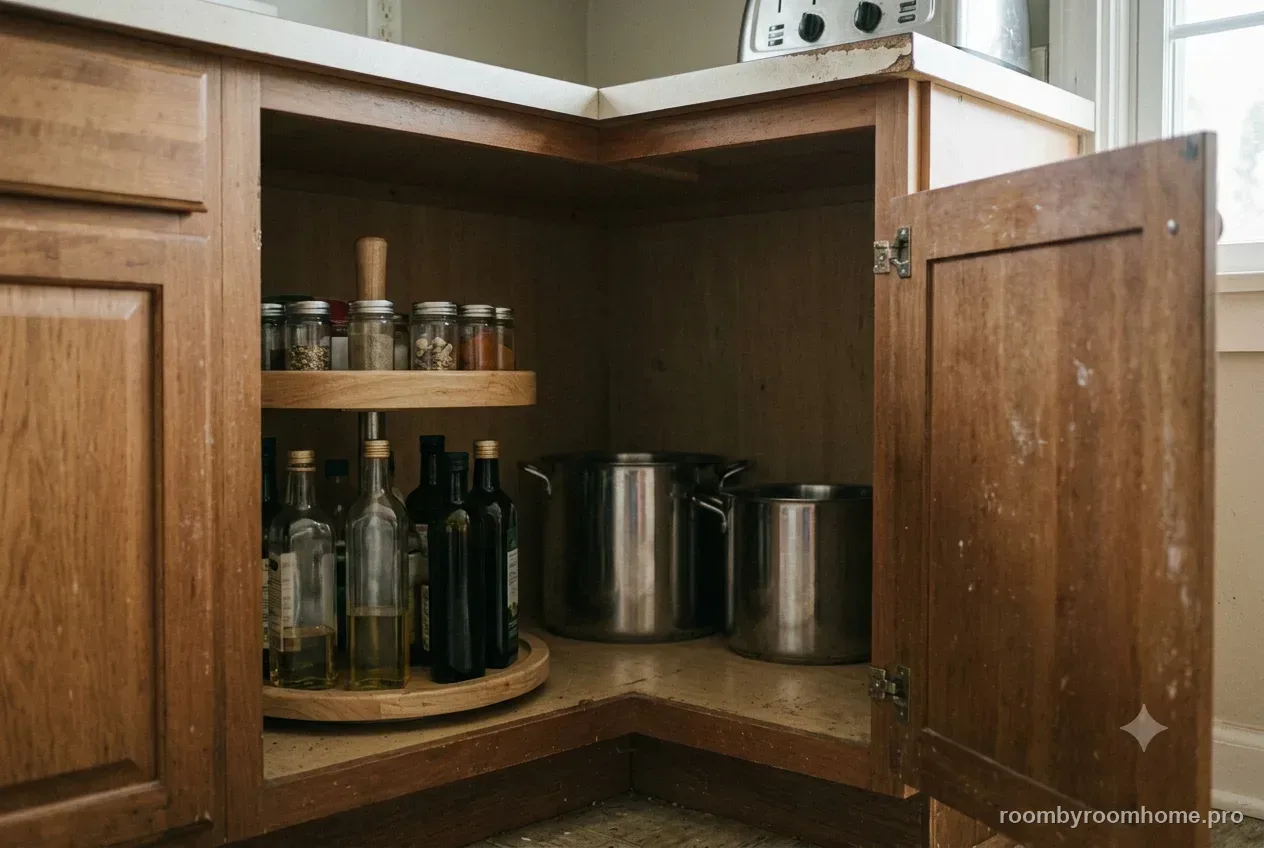
What to gather before you start
- A flashlight and a tape measure
- A turntable or two, sized to the shelf, only after you have measured
- A pull-out or half-moon unit, only if the door opening allows it
- Shelf risers or a small wire shelf for vertical stacking
- Non-slip liner for any rotating surface
- Labels for back-row containers
Measure first. Buy only the pieces that solve a specific access problem.
Map the access path before choosing corner hardware
The useful capacity of a corner cabinet is limited by what can pass through the opening and be retrieved—not by the total interior volume.
- Measure door opening width and height, hinge projection, shelf depth, and the deepest reachable point.
- Test whether a handled bin or turntable can enter and exit through the opening when loaded.
- Keep heavy cookware close to the opening or on hardware rated for its load.
- Use the blindest area for lightweight, low-frequency items that can be retrieved as one unit.
- If considering fitted pull-out hardware, verify cabinet construction and the manufacturer installation template before drilling.
Empty it and find the blind zone
Remove everything and look into the cabinet from the position you normally stand. Identify which shelf areas can be reached directly, which require leaning, and which disappear behind a face frame or neighboring cabinet wall. Measure the door opening as well as the internal shelf; an organizer that fits inside but cannot pass through the opening is useless.
Check hinges, shelf pins, pipes, and any center stile before planning hardware. Wipe the shelves and test whether they are fixed or adjustable. The goal is to map reachable front space and a back zone that can be retrieved with a pull-out, turntable, or handled container—not to fill the blind corner simply because it exists.
Measure the door opening, face-frame width, hinge intrusion, shelf shape, and the depth of the blind section. If you are considering a turntable or pull-out, also trace the movement it needs to rotate or extend. Corner hardware fails when only the interior square footage is measured and the path through the doorway is ignored. Mark the point beyond which your hand can no longer reach comfortably; that is the practical start of the blind zone. Anything stored past it should come forward mechanically or inside a removable container.
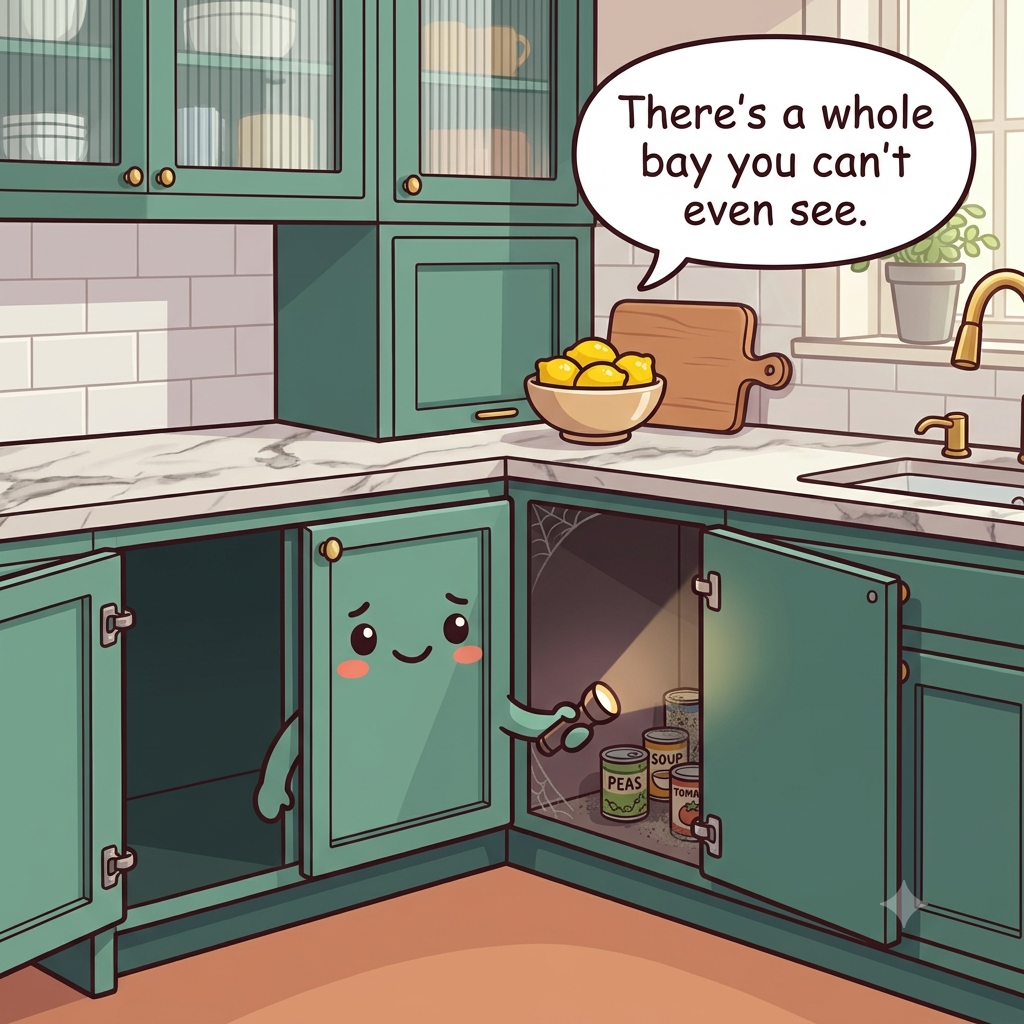
Decide what belongs there before buying a spinner
Choose categories that tolerate awkward access. Large lightweight mixing bowls, baking supplies in handled bins, occasional serving pieces, or small appliances used less often may suit the back better than tiny packets or heavy cast iron. Keep the things you reach for every day in a cabinet with direct access if you have that option.
A turntable is useful only when the shelf shape and door opening let it rotate freely and when the items fit without falling off the edge. Do not buy a large spinner just because the cabinet is large. First decide whether the problem is rotation, pull-out access, or simply too much inventory.
The back zone should hold items that can be moved as one controlled unit, not dozens of loose small pieces. A handled bin of baking supplies or a nested set of lightweight bowls is easier to retrieve than scattered lids. If an item is heavy and frequently used, another base cabinet with direct access is usually a better home.
Match hardware to how the cabinet opens
For an L-shaped corner with wide double doors, one or two turntables may expose the back effectively. A blind corner behind a single narrow door often works better with a pull-out shelf system or separate handled bins that can be lifted forward. Follow cabinet and hardware manufacturer instructions for mounting and weight limits.
Renters or anyone avoiding permanent installation can use freestanding turntables, shelf risers, and handled bins. Test the full door swing and make sure hinges do not collide with the organizer. A good solution should move through the opening without scraping doors or forcing you to unload it first.
Test freestanding organizers before installing permanent hardware. A turntable needs enough radius to spin without hitting hinges or the face frame; a pull-out needs a clear extension path; handled bins need to clear the opening when full. Follow the cabinet or hardware maker's mounting and load instructions rather than assuming every corner shelf can carry the same weight.
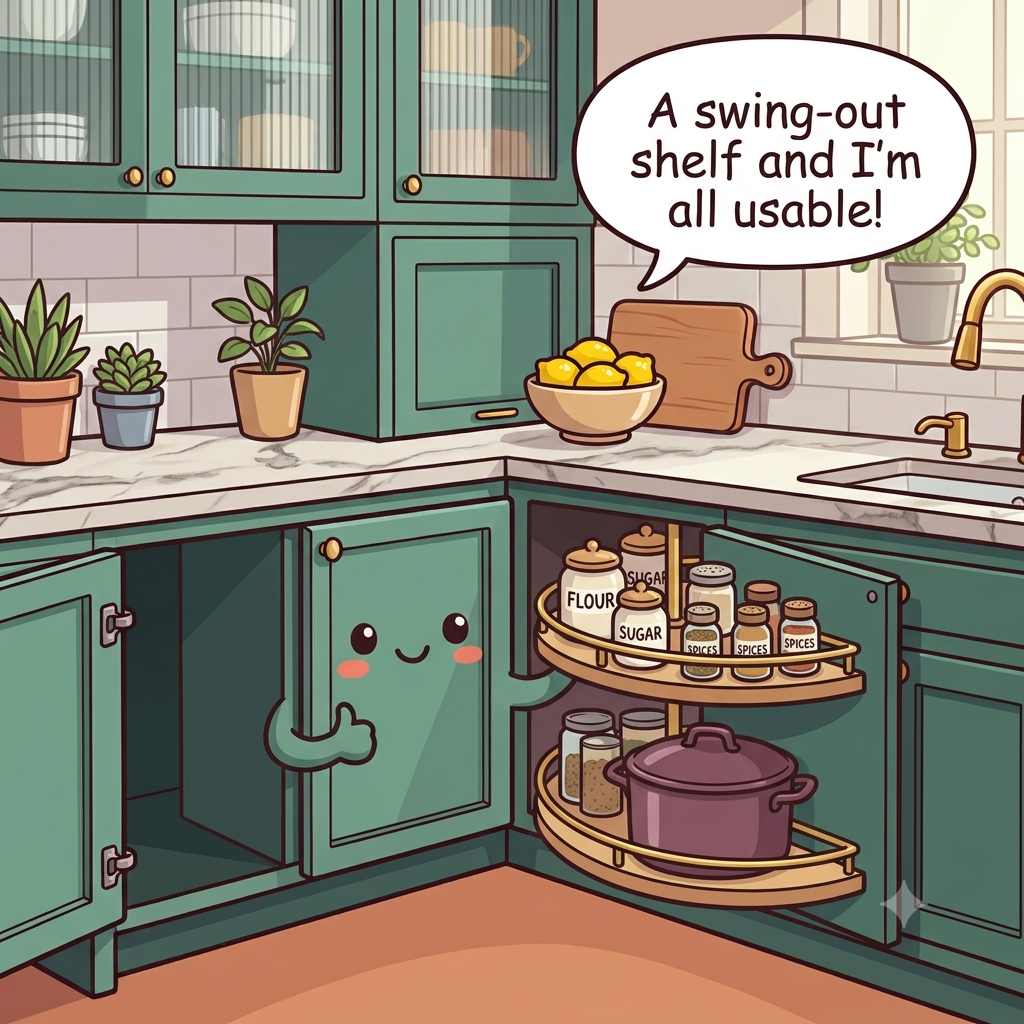
Zone it: reachable front, retrievable back
Keep active items in the front half where you can grab them directly. Put less-used categories in the back only if the entire category can come forward on a turntable, pull-out, or handled bin. Label the front of a back-zone bin so you know what is there without crawling into the cabinet.
Do not create a second row of loose cans, lids, or small gadgets behind the first. Blind corners punish loose storage because the back row becomes invisible. If an item cannot be retrieved in one controlled movement, move it to a better cabinet or change the container.
Keep the front zone loose enough that the back mechanism or bin can actually move. If a front stack must be unloaded before the turntable spins, the two zones are competing for the same path. Labels on handled back-zone bins should face the doorway so you can identify the category before reaching around the corner. For food, keep dates and labels visible on the container that comes forward rather than relying on memory. For cookware, store complete sets together only when their combined weight is still easy to control.
Load by weight and frequency
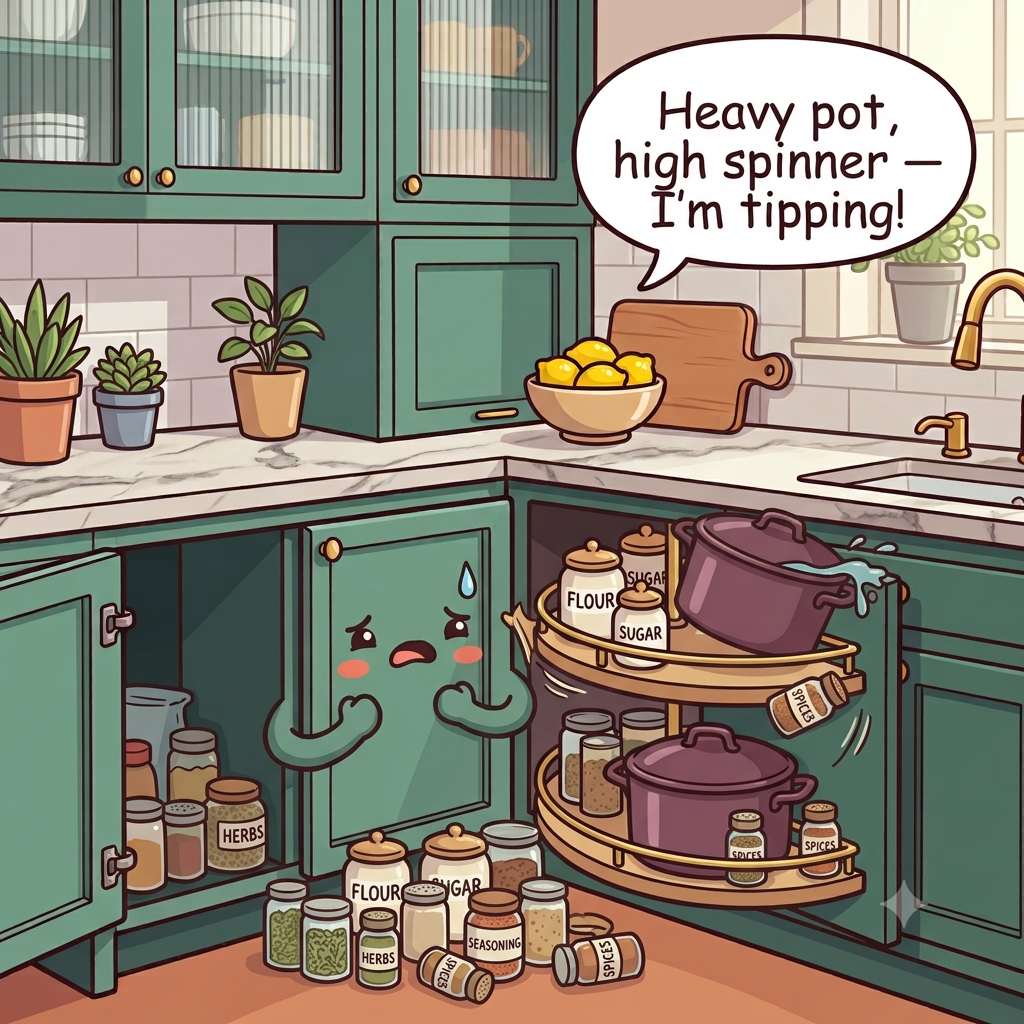
Keep heavy pots, cast iron, and dense small appliances on the lowest stable shelf and as close to the opening as practical. Lighter bowls, bakeware, and occasional items can go farther back or higher. Check the cabinet shelf and organizer weight ratings rather than assuming a turntable can carry heavy cookware.
Frequent items should not require lifting a heavy object over another. Use vertical lid or bakeware dividers only if they are stable and do not overload the shelf. If a pull-out sags, a turntable binds, or a shelf bows, reduce the load immediately and follow the manufacturer's capacity guidance.
Treat shelf and hardware ratings as the limit for heavy cookware. Cast iron and dense appliances belong low and near the opening unless a manufacturer-rated pull-out is specifically designed to carry them. Lighter, less-used pieces can occupy the awkward back area because retrieving them does not require leaning into the cabinet with a heavy load.
What sends a corner cabinet back to chaos
Do not treat the blind corner as free capacity and pack it with objects you cannot reach. Avoid heavy cookware on a small plastic spinner, loose food in the back row, organizers that block hinges, and fixed hardware installed without confirming the door opening. Do not stack fragile dishes where you have to reach around a corner to lift them.
Another mistake is using one enormous organizer when two smaller zones would be easier to control. If a turntable has to be emptied to rotate or a bin cannot clear the doorway, it is not solving the access problem. Keep the system simple enough to reset after cooking.
Do not buy the largest lazy Susan that appears to fit, overload plastic spinners with cookware, or create a loose second row behind the first. A corner cabinet is successful when the blind space is retrievable, not when every cubic inch is occupied. If an organizer binds or a shelf bows, reduce the load and correct the fit immediately.
The monthly reset
Once a month, rotate or pull out every back-zone container and check for forgotten food, duplicate gadgets, or pieces that migrated behind the active zone. Wipe crumbs and make sure the hardware still moves freely. Return the most-used items to the easiest positions.
If you repeatedly skip an item because it is too hard to retrieve, relocate it rather than accepting the friction. Corner storage stays useful when every item has a predictable retrieval path from the door to your hand.
Once a month, move every turntable or handled bin through its full travel and wipe the newly exposed shelf. Check food dates, remove duplicate gadgets, and notice anything you have skipped because access is annoying. Rehome those problem items rather than allowing the blind corner to become permanent storage for things nobody retrieves. Listen and look for hardware changes during the check: scraping, binding, loose fasteners, or a shelf that starts to sag are signs to unload the mechanism and follow the manufacturer's service guidance.
Choose contents by retrieval cost
Keep here
- Daily cookware near the opening
- Lightweight occasional appliances or serving pieces in retrievable bins
- Stable items that fit the rotation or pull-out hardware without overhang
Store elsewhere
- Very heavy cast iron deep in the blind corner
- Tiny loose items that can fall behind hardware
- Daily-use items that require unloading the front to reach
- Anything that blocks hinge or pull-out movement
Renter-friendly option
Start with handled bins or a freestanding turntable that can pass through the opening. Avoid fitted blind-corner hardware that requires drilling unless the landlord approves it.
30-second success check
- Every item in the blind zone can come forward on a turntable, pull-out, or handled container.
- Front-zone storage does not block the path of the back-zone mechanism.
- Heavy cookware stays low and close to the opening unless hardware is specifically rated for the load.
- Doors and hinges clear the organizer through its full movement.
Questions that come up
Frequently asked questions
Part of Kitchen Cabinets & Work Zones — 8 guides.