The short answer
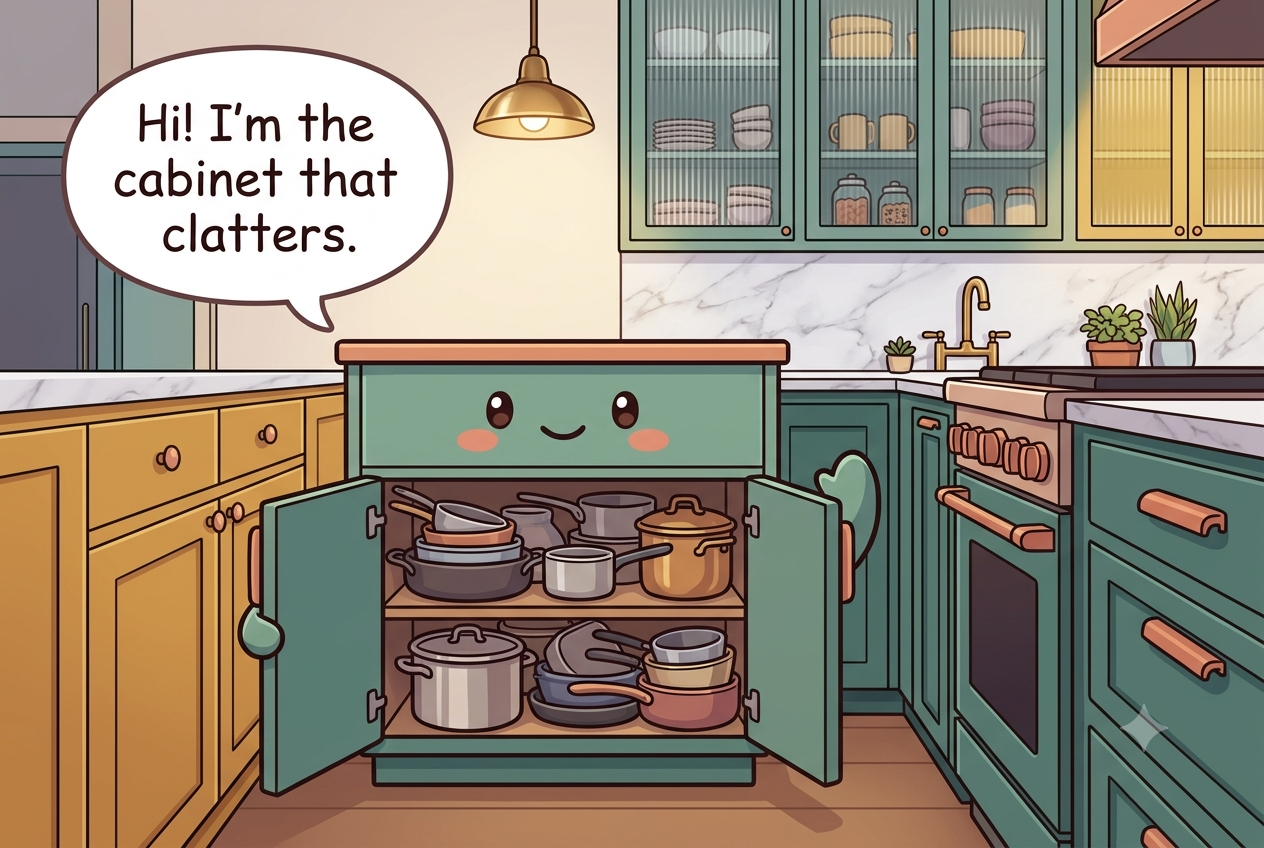
Keep the few pans you cook with most at the front of a low base cabinet, with the heaviest pieces on the lowest stable shelf. Nest only cookware that stacks safely, add pan protectors where finishes can scratch, stand awkward pans when space allows, and give lids their own vertical rack or shallow pull-out so you do not unstack the cabinet to find one.
What to gather before you start
- A tape measure for the cabinet's inside height and depth
- A lid rack, or a slim organizer for the cabinet door
- A vertical divider set for flat pans and baking sheets
- Felt or fabric liners to slip between nested pans
- A low shelf riser or pull-out tray, if it fits
- A donation box for the pans you don't cook with
Measure first. Buy only the pieces that solve a specific access problem.
Empty it and be honest about what you cook with
Take every pot, pan, lid, steamer insert, and specialty piece out of the cabinet. Group complete sets and identify what was used in the last month versus what has not been touched in a year. Check for warped bases, loose handles, badly damaged nonstick coatings, and pieces you avoid because they no longer perform well; follow the cookware maker's guidance when deciding whether damaged cookware should be retired.
Measure the cabinet opening, shelf depth, and any plumbing or hinge obstructions before adding racks. Keep the cookware you genuinely use in this prime low storage and move rarely used roasting pans or specialty equipment to another appropriate cabinet if daily pieces are being buried.
Measure the cabinet opening, usable shelf width, hinge intrusion, and the height of your tallest everyday pot before buying dividers. Lay out only the cookware that earns space in this cabinet and move specialty pieces elsewhere. A pan you use once a year should not force the daily skillet behind a stack you have to unload. Check handles as well as pan diameter when measuring. A skillet may fit the shelf yet still block the cabinet door because its handle crosses the opening. Turn handles inward during the dry-fit and confirm the heaviest piece can be lifted out without twisting around another pan.
Separate the daily few from the rest
Choose the small group that handles most weekday cooking—perhaps one skillet, one saucepan, and one larger pot—and place those within one easy reach. Keep matching lids beside them or in the nearest lid rack. Put occasional stockpots, Dutch ovens, or specialty pans behind or to the side only if they can still be removed without lifting the daily stack.
Use frequency rather than matching sets to determine placement. A beautiful complete set does not need to live together if half of it is used twice a year. The goal is to reduce the number of heavy objects you move for an ordinary meal.
Keep the everyday skillet, saucepan, and pot where they can be removed without lifting a heavier piece first. Occasional roasting pans, stockpots, or duplicate sizes can move deeper or to another zone. If the daily group still fills the whole cabinet, reduce duplicates before adding another shelf.
Nest what stacks and stand what doesn't
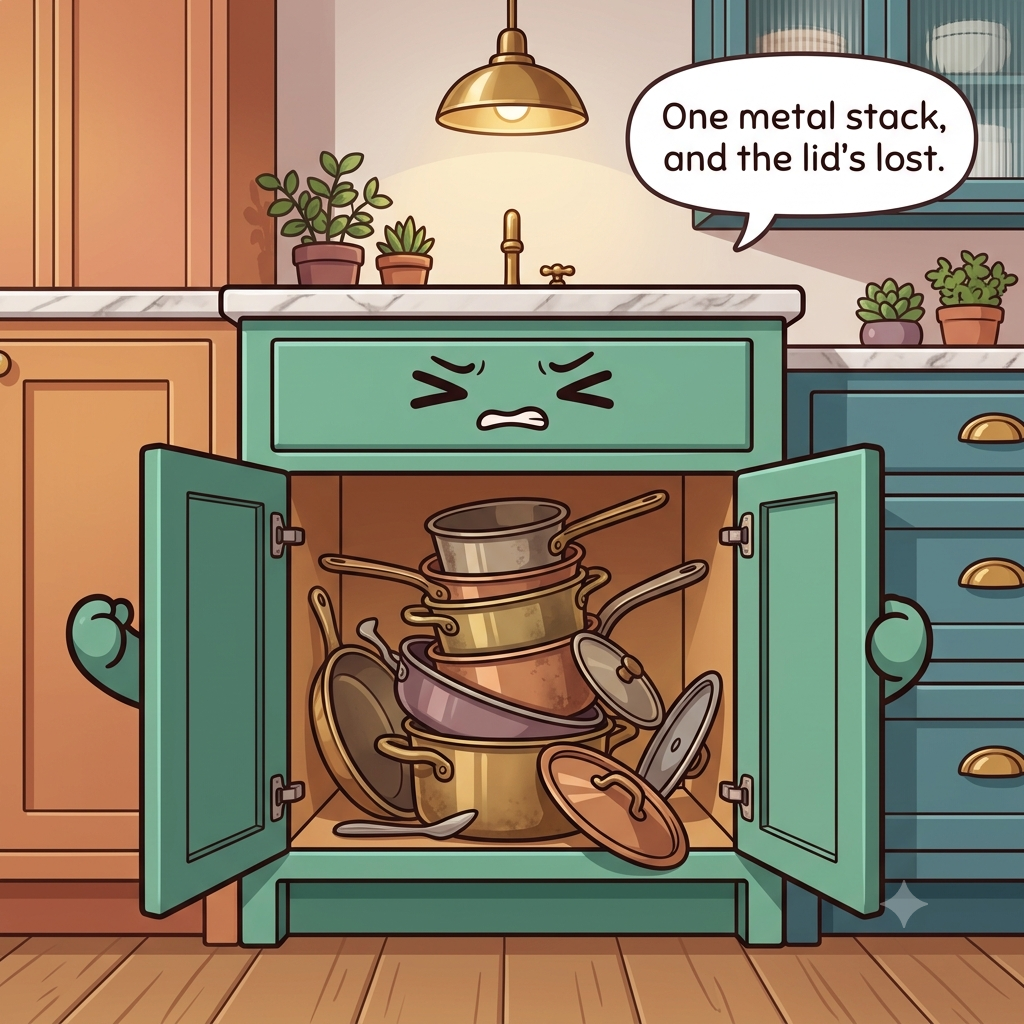
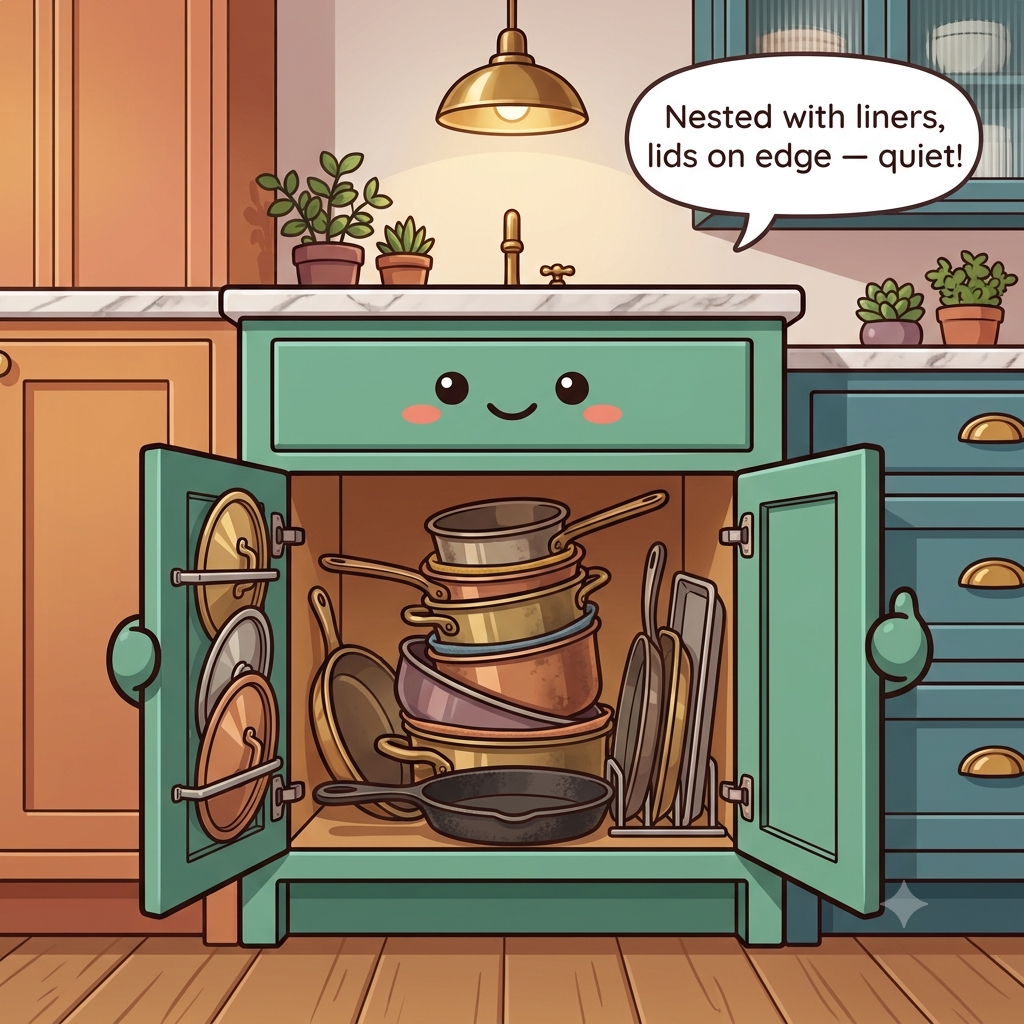
Nest pots and pans only when their shapes and finishes tolerate it. Use felt, silicone, or purpose-made pan protectors between surfaces that scratch easily, and keep stacks low enough that the bottom piece can be removed safely. Do not jam handles against cabinet doors or hinges where they can prevent closure.
Stand frying pans, cutting boards, or bakeware vertically in a sturdy divider when the cabinet height permits. Vertical storage can make one pan retrievable without lifting five, but the divider must be stable and rated for the load. Heavy cast iron is often better stored flat and low than balanced upright.
Use pan protectors or a soft separator when stacked surfaces are prone to scratching, and keep the stack short enough that one pan can leave without rebuilding everything. Sheet pans and awkward shallow cookware often work better upright in a stable divider that is rated and sized for the cabinet. Keep lids and removable handles out of the nesting stack if they make the stack unstable. For nonstick or enamel surfaces, use a soft separator approved for the cookware material rather than relying on paper towels that may hold moisture or tear.
Give the lids their own home
Store lids vertically in a rack, adjustable divider, or narrow bin with handles facing consistently so sizes are easy to compare. If cabinet doors can safely support a purpose-built lid rack, follow the hardware and cabinet manufacturer's load and clearance instructions; make sure protruding handles do not hit shelves when the door closes.
Keep glass lids where they cannot fall from height or bang against hard cookware. If a lid is used with only one specialty pot, storing it with that pot may be simpler than adding it to the daily lid file. Remove orphan lids that no longer match any cookware.
File lids vertically in a rack, divider, or narrow bin where the handles do not collide, and sort by diameter or the pot they fit. Very large or unusual lids may be easier to store with their cookware. A lid system is working when you can identify and remove one without lifting a pile. If the cabinet door is strong enough and the manufacturer permits an attached rack, door storage can work for lightweight lids; otherwise use an internal divider. In a rental, a freestanding lid rack avoids permanent hardware and can be moved when the cookware mix changes.
Load heavy low and daily at the front
Keep cast iron, Dutch ovens, and other dense cookware on the lowest stable shelf and close to the cabinet opening. Avoid overhead storage for items that require two hands or an awkward lift. Check shelf pins, pull-out hardware, and organizer load ratings before placing several heavy pots on one accessory.
Put lighter and less-used pieces farther back. Leave a hand-width retrieval path around handles where practical so you can lift a pot without scraping the cabinet or knocking the lid rack over. If a shelf bows or a pull-out feels strained, reduce the load rather than forcing it.
Run a two-hand retrieval test with the heaviest pot you use regularly. You should be able to grip it securely, lift it straight out, and set it on the counter without first moving another heavy object or leaning deep into a blind corner. If the shelf bows, a pull-out drags, or the pot has to be twisted around a lid rack, reduce the load or change the location rather than normalizing the awkward lift.
What breaks a pots-and-pans system
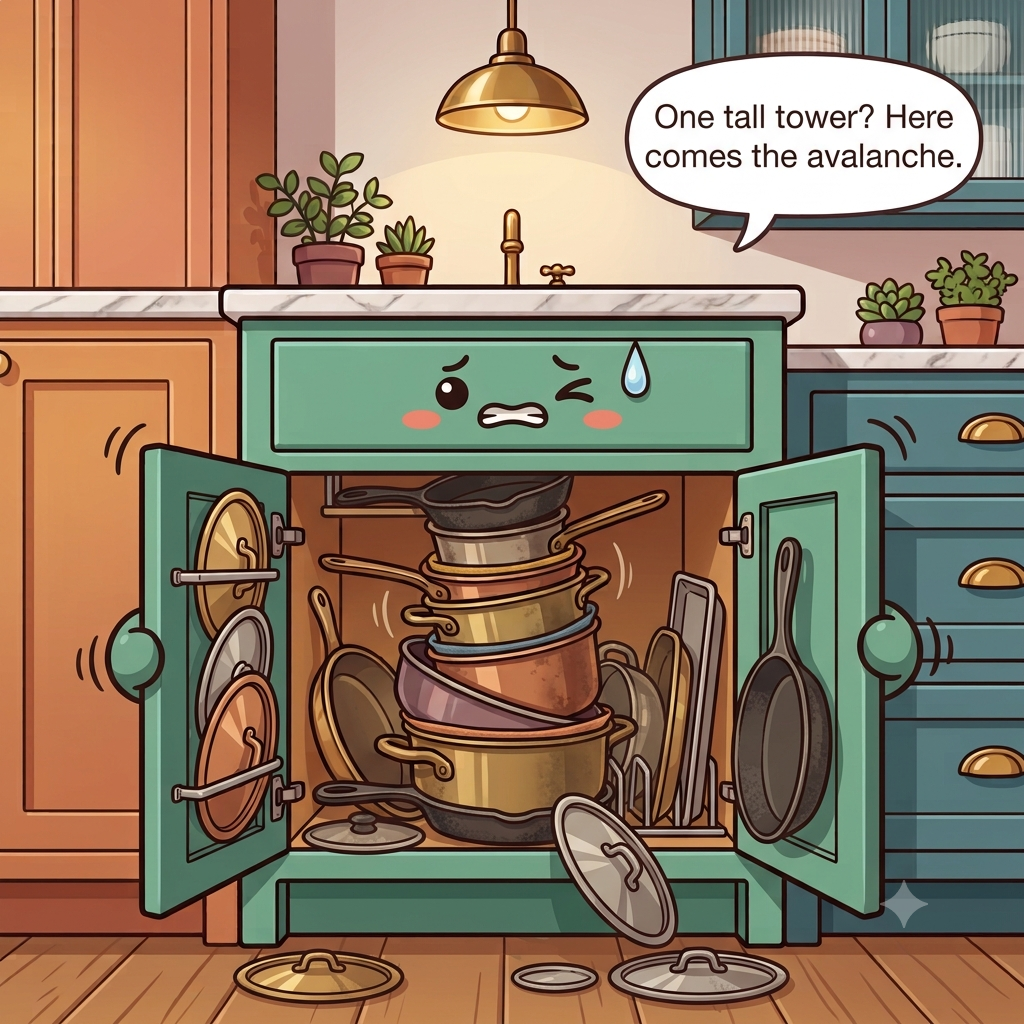
Do not build a tall unstable stack of pans, store heavy cast iron on a lightweight door rack, or let handles prevent the cabinet from closing. Avoid stacking delicate nonstick or enamel surfaces without protection when the manufacturer warns against abrasion. Do not buy a pull-out or divider until you know its load rating and the cabinet opening dimensions.
Another mistake is keeping every duplicate because cookware is expensive. If two pans do the same job and one is never chosen, moving or donating the unused piece may improve daily access more than any organizer.
Do not put cast iron on a flimsy spinner, stack delicate nonstick pans bare, or store lids loose where they fall behind the cookware. Avoid adding a full-width shelf that makes tall pots impossible to remove. The goal is controlled retrieval, not fitting every piece into one cabinet.
The after-cooking reset
After cookware is fully clean and dry, return daily pans to their front positions and put lids directly into the size-ordered rack. Do not leave one wet pot on top of the stack where it can trap moisture or make the next retrieval harder.
Once a month, straighten the dividers, check protectors, and make sure heavy items have not migrated upward. If you keep reaching past a specialty pan to get a daily piece, swap their positions immediately rather than waiting for a full reorganization.
Return dry cookware to the same low, front-accessible zones after each use and put lids back into their file immediately. If a pan repeatedly ends up on the counter because its spot is awkward, change the layout rather than accepting the counter as overflow. Wipe crumbs or grease from the cabinet before they harden. When cookware cools, dry it fully before stacking or nesting, especially cast iron and pieces prone to moisture damage. If protective pan separators become greasy or torn, clean or replace them rather than letting residue transfer between surfaces.
30-second success check
- The heaviest daily pot can be lifted straight out with two hands without moving another heavy item.
- Lids have a stable separate home and do not create a falling stack.
- Stacked pan surfaces are protected when their finish requires it.
- Shelves, dividers, and pull-outs show no bowing, binding, or overload.
- Daily cookware sits near the front while occasional pieces use the harder-to-reach space.
Questions that come up
Frequently asked questions
Part of Kitchen Cabinets & Work Zones — 8 guides.