The short answer
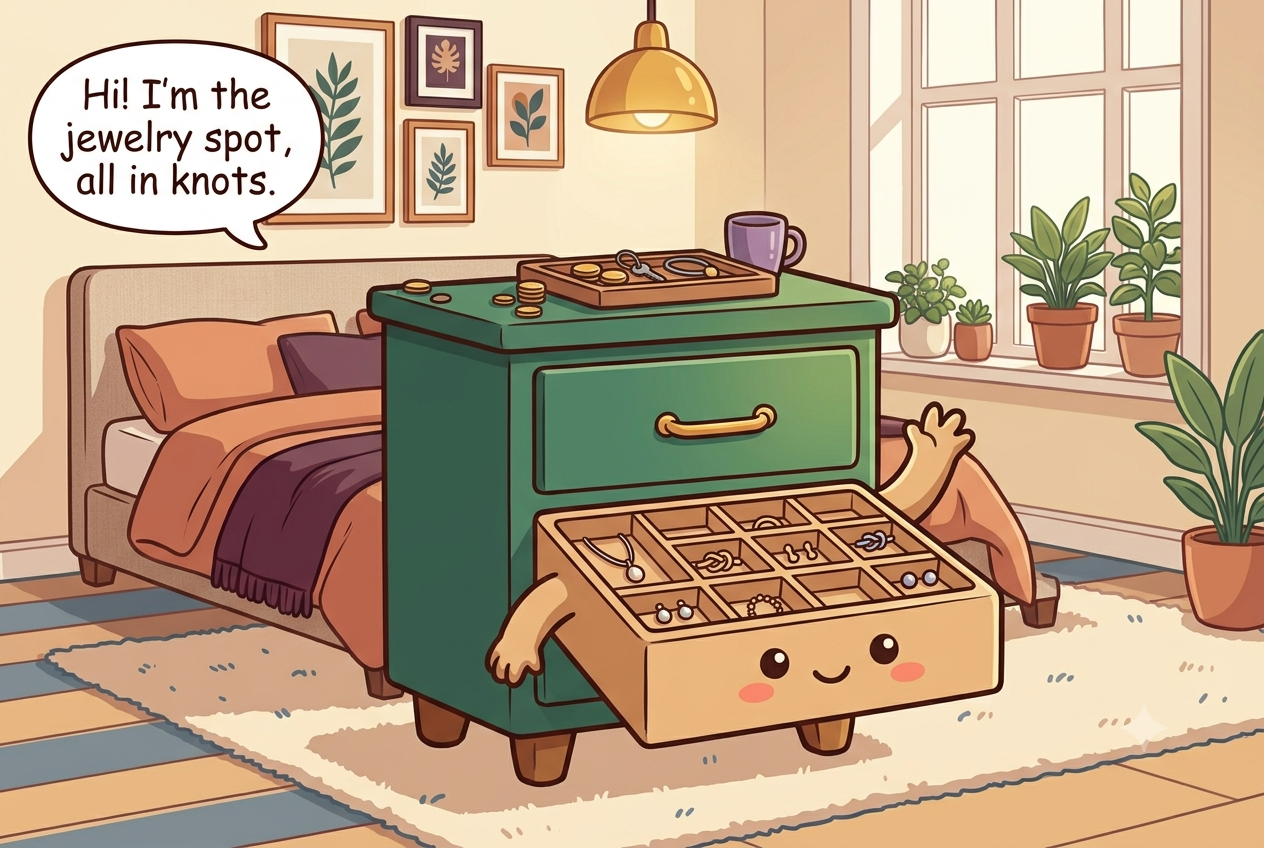
Separate jewelry by type and frequency, then give pieces enough individual space that they do not rub or knot. Hang necklaces on separate hooks, keep earrings in pairs in shallow cells, store easily tarnished silver clean and dry in closed anti-tarnish storage, and use one small dish for the pieces you remove every day.
What to gather before you start
- A shallow drawer, or a divided tray or box
- Small dividers, or a divided insert with compartments
- Hooks, a small stand, or a corkboard for hanging necklaces
- An earring holder: a small frame with mesh, or a punched card
- Anti-tarnish strips or a closed box for silver
- A small dish for the pieces you take off daily
Measure first. Buy only the pieces that solve a specific access problem.
Tip it all out and untangle
Lay jewelry on a soft, clean surface and separate necklaces, bracelets, earrings, rings, watches, and damaged pieces. Untangle chains slowly rather than pulling knots tight; a straight pin or fine tool can help loosen a knot, but stop if a valuable or delicate chain risks damage and take it to a jeweler.
Set aside pieces that need repair, cleaning, appraisal, or donation. Do not mix loose stones, broken clasps, and wearable jewelry back together. Clean pieces only according to the metal, stone, pearl, or plating care guidance; one cleaning method is not safe for every material.
Work over a soft surface so dropped stones or delicate chains are less likely to be damaged. Keep repair items separate from wearable pieces and stop if a knot requires force on a valuable chain. Clean only with methods appropriate to the specific metal, stone, pearl, coating, or plating; one homemade cleaner is not safe for everything. Photograph valuable sets or heirloom pieces during the sort if you maintain an insurance or appraisal record, then store that record separately from the jewelry. Organization can support inventory, but sensitive value information does not need to sit beside the pieces it describes.
Sort by type and by how often you wear it
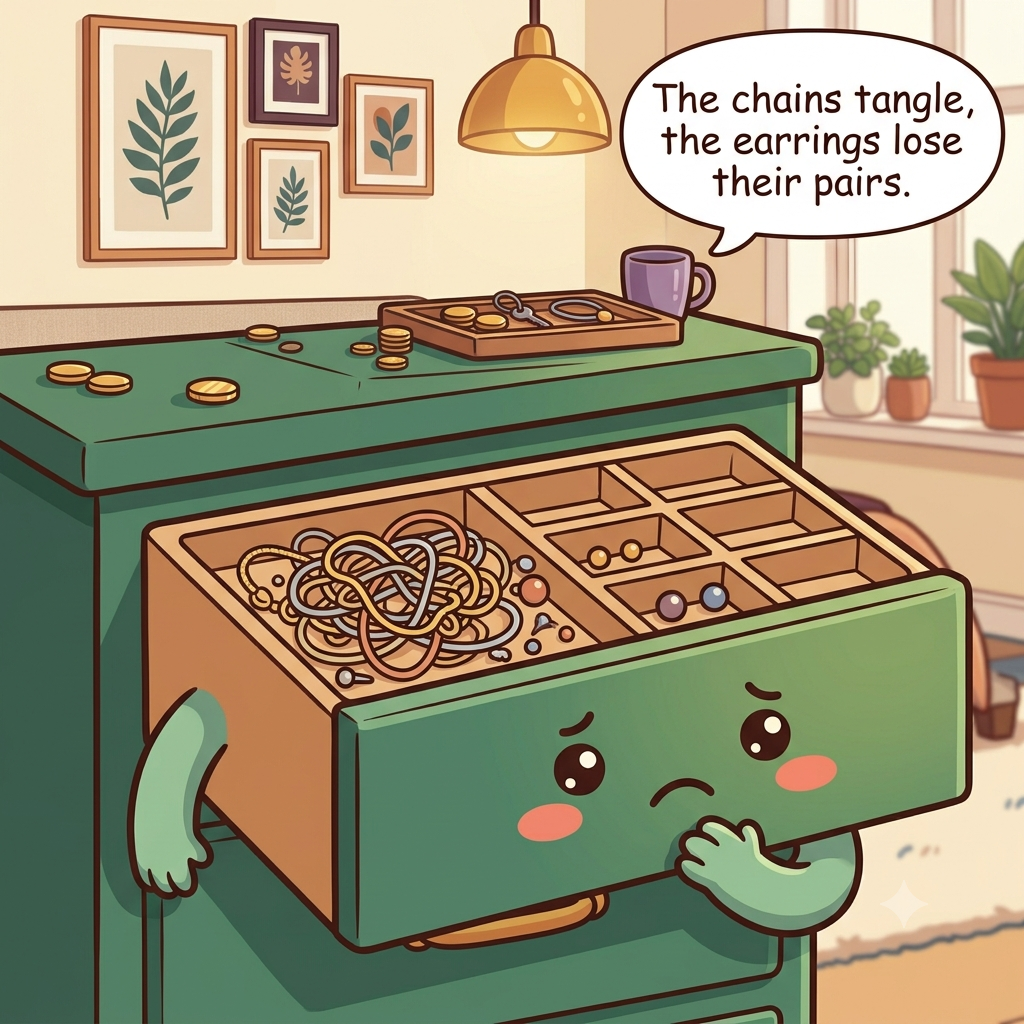
Keep daily earrings, rings, and one or two necklaces in the easiest shallow tray or display. Place occasional pieces in protected compartments nearby and move heirloom or high-value jewelry into appropriately secure storage. Grouping by both type and frequency prevents the daily handful from being buried under special-occasion pieces.
If you share a jewelry area, divide by person before dividing by type. Avoid overfilling trays; metal and stones can scratch one another when pieces are piled. The organizer should reduce contact, not simply contain the heap.
Separate high-use pieces from heirloom or high-value jewelry that may need more secure storage. Within the active collection, give scratch-prone metals and stones their own compartments rather than allowing pieces to rub together. The organizer should reduce contact as well as make daily choices visible. Keep pearls, soft stones, plated pieces, and other delicate materials from rubbing against harder jewelry. A shallow individual compartment may be more protective than a shared velvet tray when pieces have very different hardness or surface finishes. Keep high-value or irreplaceable pieces out of an openly displayed daily organizer when loss or theft is a realistic concern; a secure location can still use the same separation-by-material principle. If you maintain insurance, appraisal, or purchase records, store those records separately from the jewelry rather than creating a single package that contains both the valuables and their identifying documentation.
Give necklaces their own hooks so chains can't cross
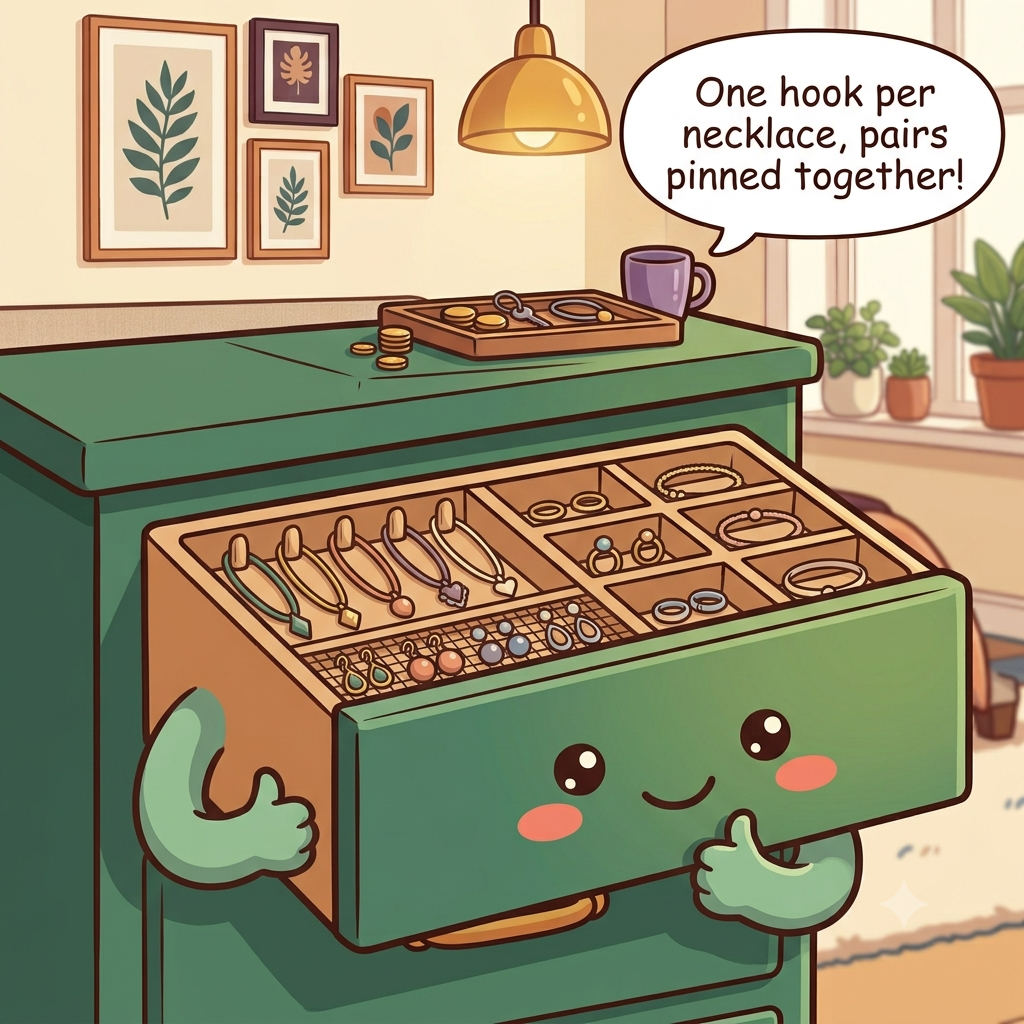
Hang necklaces from separate hooks or pegs with enough spacing that chains fall vertically without crossing. Short and long necklaces can use staggered rows if the lower chains do not touch a shelf or drawer. Fasten clasps before hanging when that helps keep delicate chains from looping through one another.
For travel or drawer storage, use individual pouches, small zip bags with the clasp left outside the seal, or purpose-built necklace channels. Do not toss multiple fine chains into one compartment; movement turns the compartment into a knot maker.
Space hooks far enough apart that chains hang without touching their neighbors and keep longer pieces from pooling on a shelf below. Fasten clasps when that helps control the chain. For drawer or travel storage, isolate each fine necklace so movement cannot pull several chains into one knot. Avoid hanging very heavy necklaces from weak adhesive hooks or delicate clasps. Heavier pieces may be safer lying flat in a long compartment, while fine chains benefit most from individual hooks or channels that prevent crossing.
Keep earrings in pairs and small pieces in shallow sections
Use a compartment tray, earring card, mesh panel, or small divided box where both earrings in a pair remain together and visible. Keep stud backs attached when practical or store spare backs in one labeled tiny container. Rings and charms also benefit from shallow cells that prevent pieces from sliding under one another.
Keep tiny jewelry parts away from children and pets; small pieces can be choking hazards. If the organizer is accessible to a child, move small or valuable pieces to a secure location rather than relying on a decorative lid.
Use shallow compartments that keep both earrings visible together and prevent rings, backs, or charms from slipping underneath larger pieces. Keep spare backs in one tiny labeled container. Small jewelry parts should be secured from children and pets rather than left in an open dish at child height. For earrings with detachable backs, keep the back on the post when that does not damage the piece. If spare backs are stored separately, keep them in one closed compartment so they cannot spill through drawer gaps or become accessible to children or pets. If the tray travels between rooms, choose one with a secure lid and compartments that do not dump their contents into each other when tilted; portability should not undo the separation that prevents loss and scratching.
Protect what tarnishes and set up a daily landing dish
Store silver and other tarnish-prone pieces clean and dry, with limited exposure to air and humidity. Anti-tarnish bags, strips, or cloth-lined closed containers can slow tarnish; follow the jewelry maker's care guidance and keep chemicals such as perfume and household cleaners away from stored pieces.
Place one small dish where you routinely remove jewelry, but empty it back into the main organizer every few days. The dish is a short-term landing zone, not long-term storage. Keeping it small prevents necklaces and earrings from becoming a new tangle.
Store jewelry clean and completely dry, and follow the jeweler or maker's care instructions for the specific metal, stone, plating, pearl, or finish. Tarnish-prone metals often benefit from closed, dry storage and compatible anti-tarnish materials, while delicate stones or plated pieces may need different handling. Keep perfume, household cleaners, and sink or shower splash away from the storage area, and replace anti-tarnish products according to their own instructions rather than leaving them indefinitely.
Habits that undo jewelry storage
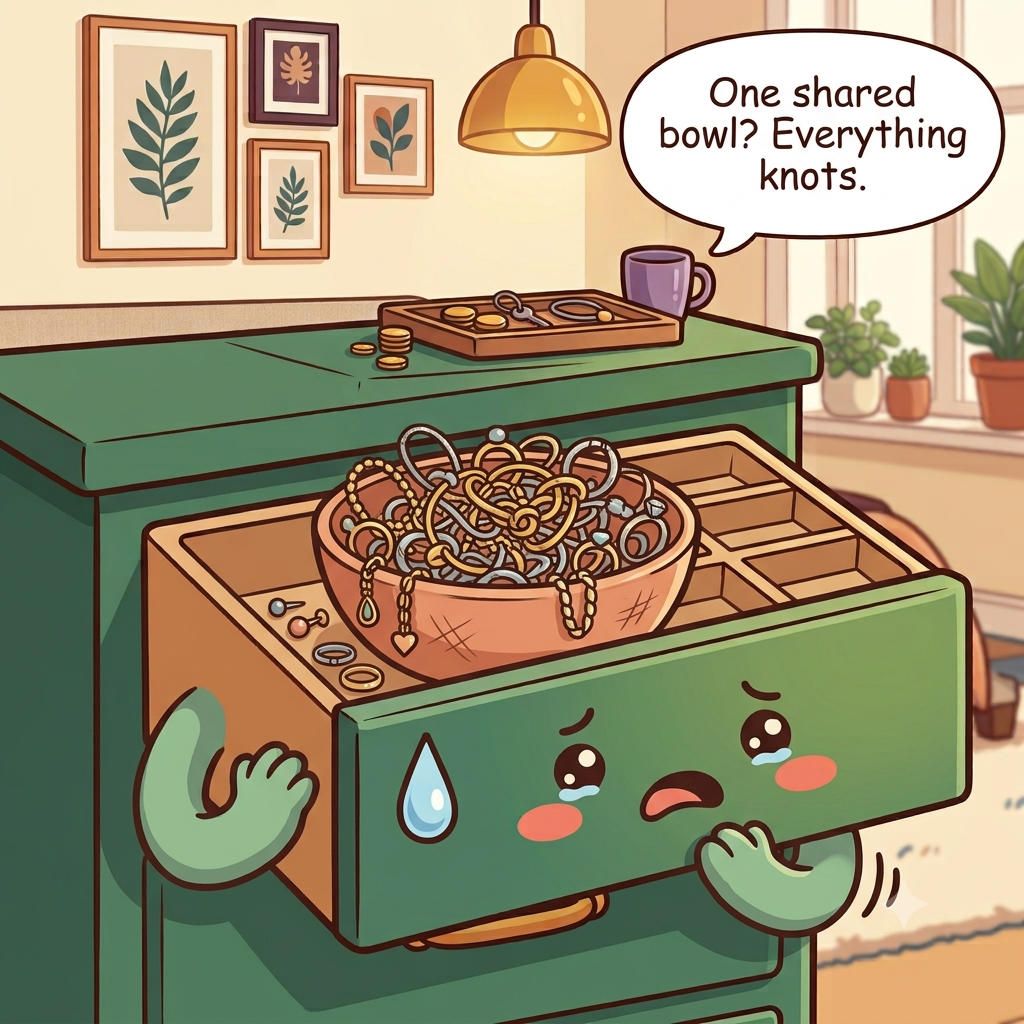
Do not pile fine chains together, store all earrings loose in one deep bowl, or use abrasive cleaners without checking the material. Avoid damp bathroom storage for tarnish-prone jewelry and do not let valuable pieces sit exposed near an entryway or open window simply for convenience.
Another mistake is over-organizing by color or outfit while ignoring physical protection. Separate pieces that scratch, knot, or tarnish before making a decorative display.
Do not mix fine chains, pile earrings in a deep bowl, or clean unknown stones with an abrasive or chemical method chosen for another material. Avoid humid bathroom storage for tarnish-prone pieces. A decorative display is secondary to preventing scratching, tangling, moisture exposure, and loss.
The weekly re-hang reset
Once a week, return necklaces from the landing dish to individual hooks, pair stray earrings, and move any broken piece into the repair container. Wipe dust from the tray and confirm the organizer is dry.
Every few months, review pieces that never get worn and decide whether they need repair, sentimental storage, sale, or donation. Fewer overlapping pieces make the daily collection safer and easier to use.
Add a quick condition check while pieces are already in your hands. Look for a loose clasp, bent post, lifted prong, frayed string, or chain kink and move questionable pieces into a repair container instead of returning them to daily storage. That turns the reset into loss prevention rather than another round of arranging; a piece waiting for repair should not keep circulating through the landing dish.
30-second success check
- Necklaces are isolated enough that chains cannot cross or knot.
- Earrings remain paired and tiny backs or charms are contained.
- Scratch-prone or delicate materials do not rub against harder pieces.
- Stored pieces are clean and dry, and the landing dish is emptied back into protected storage regularly.
- Anything with a loose clasp, bent post, or questionable setting moves to repair instead of daily rotation.
Questions that come up
Frequently asked questions
Part of Closets, Clothing & Personal Storage — 13 guides.