The short answer
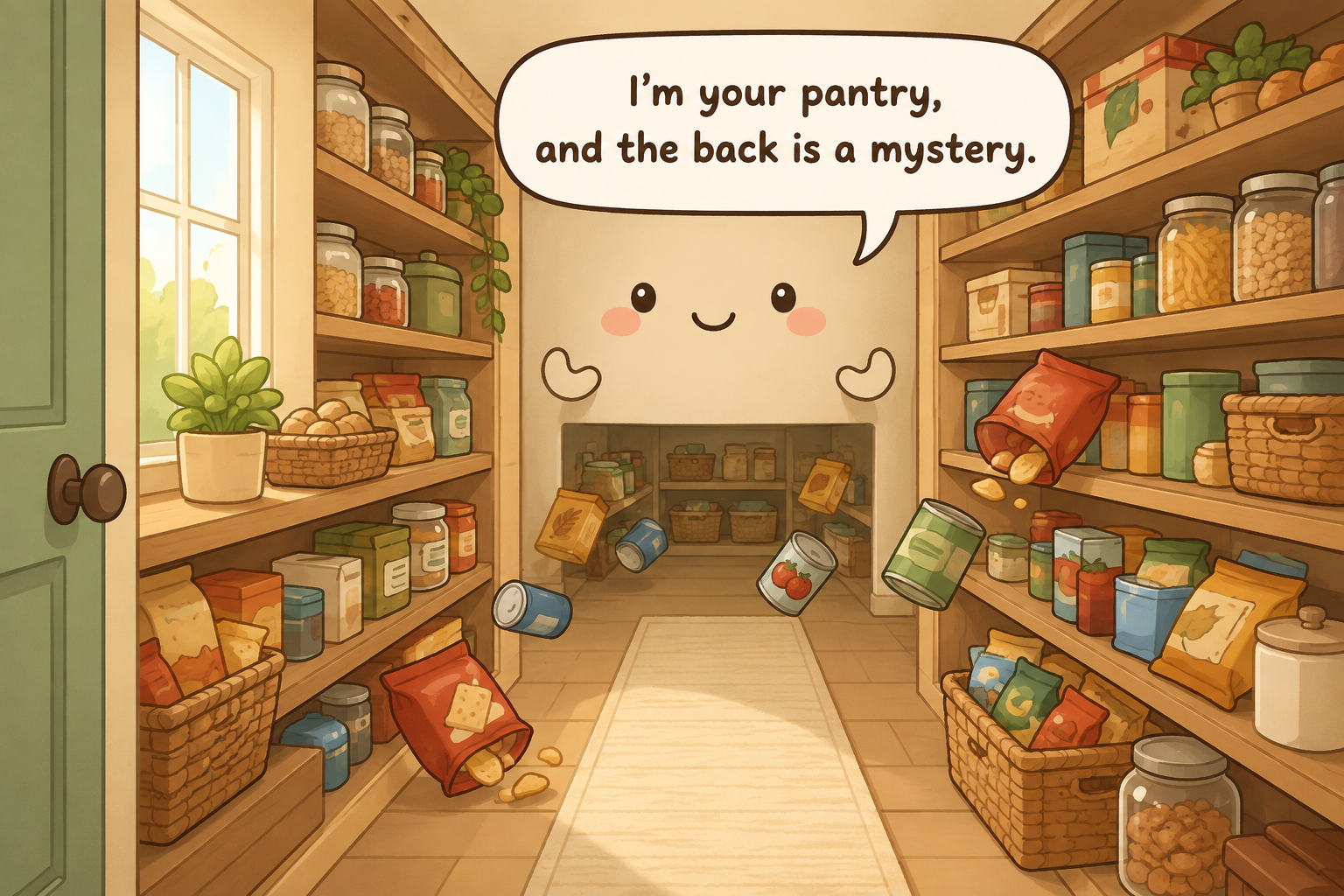
Pull food forward so you can see the full shelf depth, then create broad meal-based zones and use simple first-in, first-out rotation within each one. Put heavy cans, jars, and bulk staples on low sturdy shelves, keep lightweight backstock higher, limit duplicates to one defined backstock boundary, and scan the pantry weekly so older food becomes a meal plan instead of an expired back row.
What to gather before you start
- A tape measure and shelf-depth notes
- Painter's tape or removable labels
- A marker and a small use-first basket
- Food-safe sealed containers for opened dry goods
- Shallow bins that fit the shelf depth
- A stable step stool if upper shelves cannot be reached safely
Measure first. Buy only the pieces that solve a specific access problem.
Pull food forward and expose the real shelf depth
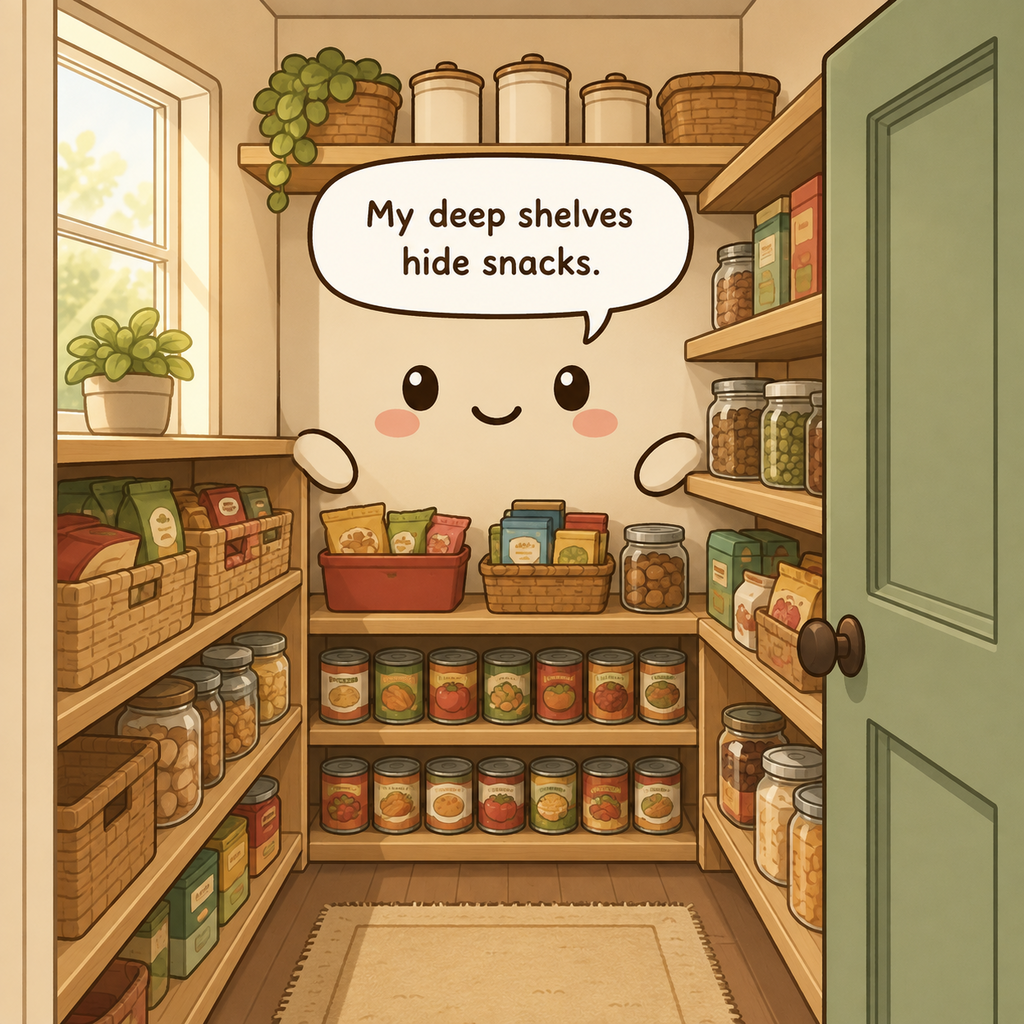
Remove one shelf at a time, wipe crumbs and spills, and line up the food so you can see what has been hiding at the back. Group duplicates and check package dates, condition, pests, and moisture. Set aside still-usable foods that should be eaten soon and follow product or food-safety guidance for anything questionable.
Measure shelf depth, height, and any corner dead zones before buying bins. Deep shelves often need risers, turntables, or handled bins, but those tools should bring food forward rather than create an opaque wall.
Pull everything to the front before measuring because the apparent shelf depth may include a rear zone you cannot actually see or reach. Note shelf depth, height, load rating if known, and the clearance needed to lift a bin over a shelf lip. Deep shelves work best when the back is assigned intentionally to retrievable backstock, not when loose packages form an invisible second row. Keep the floor and any access points clear while you map zones.
Use first-in, first-out without turning dinner into warehouse work
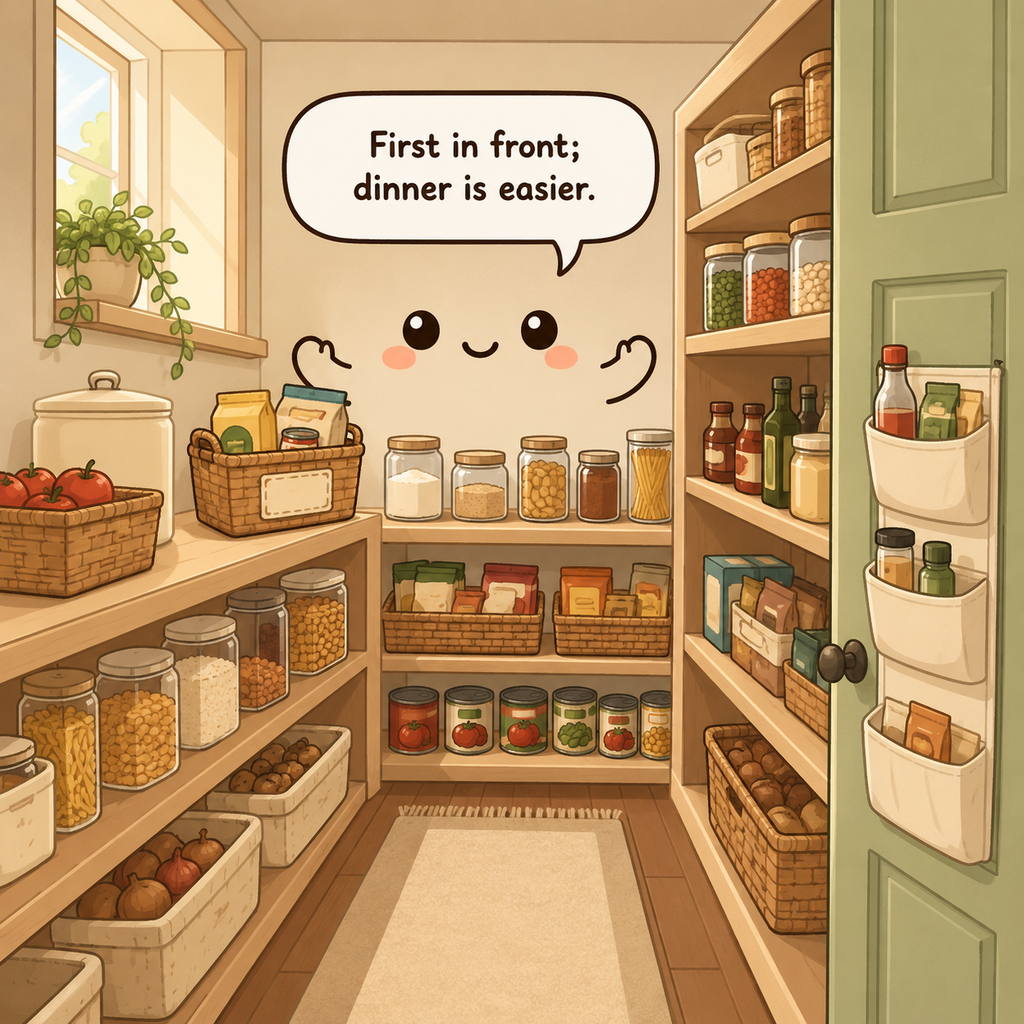
When you have duplicate packages, place the older open or dated item at the front and the new purchase behind it. That simple move is enough for most households; you do not need numbered inventory stickers for every can. Keep a small visible 'use soon' section for ingredients that deserve priority.
During grocery unloading, rotate only the categories you touched rather than re-sorting the whole pantry. The system should add seconds, not twenty minutes, to putting food away. If a category repeatedly expires, reduce the quantity you buy.
Use a simple first-in-first-out habit: when the same product comes home, move the older intact package forward and place the newer one behind it. A small 'use soon' basket can collect opened, near-date, or meal-planning priorities, but it should not become a graveyard. USDA notes that many shelf-stable foods remain safe for long periods while quality declines; use FoodKeeper and package condition rather than treating every printed date as the same kind of safety deadline.
Build zones by cooking task, then let containers support the zones
Create broad zones such as breakfast, baking, snacks, quick dinners, canned meal starters, grains, and beverages. Keep ingredients used together close when practical. Use bins for loose packets or pouches, turntables for bottles, and risers for cans only where they solve visibility or retrieval.
Avoid putting every food into a matching container just for appearance. Original packages often carry cooking instructions, ingredients, allergens, and date information. If you decant, label clearly and preserve the information your household may need.
Build broad meal-based zones first, then select containers that solve a specific visibility problem. Handled bins help retrieve a deep shelf, risers expose can labels, and turntables can make bottles reachable, but none of them should hide cooking directions, allergen information, or dates you still need. If you decant dry goods, label the contents and preserve important package information. Keep food in a cool, clean, dry area and reject packages damaged by moisture or pests.
Put heavy food low and light backstock high
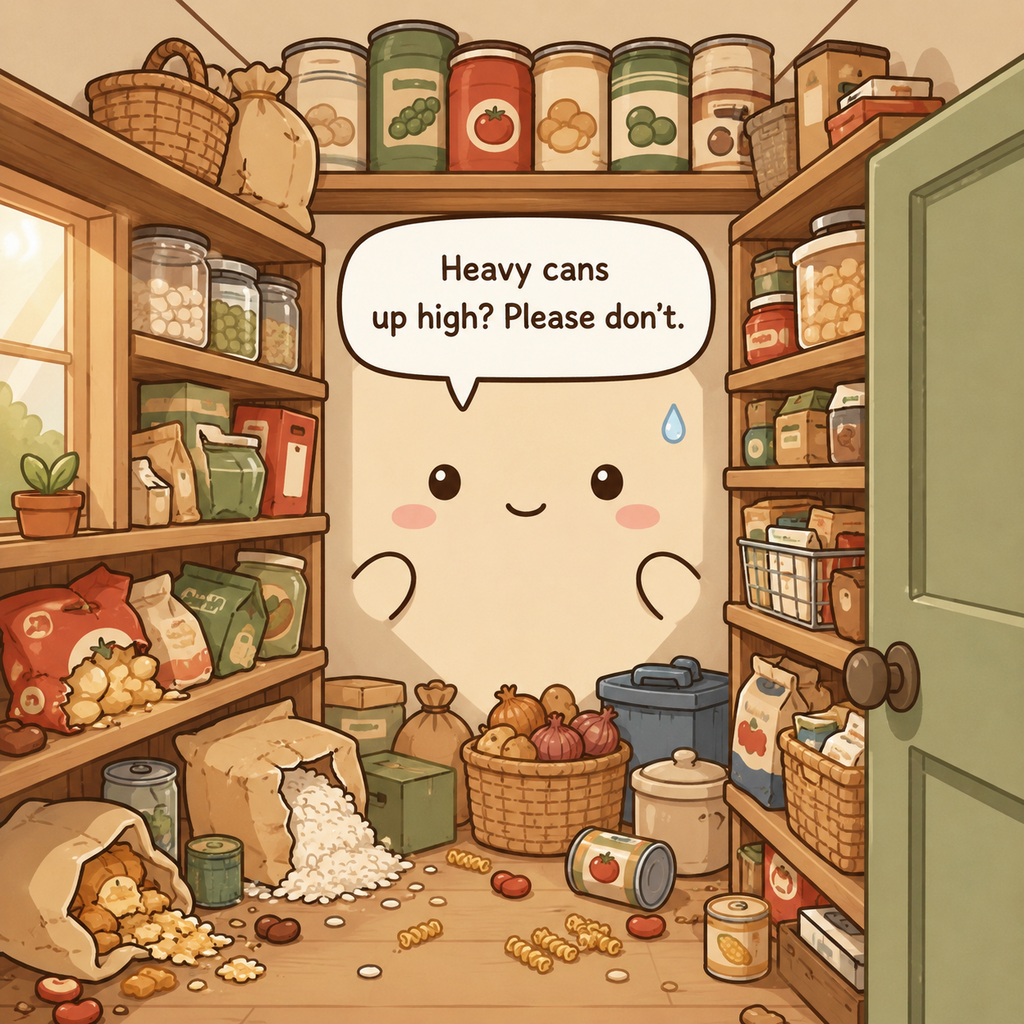
Store cases of drinks, large jars, cans, flour, and other dense foods on low sturdy shelves. Keep paper goods, empty baskets, and lightweight snack backstock higher. Follow shelf load ratings and reduce weight immediately if a shelf bows or hardware loosens.
Keep frequently used food between roughly waist and eye level for the main users. Children should not need to climb shelves to reach approved snacks, and heavy glass should not sit where a child can pull it down.
Put cases, large jars, canned goods, flour, and other dense staples on low sturdy shelves, following the shelf's rated load. Higher shelves are better for paper products, empty serving pieces, or lightweight backstock that an adult can retrieve safely. Do not make children climb for snacks or put heavy glass above head height simply to preserve symmetry. If a shelf bows, unload it and inspect the support rather than spreading the same weight across decorative bins.
Make the door work without turning it into a swinging shelf
Use the back of the pantry door for lightweight, shallow items such as wraps, small packets, or a few spices only if the organizer is designed for the door and does not interfere with hinges or closing. Keep the load within hardware limits and make sure containers cannot fall when the door moves.
Renters can use over-door racks that fit without damaging the frame, provided the door still closes correctly. Do not put heavy cans or glass jars on a lightly supported door rack simply because the pockets fit them.
Load the door organizer, then open and close the door several times at normal speed. Nothing should strike a shelf, swing out of a pocket, scrape the frame, or keep the latch from engaging. If the door feels heavier or hinges begin to sag, reduce the load and move dense items to a stationary shelf. The door is useful for shallow lightweight storage only while it still performs normally as a door.
Control duplicates with a backstock boundary
Give duplicate pantry goods one specific shelf section or bin. When that boundary is full, stop buying more until the stock is used. Keep the active package in the main zone and the unopened duplicate in backstock rather than hiding three identical items behind one another.
Use the boundary to regulate sale and warehouse-club purchases. A discount is not useful if the food expires before the household can consume it or if heavy backstock forces unsafe storage.
Give unopened duplicates one clearly marked shelf section or bin and stop buying when that boundary is full. Keep the active package in its normal cooking zone and the reserve behind or above it in a way that remains visible. This turns bulk buying into a physical decision: if three extra jars will not fit the backstock boundary, they are not a bargain for this pantry. Persistent excess in one category is a signal to buy smaller quantities.
Give it a five-minute meal-planning scan
Before planning meals or groceries, spend five minutes scanning the use-soon area, open packages, produce stored in the pantry, and duplicate backstock. Choose meals that consume the oldest useful ingredients and write the true gaps on the shopping list.
This scan is more valuable than a perfect inventory spreadsheet for many households because it connects storage to actual eating. Keep it short enough to repeat every week.
Use the five-minute scan to connect pantry storage to actual meals. Look first at the use-soon area, opened packages, produce kept at room temperature, and duplicate stock; then choose meals that use those items before adding more to the shopping list. If you use FoodKeeper or manufacturer guidance for storage times, check the categories that matter rather than maintaining a complicated spreadsheet. The routine works because it happens before purchasing, when you can still prevent another duplicate.
What breaks a walk-in pantry
Do not hide dates in opaque bins, stack heavy food high, overload door racks, or buy bulk quantities beyond the defined backstock zone. Avoid mixing household chemicals or cleaning products into food storage and do not discard allergen or cooking information when decanting.
Another mistake is putting the newest groceries in front because it is faster. A two-second rotation during unloading prevents the ancient back row from returning.
When clutter returns, diagnose the exact source. Hidden dates mean the container is too opaque or deep; duplicate cans in three places mean the backstock boundary is not being followed; heavy items high up mean the zone plan is unsafe. Do not solve an overfilled pantry by adding a second loose row at the back. Remove expired, damaged, unwanted, or excessive stock and restore visibility before buying another organizer.
The weekly reset
Once a week, straighten the use-soon zone, bring older duplicates forward, wipe crumbs, and remove packaging that has become empty. Check one deep bin or corner so no category can disappear indefinitely.
Once a season, review the backstock boundary and reduce quantities in categories that repeatedly remain full. The pantry should help you plan meals, not preserve forgotten inventory.
Once a week, bring older duplicates forward, clear crumbs, check the use-soon zone, and inspect one deep shelf for damaged packaging, pests, or moisture. Keep household chemicals out of food storage and keep dense foods on stable lower shelves. Before the next grocery trip, make sure the backstock boundary has visible room. Leaving some open shelf space is useful capacity: it lets new groceries enter without hiding the older food you are trying to use first.
Renter-friendly option
Use freestanding shelf risers, handled bins, turntables, and a properly fitting over-door rack instead of adding permanent built-ins. Keep the door within its normal operation and move heavy cans or glass to stationary shelves.
30-second success check
- Every deep backstock area can be retrieved or scanned without a loose invisible second row.
- Older duplicates move forward when groceries arrive.
- Heavy food stays on stable lower shelves and high storage is light.
- A loaded door rack still lets the door swing and latch normally.
- The backstock boundary has visible capacity before another bulk purchase enters.
Questions that come up
Frequently asked questions
Part of Pantry, Fridge & Food Storage — 4 guides.