The short answer
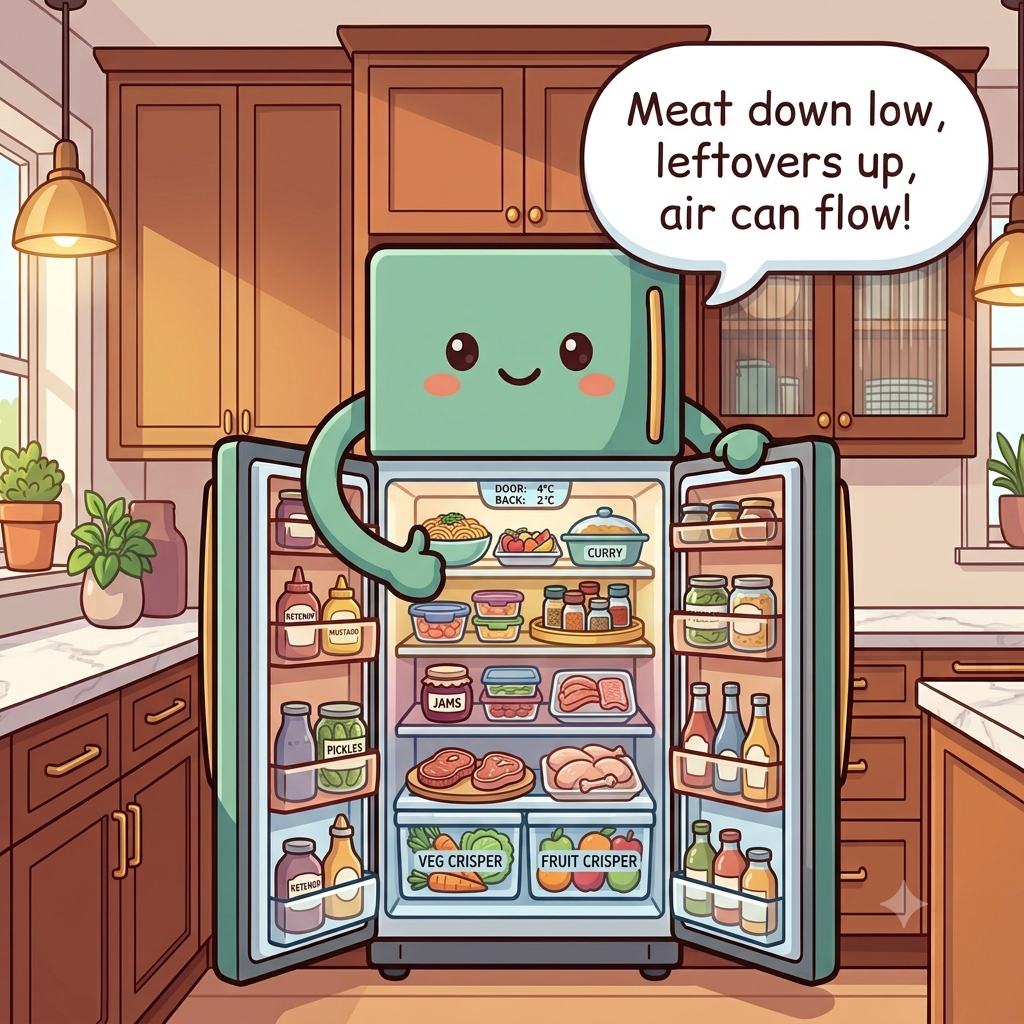
Keep the refrigerator at 40°F (4°C) or below and organize by temperature and contamination risk, not just convenience. Store raw meat, poultry, and fish on the bottom in a leakproof container, keep milk and eggs in the main compartment rather than the warmer door, use crisper settings for produce, and leave enough open space for cold air to circulate.
What to gather before you start
- A cooler or a few insulated bags to hold cold food while you work
- A couple of clear bins for grouping like items
- A turntable for jars and condiments
- A drip tray or liner for the bottom shelf
- A marker and labels, or masking tape, for open-by dates
- An appliance thermometer if there is no built-in readout
Measure first. Buy only the pieces that solve a specific access problem.
Use food-safety zones before convenience zones
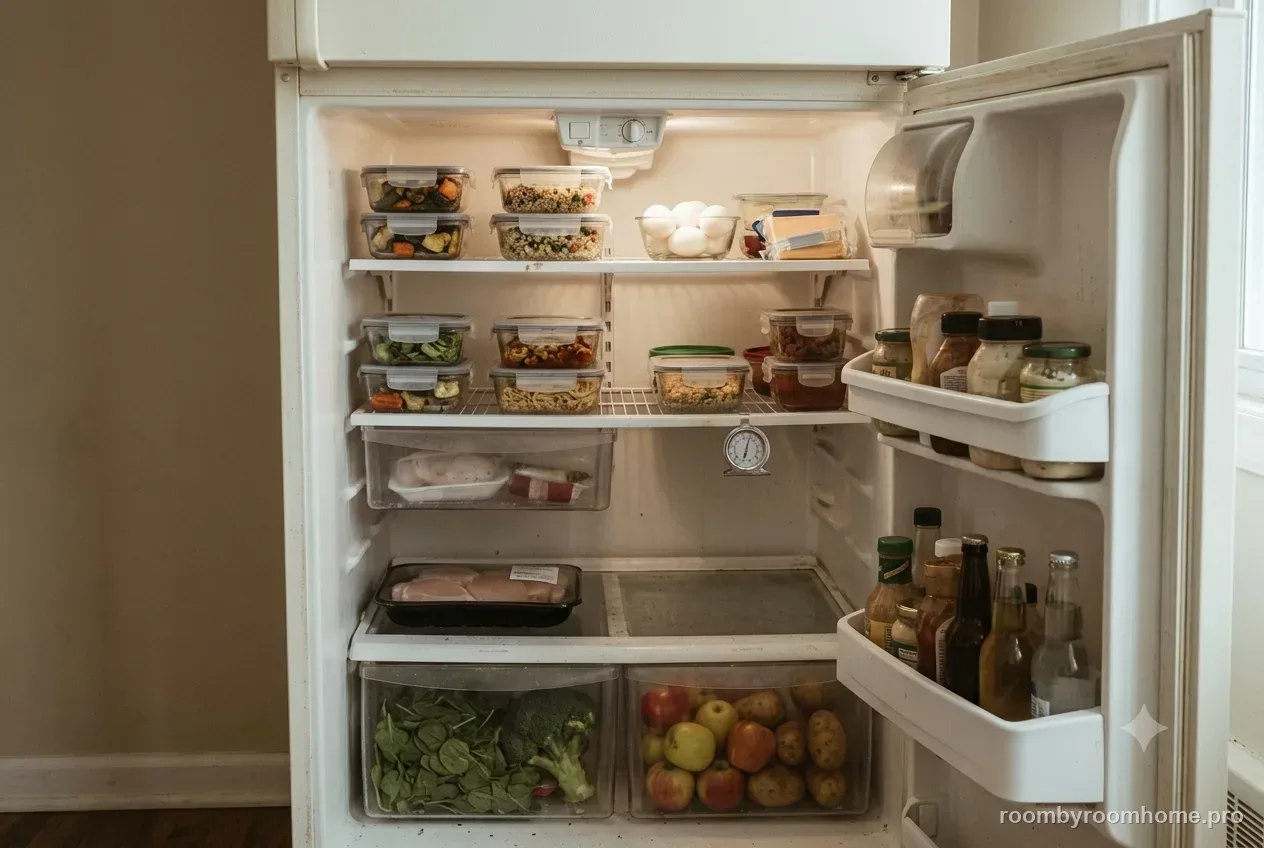
Set the refrigerator to 40°F (4°C) or below and the freezer to 0°F (-18°C); keep raw animal foods separated and contained so juices cannot drip onto ready-to-eat food.
- Use an appliance thermometer rather than relying only on the control dial.
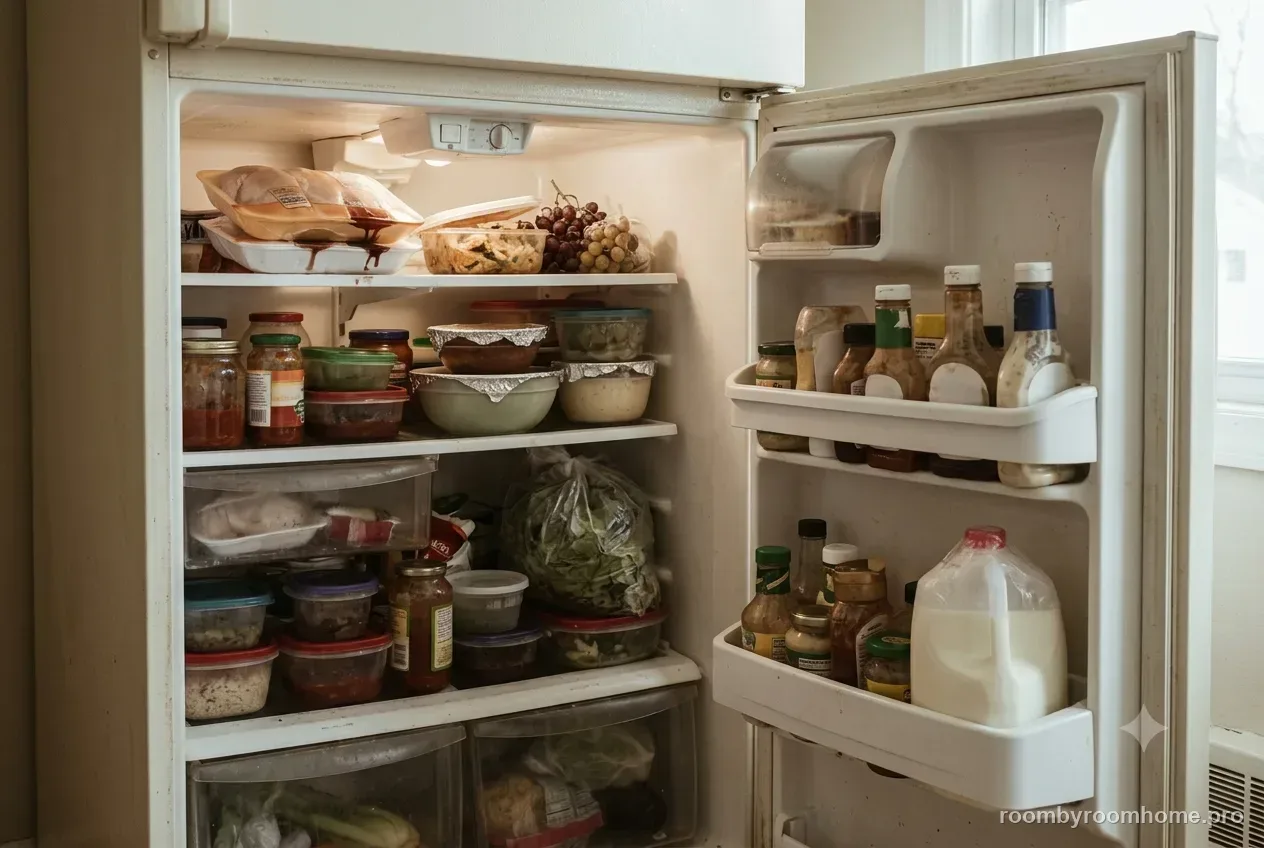
- Keep raw meat, poultry, and seafood sealed and placed below ready-to-eat foods so a leak cannot drip onto them.
- Do not overfill shelves; cold air needs room to circulate.
- Use crisper settings according to the produce and the refrigerator manual rather than assuming one setting fits everything.
- Create a front use-it-first area for safe leftovers and foods nearing their quality date.
Sources: U.S. FDA — Refrigerator Thermometers: Cold Facts About Food Safety; U.S. FDA — Safe Food Handling
Empty it, check dates, and see the real layout
Work quickly so perishable food is not left warm while you clean. Remove one shelf or zone at a time, discard spoiled food, and check leftovers and opened packages against reliable storage-time guidance such as USDA FoodKeeper. Wipe spills, especially raw-meat drips, with appropriate cleaning practices before returning food.
Confirm the refrigerator temperature with the appliance display or, better, a refrigerator thermometer if you are unsure; FDA and USDA guidance uses 40°F (4°C) or below for the refrigerator and 0°F (-18°C) for the freezer. Notice where vents, drawers, and door bins are located so organizers do not block airflow.
Keep an appliance thermometer in the refrigerator if the built-in display is absent or uncertain. USDA guidance calls for 40°F or below in the refrigerator and 0°F in the freezer. While the shelves are partly empty, locate vents and make sure bins or tall packages will not sit directly against them and interfere with the appliance's intended airflow. Keep perishables out only as long as needed for the cleaning pass. If a refrigerator must stay open for an extended repair or deep clean, move food to another properly chilled location rather than treating the organizing session as an exception to normal temperature control.
Load by temperature, not by habit
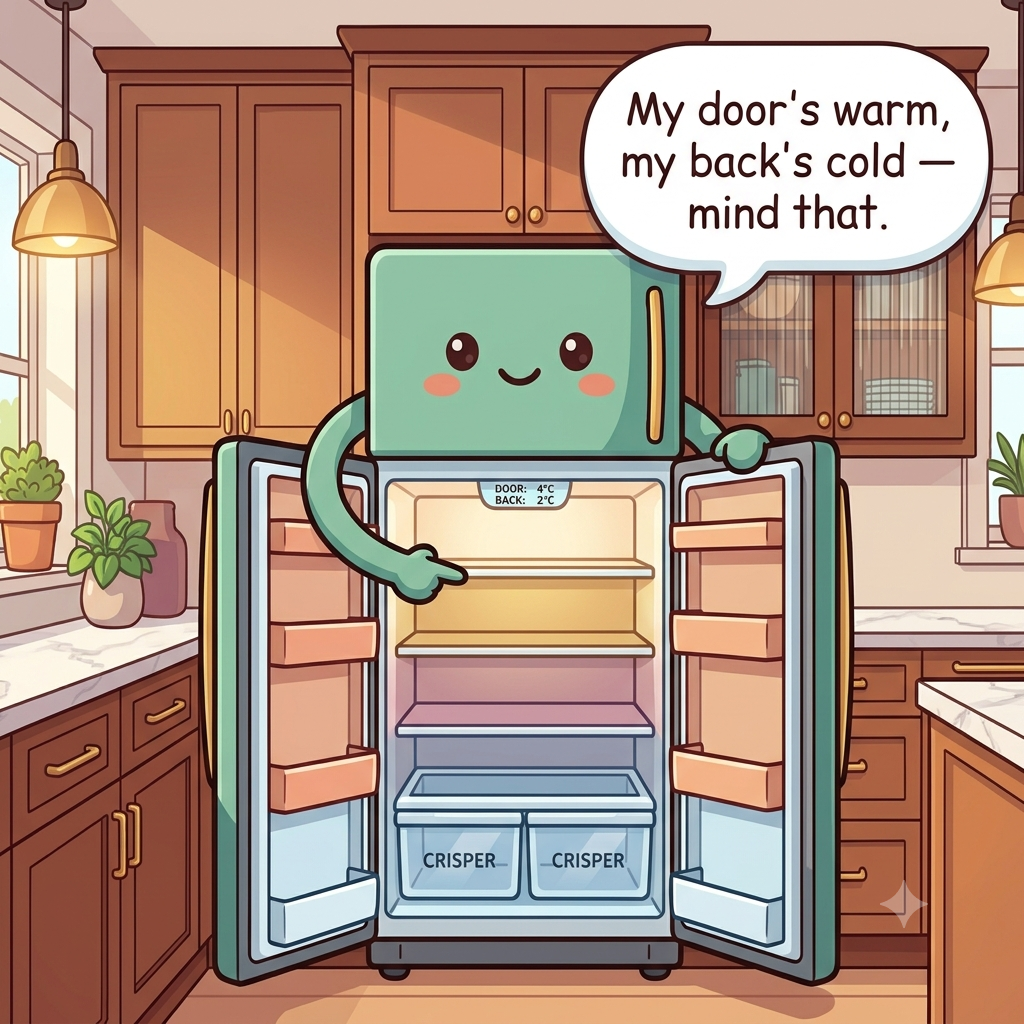
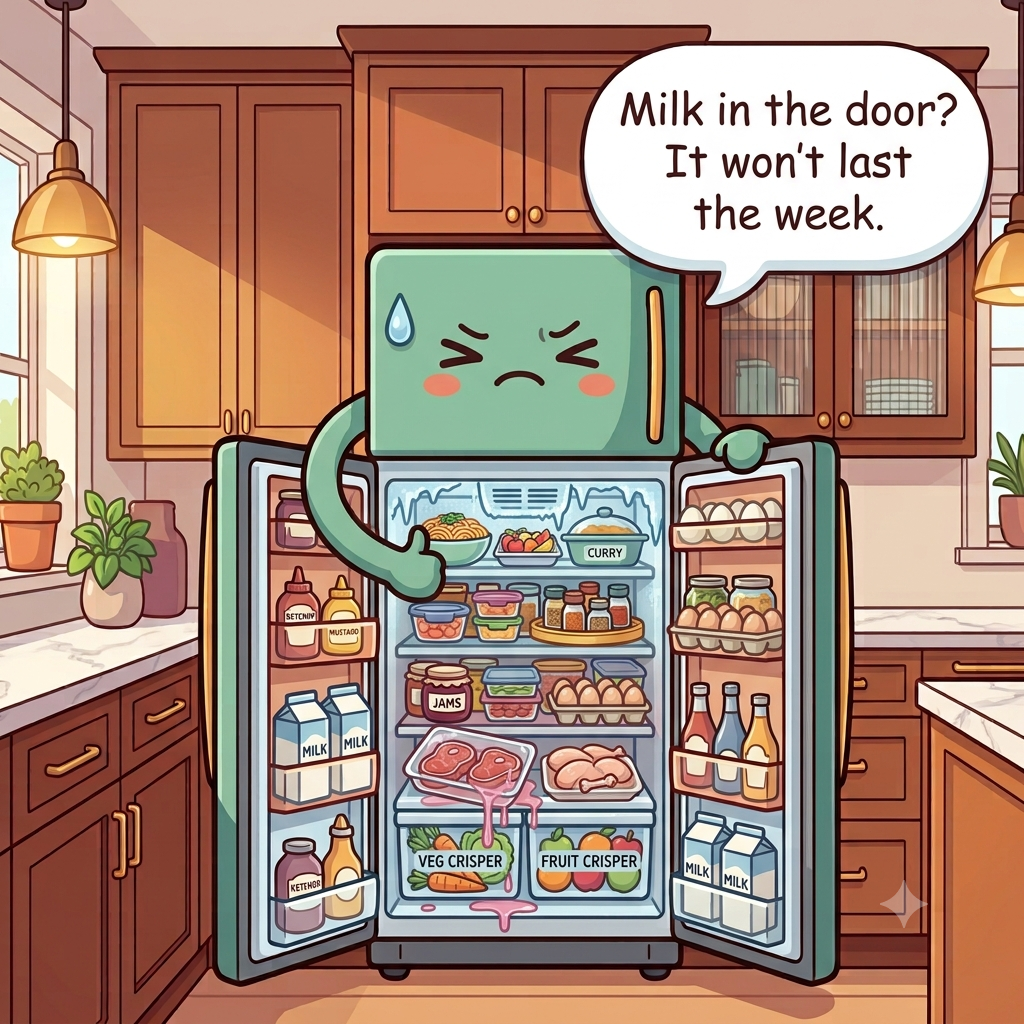
Use the main shelves for dairy, leftovers, ready-to-eat foods, and other foods that need steady refrigeration. The door experiences more temperature fluctuation, so use it for condiments and items that tolerate that variation rather than milk or eggs. Follow package instructions for products with special storage requirements.
Keep foods covered or in closed containers to reduce spills and odors. Do not jam containers tightly against air vents or fill every gap with bins; cold air needs room to circulate. If one area of the fridge routinely freezes or warms food, check the appliance manual and temperature rather than assuming every shelf behaves the same.
Keep the door for condiments and other foods that tolerate its larger temperature swings, not milk or eggs. Put ready-to-eat foods where they stay visible and covered, and follow the manufacturer's layout if the refrigerator has dedicated temperature-controlled drawers. Do not create a decorative bin system that blocks vents or hides older food behind opaque walls. Do not assume every drawer is colder simply because it is enclosed. Some refrigerators have dedicated deli or meat drawers with separate controls, while others do not. Use the appliance manual and an actual thermometer when a zone's temperature is uncertain.
Put raw meat and fish on the bottom shelf, always
Place raw meat, poultry, and seafood on the lowest practical shelf so leaks cannot drip onto ready-to-eat food below. Keep them in a tray, bin, or leakproof container that can be washed easily, and keep packages separated from produce and cooked foods. This is a contamination-control rule, not merely an organization preference.
If your refrigerator has a dedicated meat drawer with manufacturer guidance for raw proteins, use it as directed while still preventing leaks and cross-contact. Do not store raw packages loosely above leftovers, fruit, or food that will be eaten without further cooking.
Use a washable tray or leakproof bin large enough to contain a damaged package, and clean it promptly after any drip. Keep raw poultry, meat, and seafood physically separated from produce and foods eaten without cooking. The point of the bottom-shelf rule is to reduce the chance that raw juices contaminate food below.
Make the crispers do their actual job
Use crisper humidity controls according to the produce you store and the refrigerator manual. In general, many leafy greens and vegetables benefit from higher humidity, while fruits that release ethylene are often kept in a lower-humidity drawer that allows more gas to escape. Keep damaged or decaying produce from sitting unnoticed under fresh items.
Do not wash all produce simply for organization if you cannot dry it well; excess moisture can accelerate spoilage for some foods. Keep a simple produce inventory visible and avoid packing drawers so tightly that you cannot see what needs using.
Check the slider labels and refrigerator manual before assuming which drawer setting is high or low humidity. Keep produce loose enough to inspect, and remove soft or moldy pieces before they affect neighboring items. If one drawer becomes a forgotten produce graveyard, reduce the quantity stored there rather than adding more dividers. Store produce in a way that lets moisture escape when needed and keeps damaged pieces visible. If condensation repeatedly pools inside a drawer, adjust the setting or loading pattern according to the appliance instructions rather than packing produce into additional sealed bins.
Keep space for air and a use-it-first bin front and center
Leave visible gaps around food and avoid overpacking shelves so cold air can move. A small 'use first' bin at eye level can hold leftovers and foods nearing the end of their recommended storage time. Keep the bin small enough that it is scanned, not ignored.
Use USDA FoodKeeper or package-specific guidance for storage times rather than a homemade universal rule. Label leftovers with the date when that helps the household act. If the refrigerator loses power or runs above safe temperature, food-safety decisions should follow USDA/FDA outage guidance rather than how organized the shelf looks.
Keep the use-first area small and visible enough to be scanned whenever the door opens. Date leftovers when that helps the household follow FoodKeeper guidance, and move older duplicate packages forward when groceries arrive. If a shelf is packed edge to edge, remove excess containers before adding another organizer so cold air can circulate as designed.
Why refrigerators slide into chaos again
Do not store raw meat above ready-to-eat food, put milk or eggs in the warmest door zone for convenience, block vents with tightly packed bins, or treat a best-by date as the only sign of safety. Avoid large opaque organizers that hide food until it spoils.
Do not use the refrigerator as indefinite storage for leftovers. Check specific food times in FoodKeeper, keep the temperature at 40°F or below, and discard food when safety is uncertain. Organization should make safe food easier to see and use, not extend its safe life.
Do not treat organization as a way to extend storage life. A neat leftover can still be too old, and a labeled package can still be unsafe after improper temperature exposure. Keep the refrigerator at 40°F or below, use FoodKeeper or package-specific guidance, and discard food when safety cannot be established.
The shopping-eve reset
Before grocery shopping, scan leftovers, produce, dairy, and the use-first bin. Plan the next meal around what is still good, discard spoiled food, wipe small spills, and note what actually needs replacing. Pull older duplicate products forward before new groceries arrive.
Once groceries are home, return each category to its temperature-appropriate zone and avoid filling the refrigerator so tightly that air cannot circulate. A short pre-shop sweep prevents both duplicate buying and forgotten food.
Make the sweep a meal-planning check: identify leftovers and produce that should be used next, note only the groceries that are genuinely missing, and clear spoiled food before new packages arrive. When restocking, keep raw proteins low, condiments in the door, and older duplicates ahead of newer ones so the layout supports rotation automatically. Add a quick door-bin check for open sauces and condiments before shopping. Because the door is easy to overfill, duplicate bottles often hide there even when the main shelves look organized. Finishing or consolidating legitimate duplicates frees space without moving milk or eggs into the warmer door zone.
A practical zone map
Keep here
- Ready-to-eat foods and leftovers where they stay visible
- Raw animal foods sealed on the lowest practical shelf or in a dedicated leak-containing zone
- Produce in the appropriate crisper
- Condiments and other temperature-tolerant items in the door
Store elsewhere
- Milk or eggs in a warm door zone when a colder interior shelf is available
- Uncovered raw meat above ready-to-eat foods
- So much food that vents and airflow are blocked
- Foods kept past a safety or quality point just because the package still fits
Food-safety constraints
- Keep the refrigerator at 40°F (4°C) or below and the freezer at 0°F (-18°C).
- Keep raw meat, poultry, and seafood separated from ready-to-eat foods and sealed so juices cannot drip.
- Do not overfill the refrigerator; cold air must circulate.
Sources: U.S. FDA — Refrigerator Thermometers: Cold Facts About Food Safety; U.S. FDA — Safe Food Handling
30-second success check
- An appliance thermometer confirms the refrigerator is at 40°F (4°C) or below.
- Raw meat, poultry, and seafood are contained on the lowest practical shelf.
- Milk and eggs remain in the main compartment while the door is reserved for more temperature-tolerant foods.
- Air vents remain visible and the use-first area can be scanned without moving opaque bins.
Questions that come up
Frequently asked questions
Part of Pantry, Fridge & Food Storage — 4 guides.