The short answer
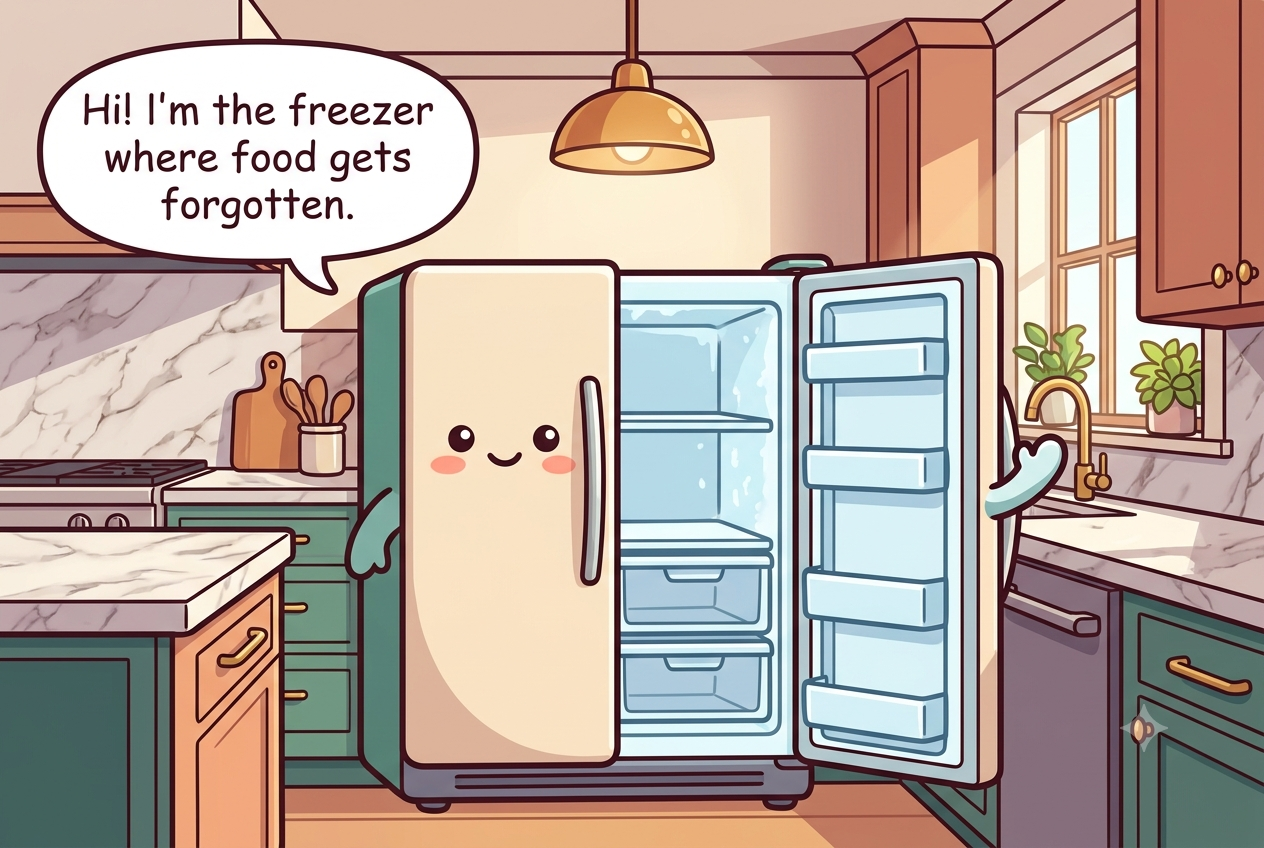
Keep the freezer at 0°F (-18°C), group food by how you cook from it, and make every package identifiable. Freeze soups, sauces, and other suitable foods flat before filing them upright, label the name and freeze date, keep oldest items easiest to reach, and use USDA FoodKeeper guidance for quality times instead of guessing from appearance alone.
What to gather before you start
- A cooler or insulated bags for the emptying-out
- Freezer bags or reusable containers that freeze flat
- A few open bins or magazine files to stand bags upright
- A marker and freezer labels or masking tape
- A simple list for the door or a nearby cabinet
- A thermometer if there is no built-in readout
Measure first. Buy only the pieces that solve a specific access problem.
Empty it, sort fast, and assess quality
Work quickly and in small sections so frozen food stays frozen. Group meat and seafood, vegetables and fruit, prepared meals, breads, desserts, and meal-prep components. Discard packages with serious damage or food you cannot identify; for safety questions after thawing or a power outage, follow USDA/FDA guidance rather than relying on smell alone.
Freezer burn is a quality problem caused by moisture loss and air exposure, not automatically a safety problem if the food has stayed continuously frozen at 0°F. Trim or use freezer-burned food if quality is acceptable, but remove forgotten food you know your household will not eat.
Keep an appliance thermometer in the freezer when the built-in temperature is uncertain; USDA uses 0°F for long-term frozen storage. Work in sections so food remains frozen, and distinguish freezer burn from a safety failure. Freezer burn affects quality, while thawing or a power outage requires time-and-temperature guidance to judge safety. If food has partly thawed, do not make a safety decision from appearance alone. USDA advises using measured temperature and the presence of ice crystals after a power interruption; when in doubt, follow official outage guidance rather than refreezing simply because the package still feels cold.
Group it by how you'd cook from it
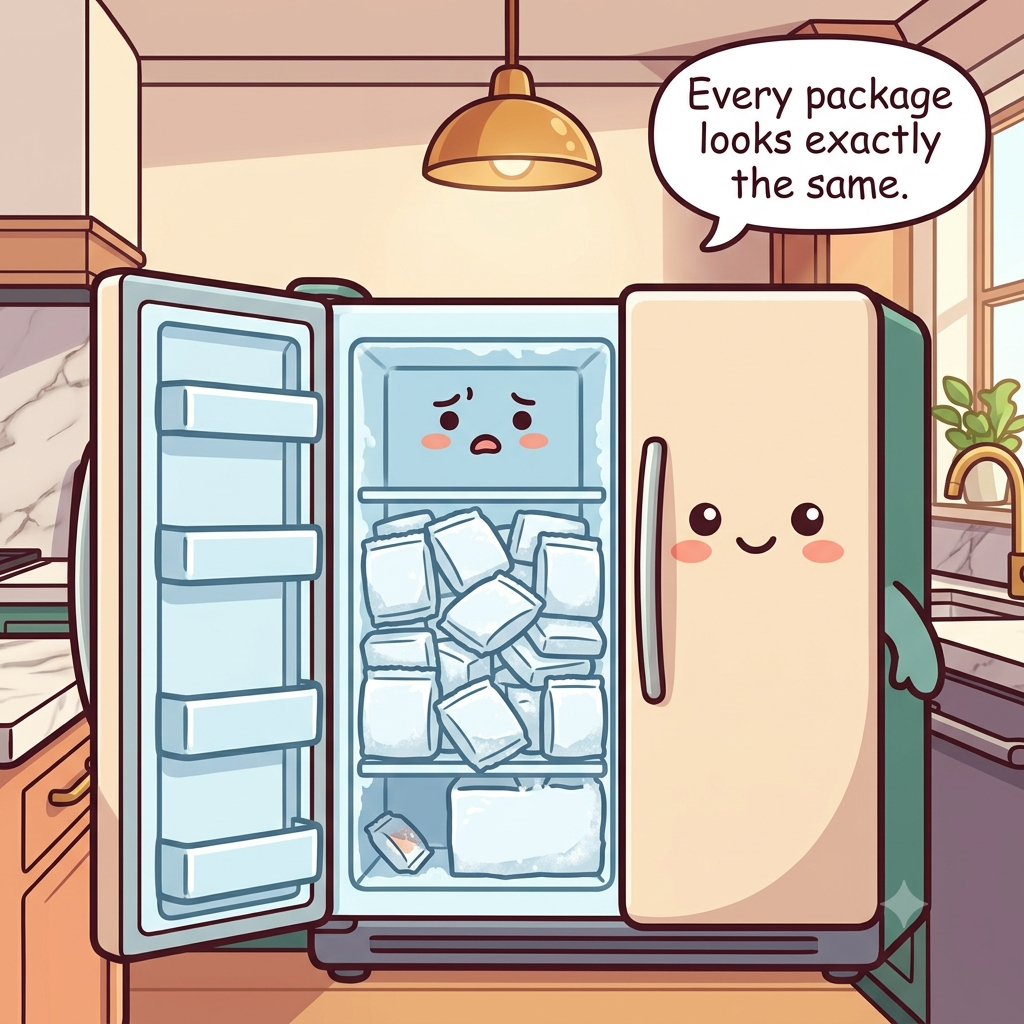
Create categories that lead to meals: proteins, breakfast, vegetables, ready-to-reheat meals, baking, and bread may work better than sorting only by package type. In a chest freezer, use separate lift-out bins or sturdy reusable bags for broad categories so the bottom can be retrieved without excavating every item.
Keep heavier or bulky foods lower and avoid stacking delicate packages where they will be crushed. Reserve one easy-access zone for items you use every week so frequent retrieval does not disturb long-term storage.
Choose categories that translate directly into meals and can be lifted out as units in a chest freezer. Use sturdy bins or reusable bags that remain manageable when full rather than one enormous basket. Keep raw proteins contained so a torn package does not soil bread, desserts, or ready-to-reheat food around it. In a chest freezer, give frequently used categories a bin that can be lifted without excessive weight. Large frozen roasts or bulk packages may need a separate low zone rather than joining a basket that becomes too heavy to handle safely.
Freeze flat and file instead of building tall stacks
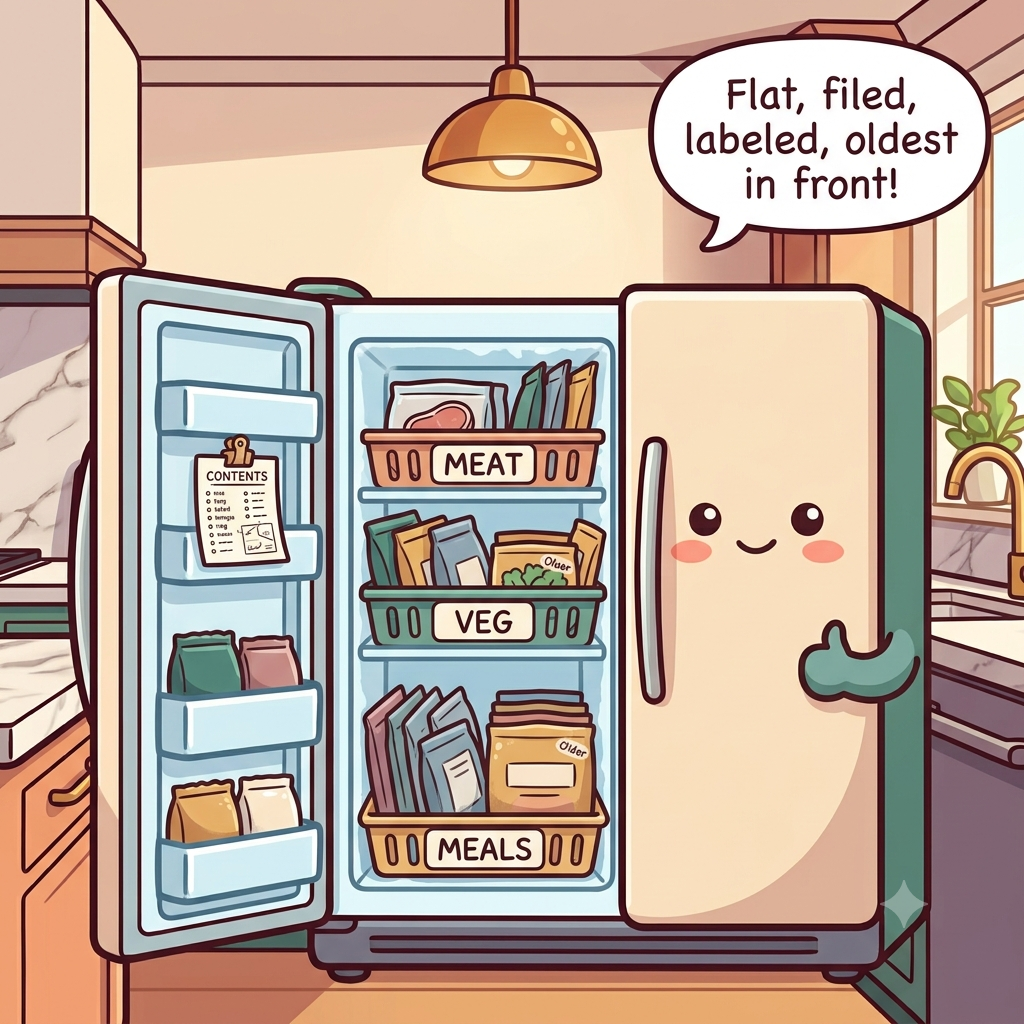
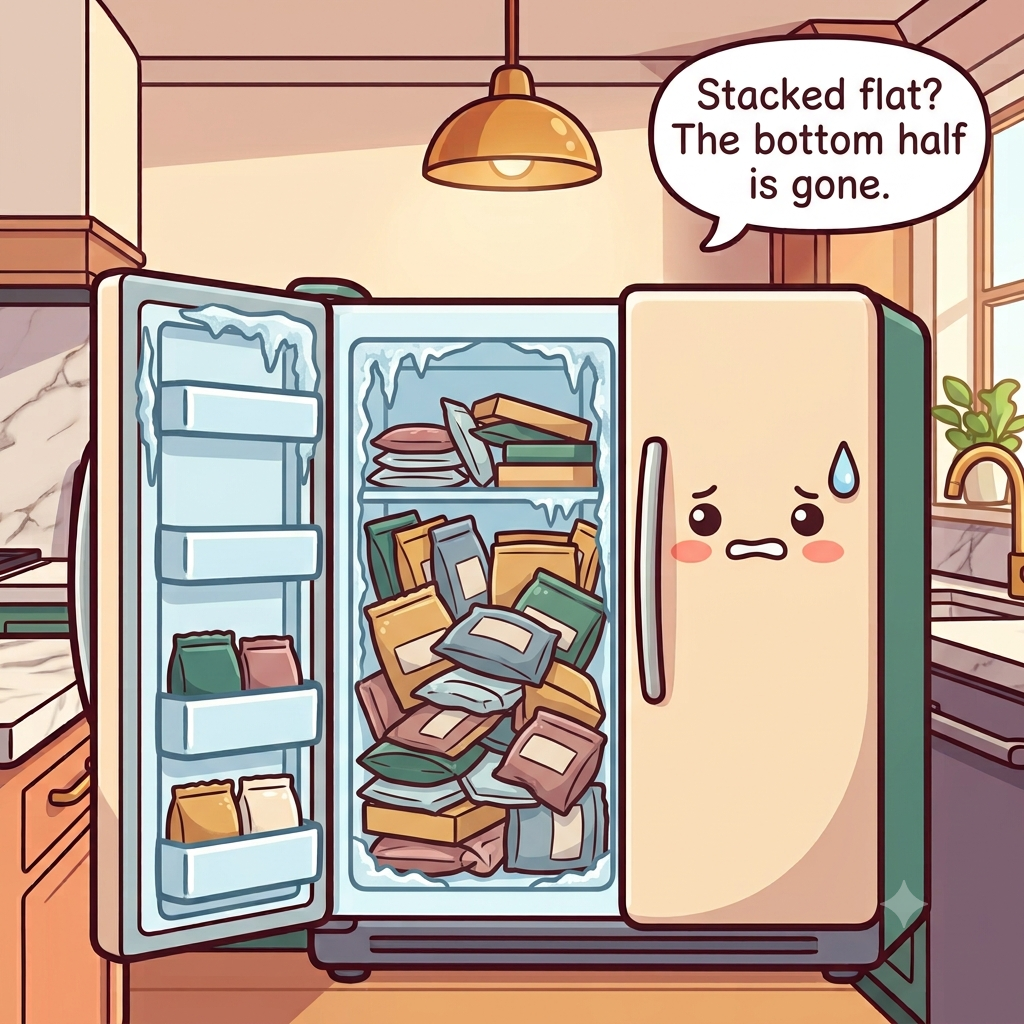
For soups, sauces, cooked grains, and other foods that are appropriate for flexible freezer bags, cool and package them safely, remove excess air, seal, and freeze the bags flat on a tray. Once solid, file them upright like folders so labels stay visible and one portion can be removed without unstacking a tower.
Do not use packaging that is not intended for freezer storage, and leave appropriate expansion space for liquids according to the container manufacturer's guidance. Rigid containers can be stacked by footprint, but keep stacks low and stable so lids are not forced open under weight.
Freeze flexible bags flat only when the food and packaging are appropriate for that method, then stand them upright after they are solid. Remove excess air to protect quality without overfilling the bag, and follow container guidance for liquid expansion. Rigid containers should stack on stable footprints rather than on bowed or loose lids. Label the bag before filling it so writing remains legible and the seal area stays clean. Freeze new flat packages in a single layer until solid; stacking several soft bags immediately can create misshapen frozen blocks that are harder to file or separate later.
Label everything because frozen food is a disguise
Mark the food name, useful portion information, and freeze date before the package goes into the freezer. Include reheating or cooking notes when the food will be hard to identify later. Opaque containers especially need labels; color alone is not a reliable way to distinguish sauce, soup, or cooked meat once frozen.
Use a freezer-safe marker or label that stays readable at low temperature. For commercially packaged food, keep original cooking, ingredient, and allergen information attached whenever possible instead of decanting into an anonymous bag.
Include the food name and freeze date at minimum, then add portion or reheating notes when they prevent waste. Preserve commercial ingredient and allergen information when needed. Use labels that stay legible at freezer temperature and face them toward the retrieval side so identifying dinner does not require unpacking the entire category. For homemade meals, include the cooking status when it matters—for example, raw marinated chicken versus fully cooked chicken—so thawing and reheating decisions are not based on guesswork. Preserve allergy information when food may be served to more than one person.
Rotate oldest to the front and leave room to close
Put new duplicates behind or below older ones and move older food into the easiest retrieval position. Do not overfill baskets so packages interfere with the lid, drawer, gasket, or air circulation required by the appliance. Check the freezer manual for loading and airflow guidance specific to the model.
Use USDA FoodKeeper for recommended freezer quality times. Foods kept continuously frozen at 0°F can remain safe indefinitely from a temperature standpoint, but quality declines, so labeling and rotation still matter. A small 'use next' basket can turn older food into actual meal plans.
Use FoodKeeper's food-specific quality guidance instead of inventing one universal freezer deadline. Continuously frozen food at 0°F remains safe from a temperature standpoint, but quality declines over time. Keep older packages easiest to reach and leave the appliance's gasket, vents, drawers, and closing path unobstructed. Keep the door gasket and lid edge clear of bulging bags or baskets so the appliance can seal completely. Frost buildup, a door that resists closing, or packages touching moving drawers are signs to reduce or rearrange the load rather than force it shut.
Why freezers slide into chaos again
Do not rely on memory to identify frozen leftovers, keep unlabeled mystery packages for years, or build chest-freezer layers that cannot be lifted out by category. Avoid hot food placed into unsuitable containers, fragile glass not rated for freezing, and packages that prevent the lid from sealing.
Do not decide food is safe after a power outage just because it is still cold to the touch. Follow USDA/FDA guidance about remaining ice crystals, temperatures, and outage duration. Organization can reduce waste, but it cannot determine time-temperature safety by itself.
Do not throw away food solely because of freezer burn, and do not declare thawed food safe because it still feels cool. USDA guidance after an outage considers ice crystals and measured temperature. Also avoid mystery bags, non-freezer packaging, overloaded baskets, and containers that prevent the door or lid from sealing fully.
The monthly dig-out reset
Once a month, pull out each category bin, read the oldest dates, and plan a few meals from the 'use next' items. Refile tipped bags, discard empty packaging, and wipe reachable crumbs or ice according to the appliance instructions.
Update a simple freezer list if a large chest freezer makes inventory invisible. The list does not need to be perfect; its job is to keep high-value or older food from disappearing at the bottom.
Pull each category forward far enough to read the oldest labels and plan meals around the food you want to use next. Straighten packages, wipe reachable spills or crumbs according to the appliance instructions, and update any inventory list used for a deep chest freezer. Remove categories nobody uses rather than burying them under newer food.
Freezer safety
- Keep the freezer at 0°F (-18°C).
- Package food to limit air exposure and label contents and dates so quality can be tracked.
- Freezer burn is a quality issue, not by itself proof that food is unsafe; evaluate storage history and signs of spoilage appropriately.
Sources: U.S. FDA — Refrigerator Thermometers: Cold Facts About Food Safety; FoodSafety.gov — Cold Food Storage Chart; USDA FSIS — Refreezing partially thawed food
30-second success check
- An appliance thermometer confirms 0°F (-18°C) or below during normal operation.
- Every homemade or repackaged item is named and dated from the retrieval side.
- Flat-frozen bags and category bins can be removed without excavating a heavy stack.
- Older food is easiest to reach or sits in a visible use-next zone.
- The door or lid seals fully and vents, drawers, and gaskets are not obstructed by overfilling.
Questions that come up
Frequently asked questions
Part of Pantry, Fridge & Food Storage — 4 guides.