
The short answer
Measure the lowest clearance under the bed before choosing containers, then reserve the space for flat, low-turnover items such as seasonal clothes or spare linens. Use lidded containers that slide easily, label the visible end, keep a dust barrier, and leave enough room to pull each box out without moving the bed.
What to gather before you start
- A tape measure and a flashlight
- Two or three shallow lidded under-bed containers or bags that fit the clearance
- A low rolling tray or a rigid board for anything heavy
- A washable mat, liner, or old sheet as a dust and moisture barrier
- Labels for the ends of each container and a marker
- Vacuum-compression bags only for soft goods, if you want them
Measure first. Buy only the pieces that solve a specific access problem.
Measure the clearance and clear it out
Remove everything from under the bed and vacuum before deciding what can return. Measure from the floor to the lowest obstruction—often a center rail, slat, or hardware—not just to the side rail. Also measure the width of the opening and the distance to any center legs so you know the largest box that can actually slide in and out.
Do not buy containers that fit the height on paper but scrape the frame or catch on carpet. If the bed has adjustable or replaceable legs, follow the frame manufacturer's instructions rather than improvising unstable risers. Storage should not compromise the bed's support or block access to structural fasteners.
Write down the lowest clearance, the width between support legs, and the full pull-out path before buying boxes. Include lid lips, wheels, or handles in the container height. A box that slides under the side rail but catches on a center support or thick rug will become storage you avoid using. Check the route from the bed to the room door as well. Oversized rigid bins may fit underneath yet be impossible to remove for cleaning or seasonal use without tilting furniture or blocking the walkway.
Store only flat, low-turnover things
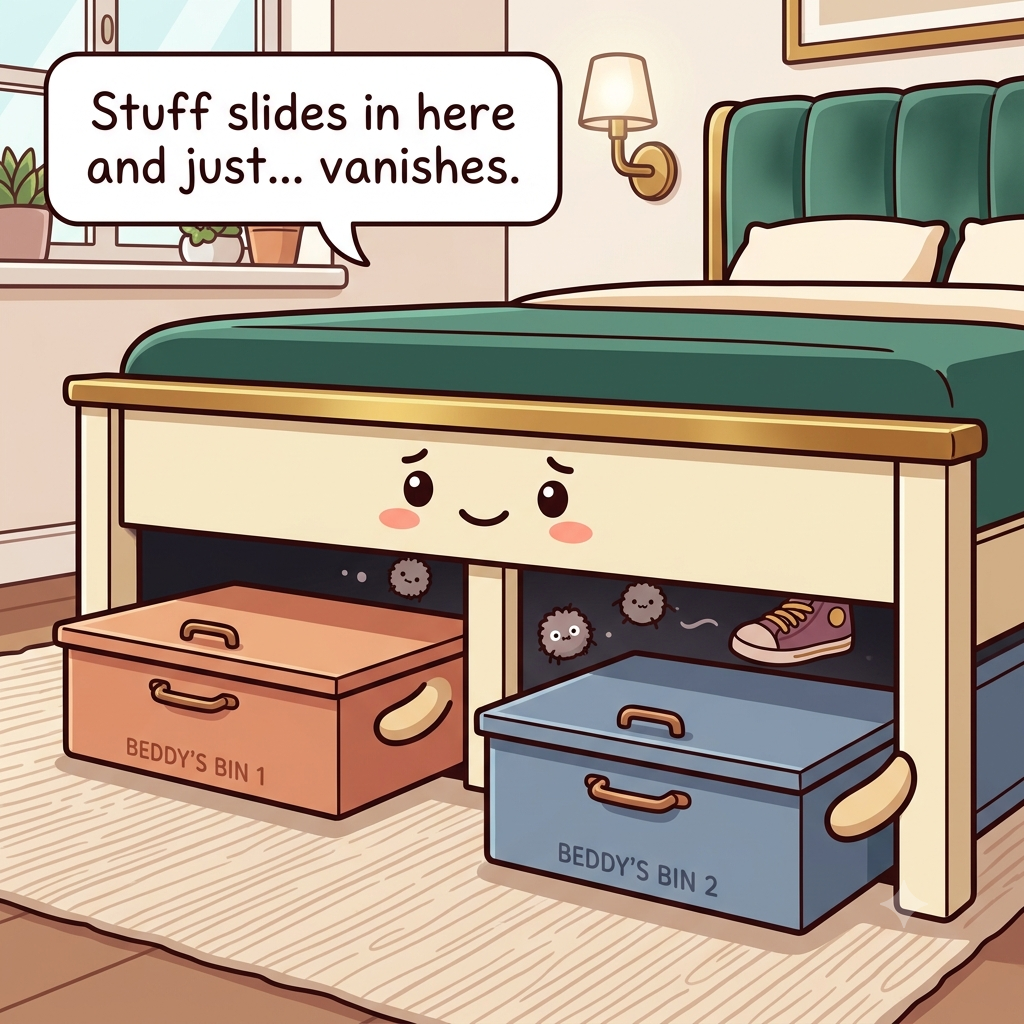
Use under-bed space for items that are clean, dry, and not needed every day: off-season clothing, spare linens, gift wrap, shoes in protected containers, or a small archive of sentimental textiles. Keep daily clothes, important documents, electronics, medications, food, and anything you would forget or damage in a dusty low space somewhere else.
The space works best as a deliberate secondary zone, not a hidden catchall. If you reach under the bed every morning, the friction of kneeling and pulling boxes will make the system fail. Put high-turnover items in drawers, a closet, or another easier-to-access location.
Use this space for belongings that tolerate being out of sight and do not need daily access: seasonal clothing, spare linens, or a small archive of soft goods are typical examples. Keep food, medicine, important originals, and anything moisture-sensitive somewhere with better environmental control and easier inspection.
Use lidded, labeled containers that slide
Choose low containers with lids to reduce dust and keep textiles together. Rigid plastic boxes work well where moisture is a concern; breathable fabric containers can suit a dry room when the contents benefit from airflow. Wheels or smooth undersides help on hard floors, while sturdy handles matter more on carpet.
Label the end that faces the room and, if boxes can be reached from both sides, label both ends. Avoid deep soft bags that collapse and snag on the frame. Do not pack a box so heavily that pulling it strains the handle or makes it difficult to control.
Choose a container you can pull out without dragging the contents across the floor. Low rigid bins with fitted lids work well for many frames; soft zip bags can suit textiles when they still slide cleanly and protect from dust. Put a label on the outward-facing end and a second label on the opposite end if the box may be inserted from either side. Avoid compressing delicate or structured clothing just to make it fit under the frame. If a garment needs hanging, breathable storage, or climate control, under-bed space is the wrong zone even when the container fits.
Keep a dust barrier and a pull path
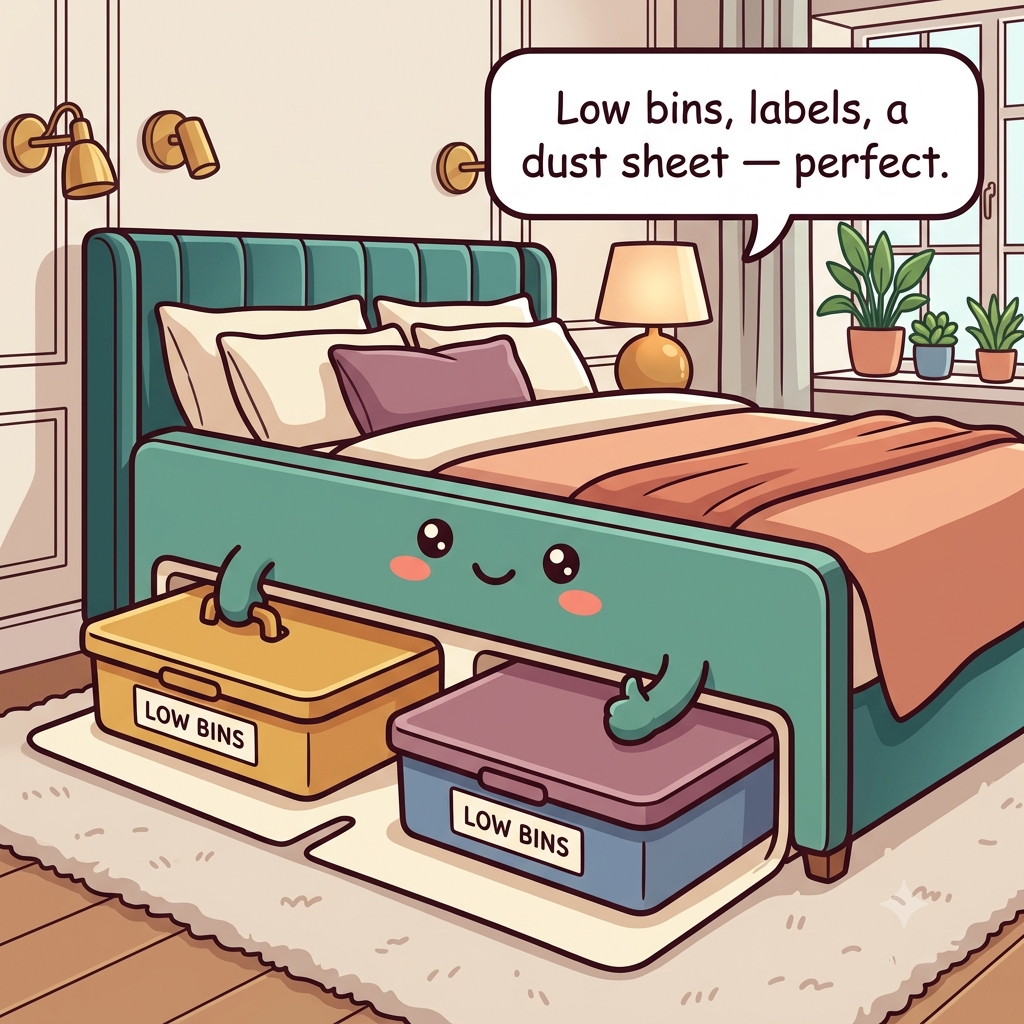
Vacuum the area before storage and leave a small clear lane so each container can slide straight out. Use fitted lids rather than open baskets for textiles, and wash or fully dry fabrics before packing them. If the room collects dust quickly, schedule under-bed vacuuming at the same time you rotate the contents.
Do not fill the entire footprint edge to edge. A narrow gap makes it easier to see whether anything has spilled, pests have entered, or a container has shifted against a center support. On carpet, check that boxes do not trap dampness; if the room has a moisture problem, solve that before using under-bed space for fabrics.
Do not pack boxes tightly from wall to wall. Leave a clear route for each container to come out without moving the bed or unloading its neighbor, and vacuum that route when the boxes are out. If the floor is prone to dampness, under-bed storage is a poor place for absorbent cardboard or irreplaceable belongings.
Leave a map of what is there
Keep a simple inventory in a note on your phone or a label inside the closet: left side—winter knitwear and guest sheets; right side—gift wrap and summer shoes. The list matters most when the containers look identical or the bed is large enough to hold several boxes.
Update the map when you swap seasons instead of relying on memory. If a box becomes miscellaneous, empty it and restore a single category. Under-bed storage is easy to forget precisely because it is invisible, so clear labels and a tiny inventory prevent duplicate purchases.
For several boxes, keep a simple list in a phone note or on the inside of a closet door: container name, contents, and which side of the bed it sits on. The map matters most for seasonal items that may not be opened for months. Update it when a box changes rather than relying on memory.
Signs your under-bed storage isn't working
Avoid storing damp clothing, food, candles, medications, electronics, important original documents, or anything sensitive to dust, heat, moisture, or pests. Do not use cardboard in a room with humidity or pest problems. Avoid unstable bed risers and containers that press against center supports or make the bed harder to inspect.
Do not pack the area so tightly that you must lift the mattress or move the frame to retrieve a box. Open bags and loose shoes turn the space into a dust trap. If you cannot name what is in each container from the visible label, the system is too anonymous.
Avoid unlidded baskets, mystery boxes, containers so tall they scrape the frame, and items you need every morning. Do not use unstable bed risers merely to create storage unless the bed manufacturer permits the setup. The storage should remain secondary to the frame's support and the room's safe walking path. Do not block floor vents, heating equipment, or access to bed-frame hardware with boxes. If the room has recurring moisture or pest problems, solve those conditions before using low hidden storage for textiles.

The seasonal reset
At the change of season, pull every container out, vacuum the floor, and inspect the contents before swapping clothing or linens. Wash and dry textiles completely, repair loose lids or handles, and donate items you did not use during the season that just ended.
Update labels and the inventory as the boxes go back. Keep the same categories in the same positions when possible; consistency makes the hidden storage easier to remember and prevents the area from slowly becoming miscellaneous overflow.
At the seasonal swap, pull every container completely out, vacuum underneath, and confirm the contents still belong there. Wash and dry textiles fully before long storage, repair damaged lids, and update labels or the inventory note. Returning fewer, clearly identified boxes is better than preserving an outdated seasonal archive. Inspect for insect activity, condensation marks, and fabric odor while the boxes are out. Anything that comes back damp or musty should be cleaned and fully dried before it returns beneath the bed.
30-second success check
- Every container clears the lowest bed-frame obstruction and can slide all the way out without moving the bed.
- Labels are readable from the side you normally access.
- Contents are clean, completely dry, and low-turnover.
- There is enough open space to vacuum and inspect the floor when boxes are removed.
Questions that come up
Frequently asked questions
Part of Closets, Clothing & Personal Storage — 13 guides.