The short answer
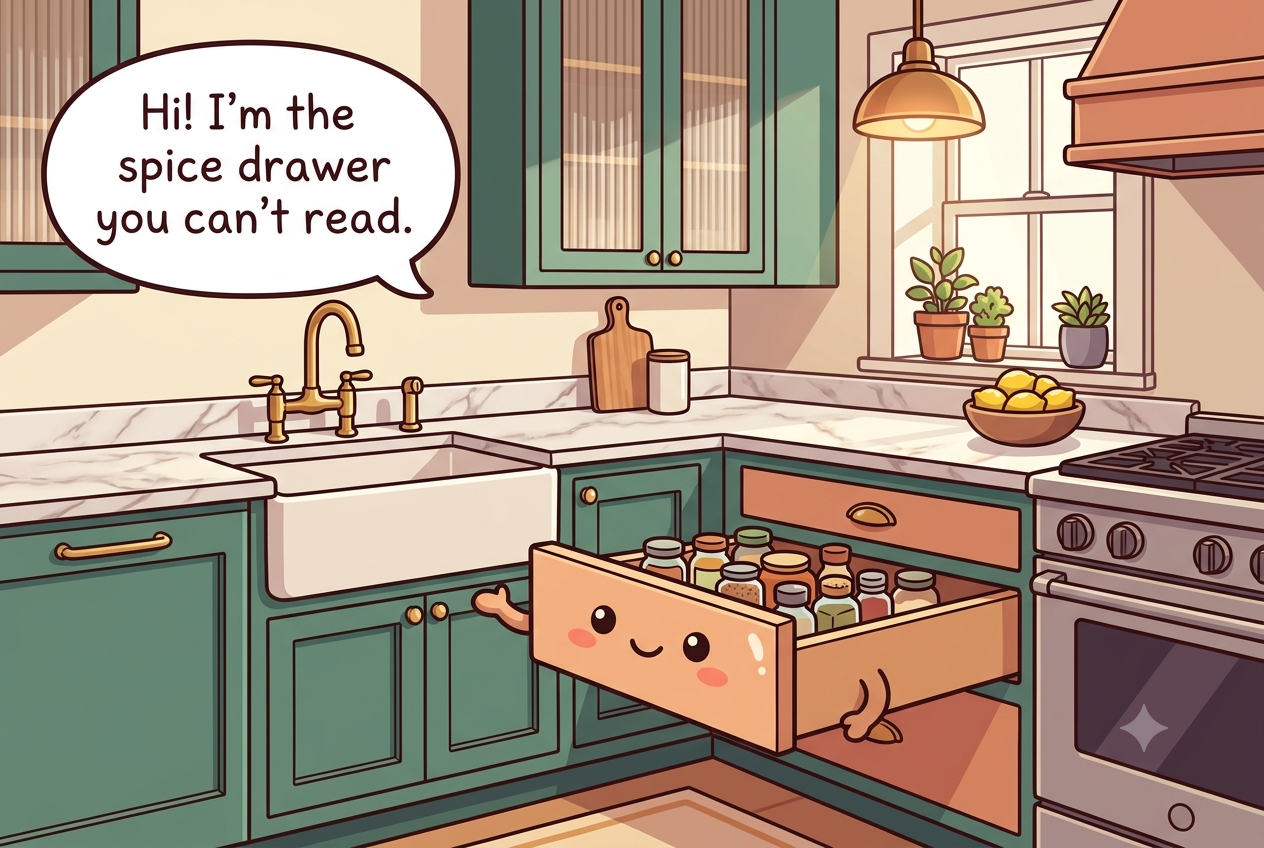
Empty the drawer, check each spice for age, aroma, and duplicates, then organize by the way you actually cook—such as baking, everyday savory, and specialty cuisines. Keep labels readable without lifting jars, date anything you decant, and choose a drawer away from strong heat and direct light when possible.
What to gather before you start
- A tape measure for the drawer's inside depth and height
- An angled tiered drawer insert, or a flat non-slip liner
- Small jars of one consistent size, if you decant
- Blank labels for the tops and a marker
- A fine-point pen for open dates
- A small bin or bag for the stale spices leaving
Measure first. Buy only the pieces that solve a specific access problem.
Empty it out and check every jar for freshness
Take every jar out and combine only true duplicates that are the same product and still in good condition. Check best-by dates as a starting point, then inspect aroma, color, moisture, and clumping. Dried spices usually lose quality before they become unsafe, so the useful question is whether the spice still smells and tastes strong enough to earn drawer space.
Discard anything with mold, insects, obvious moisture damage, or an unknown identity. Wipe the drawer and jar exteriors before reloading. Make a short list of spices you actually need to replace rather than automatically rebuying every old jar; an infrequently used spice may be better purchased in a smaller quantity.
Use package dates as quality guidance rather than inventing one universal discard age for every spice. Whole spices generally retain aroma longer than ground spices, but storage conditions, the product, and the manufacturer's guidance all matter. Replace a spice sooner when you see moisture, mold, pests, or an obvious loss of aroma or color, and do not keep a jar simply because a generic internet chart says it should last a certain number of years.
Sort by the way you reach for spices
Choose a grouping that matches your cooking: baking spices together, everyday savory seasonings together, a cuisine-specific group, or alphabetic order if you own many jars and search by name. The best system is the one that helps you find a spice during active cooking without reading every label.
Keep frequently paired spices near one another and separate blends from single spices if that reduces mistakes. Avoid creating too many tiny categories. A drawer that requires a map for ordinary cooking will not stay organized; two to five meaningful zones are usually easier to maintain than a catalog system.
Keep the grouping broad enough to survive actual cooking. Baking, everyday savory, and a specialty group may make sense for one household; alphabetical order may be easier for another. The important test is whether another regular cook can find and return a jar without learning a complicated catalog. When several people cook, agree on one primary rule and use a small secondary cue only where needed—for example, a baking zone within an otherwise alphabetical drawer. Too many overlapping systems make returns inconsistent and hide duplicates. Run a real cooking test before finalizing the order: make one typical weeknight meal and notice which jars you reach for in sequence. If the same four or five seasonings cross the full drawer repeatedly, create a small high-frequency lane while keeping the rest in broader groups. That preserves speed without turning the entire collection into a rigid alphabetical system that has to be rebuilt whenever one jar changes size.
Make every label readable without lifting a jar
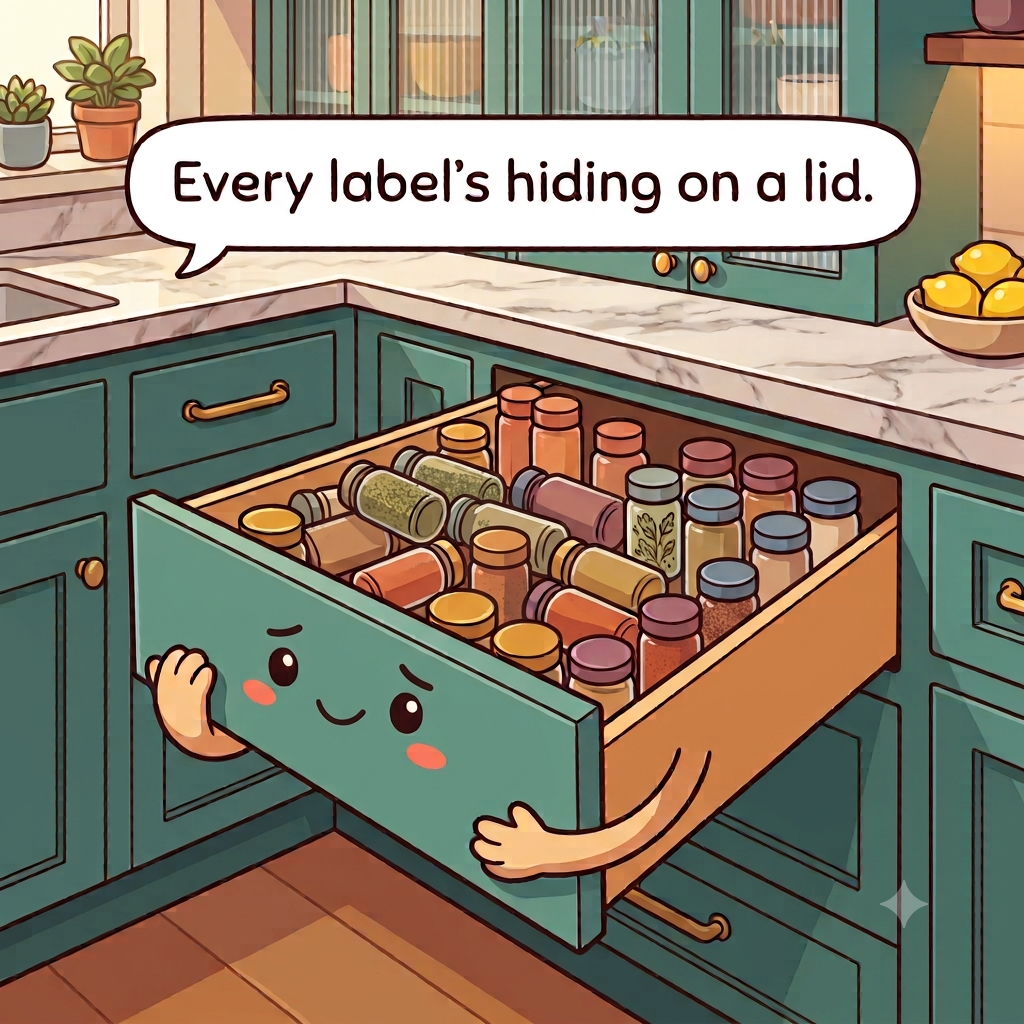
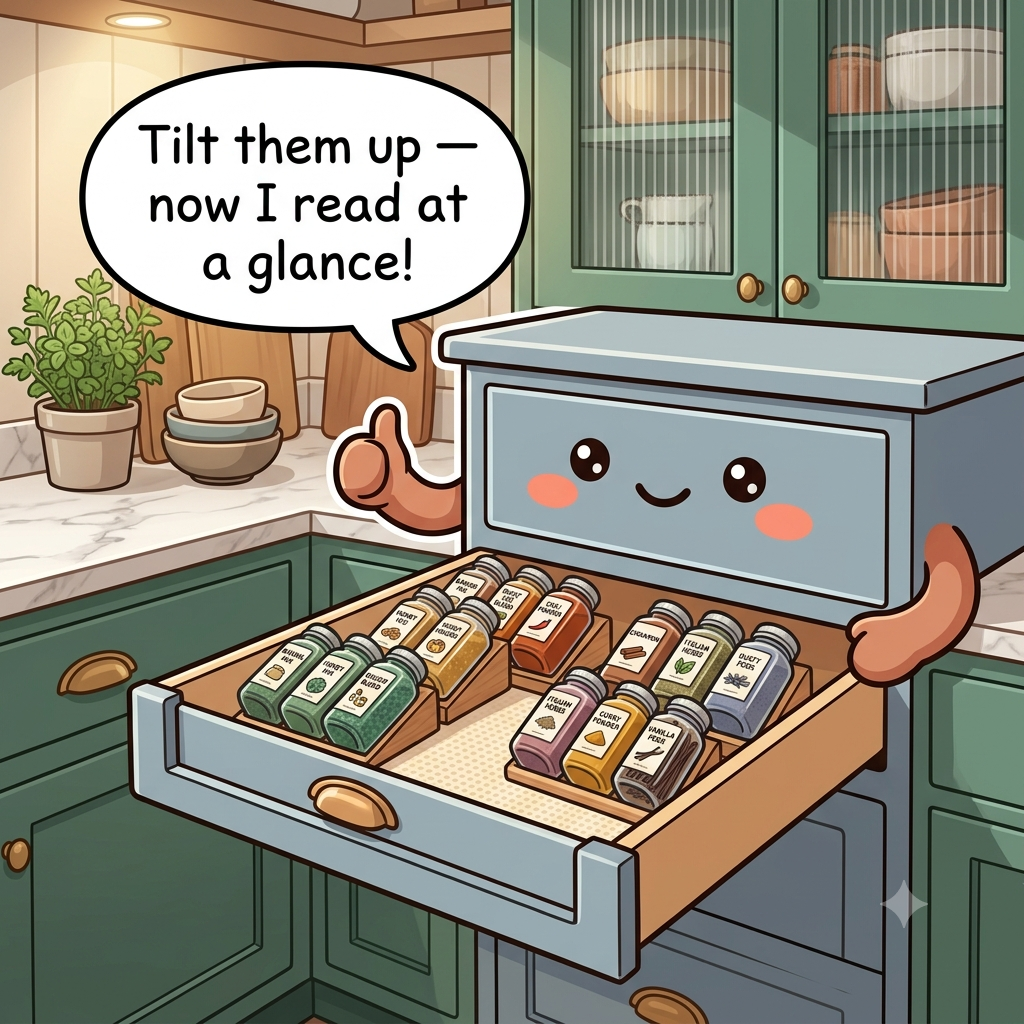
Use a sloped spice-drawer insert, low-tiered tray, or uniform label position so the name can be read from above. If jars lie flat, orient every label the same way. If they stand at an angle, confirm the drawer closes with clearance above the tallest cap before filling the insert.
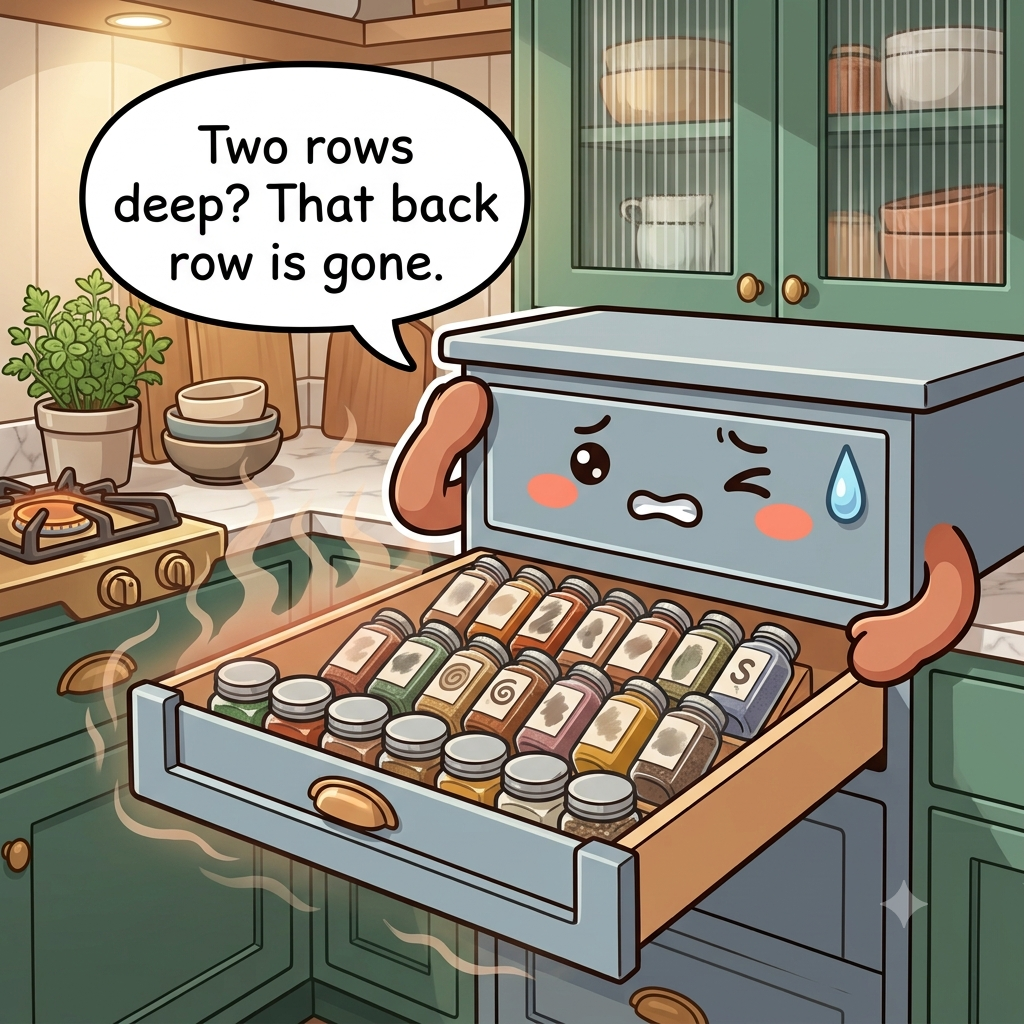
Do not stack jars two deep when the back labels disappear. If the collection is larger than the visible footprint, reduce duplicates or move rare spices to a labeled reserve bin outside the main cooking drawer. Visibility matters more than squeezing in one extra row.
Measure drawer height with the insert in place before filling it. A sloped rack that displays labels is useful only if the tallest cap still clears the drawer above. If the collection is larger than the visible footprint, keep a labeled reserve elsewhere instead of hiding a second row under or behind the active spices. If labels are on the lids, keep their orientation consistent after every refill so the drawer can be scanned quickly while cooking.
Keep it away from heat and light, and date what you decant
Heat, moisture, and light accelerate quality loss in spices. A drawer immediately beside an oven or cooktop can be hotter than the surrounding cabinetry, so use a cooler drawer when practical. Keep jars tightly closed and never use a wet measuring spoon inside a spice container.
If you decant into matching jars, add the spice name and a purchase, opening, or decant date so age does not become invisible. Keep ingredient and allergen information available for blends; photograph or retain the original label if the new jar does not have room for it.
Keep containers tightly closed and away from repeated heat, steam, moisture, and direct sunlight. When you decant, preserve the spice name and useful date information and retain ingredient or allergen details for blends; use a dry spoon so steam or water does not enter the jar. If a drawer beside the range or dishwasher becomes warm or humid during normal cooking, move the active spice zone to a cooler, drier cabinet instead of assuming matching jars will protect the contents.
Load front to back by how often you cook with it
Put everyday salt-free blends, pepper, garlic, paprika, cinnamon, or whatever your household actually uses in the easiest front positions. Move specialty baking colors, whole spices, or rarely used blends toward the back while keeping their labels readable. The frequency order should reflect your own recipes rather than a generic spice list.
Leave a little empty space so jars can be lifted and returned without wedging the row. If the drawer becomes completely full, use the next reset to remove duplicates before buying another organizer. Capacity is a useful boundary for the collection.
Let actual use determine the prime row. Frequently reached jars belong where their labels can be read immediately; specialty spices can sit farther back as long as they remain visible. Keep a small amount of spare room so a new jar can be returned without wedging the entire row tighter.
Habits that undo a spice drawer
Do not decant everything and throw away the only label that shows ingredients, allergens, or age. Avoid placing spices over a steaming kettle, beside a hot oven when a cooler location is available, or in direct sun. Do not keep mystery powders just because the jar is attractive.
Another common mistake is sorting alphabetically when you cook by task—or sorting by task when nobody else can find anything. Choose one retrieval rule and keep it simple. A beautiful insert does not help if labels remain hidden or the drawer jams on tall jars.
Avoid storing jars beside a strong heat or moisture source when a cooler cabinet is available, throwing away the only ingredient label after decanting, or keeping mystery powders. Do not force an alphabetical system on a household that cooks by task, or vice versa. A consistent retrieval rule is more valuable than matching jars.
The once-a-season reset
Every few months, scan for nearly empty jars, duplicates, and spices you stopped using. Smell older ground spices before planning a recipe around them and replace only what has clearly lost useful aroma or quality. Wipe dust and stray powder from the drawer and jar shoulders.
When adding a new spice, give it a labeled position immediately and check whether an older duplicate already exists. This small rotation prevents three half-used jars from accumulating behind the visible row.
At the seasonal check, wipe loose powder, compare duplicate jars, and smell older spices before relying on them for a recipe. Replace items that have clearly lost useful aroma or show moisture or contamination, and add a date when a decanted jar has none. Check the active row before buying a refill so duplicates do not accumulate unseen. If you buy from bulk bins, write the purchase date when filling the home jar and avoid topping an old jar with new spice until the container has been emptied and cleaned so age remains traceable.
30-second success check
- Every spice label can be read without lifting another jar.
- The drawer is not repeatedly heated or steamed by nearby cooking or dishwashing.
- Decanted spices retain the identity, useful date, and needed ingredient or allergen information.
- Jars with moisture, pests, or obvious quality loss leave the drawer instead of being kept by a generic age rule.
Questions that come up
Frequently asked questions
Part of Kitchen Cabinets & Work Zones — 8 guides.