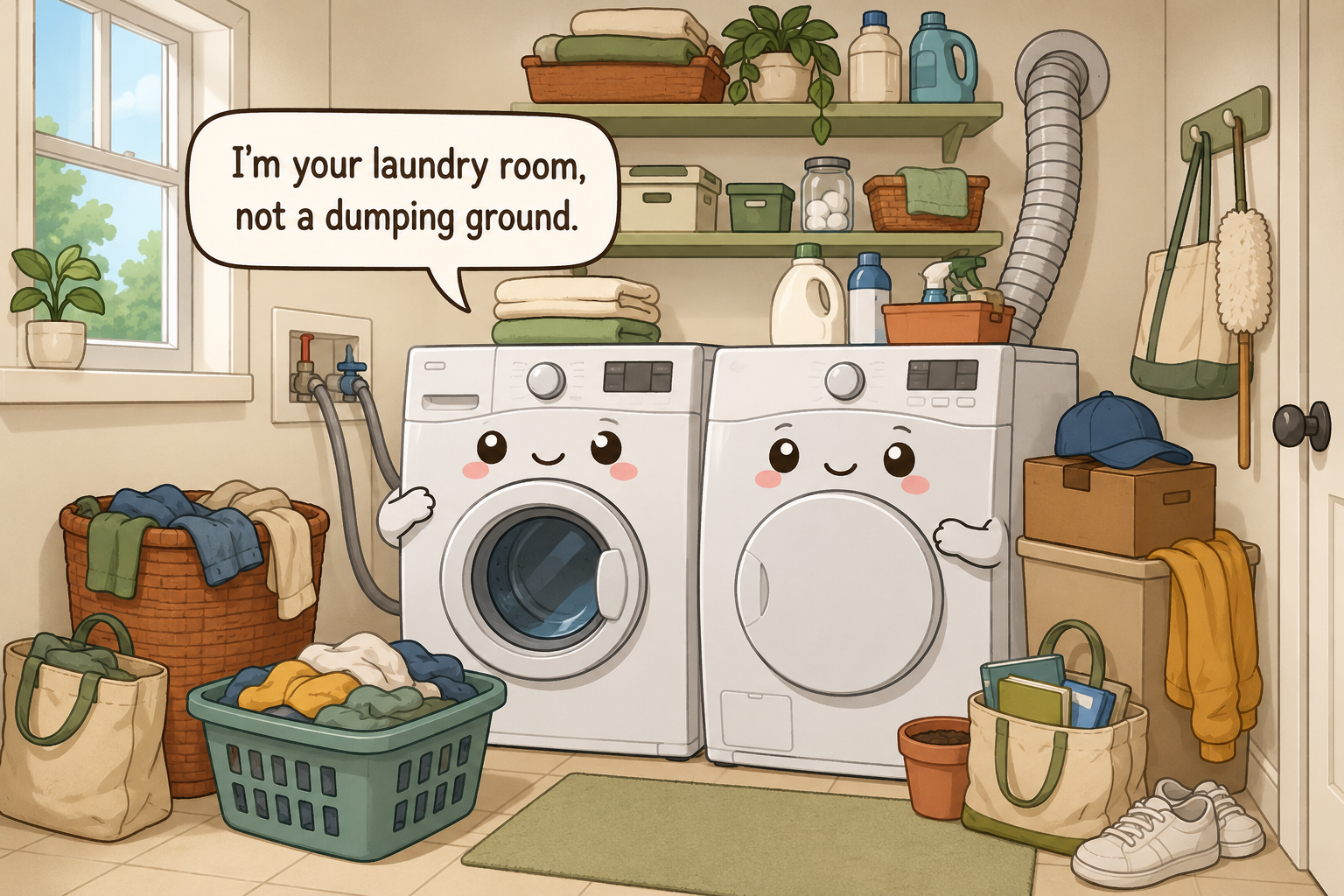
The short answer
Keep the floor and utility access clear, then divide the room into wash, dry, and household-overflow zones. Store detergents and other chemicals in original labeled containers and lock them away from children, give dirty laundry a fixed hamper footprint, clean the dryer lint filter before each load and inspect the vent system periodically, and use high shelves only for lightweight supplies.
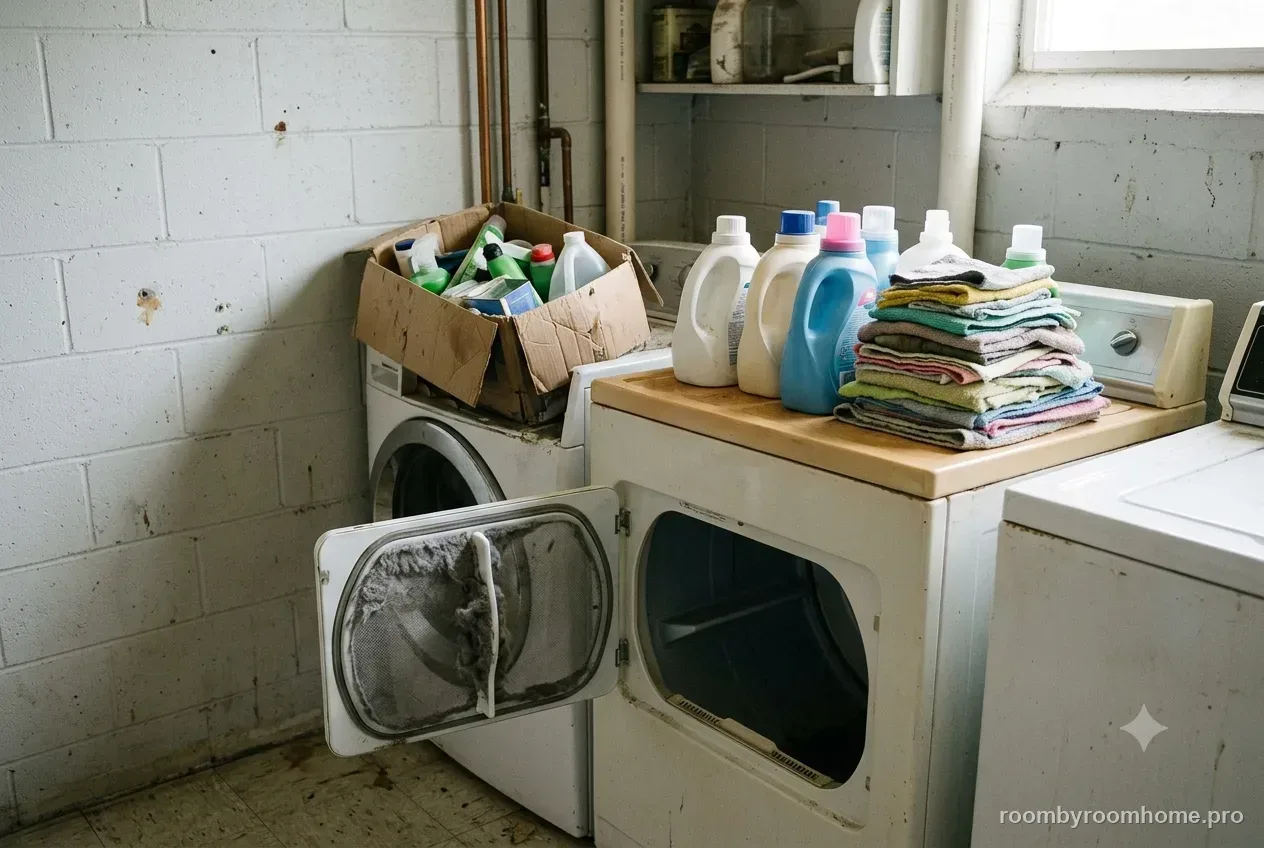
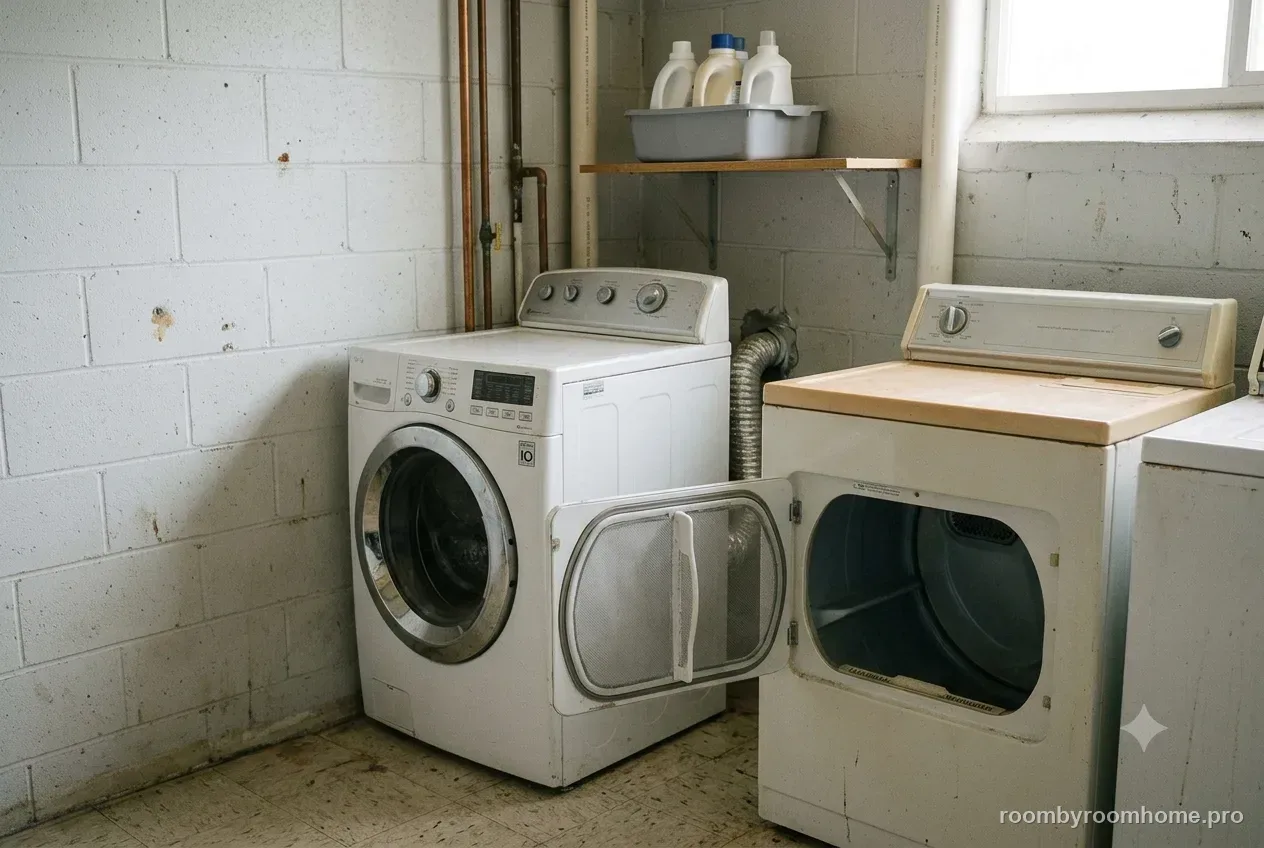
What to gather before you start
- A tape measure and painter's tape
- Two or three laundry baskets sized for the real floor space
- Closed or high storage for detergent and pods
- A shallow shelf bin for stain-care items
- A lint waste container placed away from heat
- Removable hooks or an over-door organizer for light supplies
Measure first. Buy only the pieces that solve a specific access problem.
Build the room around wash, dry, and fire-safe access
The laundry room needs working space for sorting and folding, but it also needs clear appliance access and a lint routine that does not get buried by storage.
- Keep anything that can burn at least 3 feet from a furnace, water heater, or other heat-generating equipment when these share the room.
- Clean the dryer lint filter every time the dryer is used and clean dryer vent ductwork every year, following USFA guidance.
- Keep detergent and other chemicals in original labeled containers and secured from children.
- Do not stack storage where it blocks appliance shutoffs, vent connections, service panels, or the path to remove a machine.
- Use vertical storage for light supplies and keep heavy bulk refills lower.
Sources: U.S. Fire Administration — Basement and Garage Fire Safety; U.S. CPSC — Poison Prevention Information Center
Clear the floor and protect things you may need in a hurry
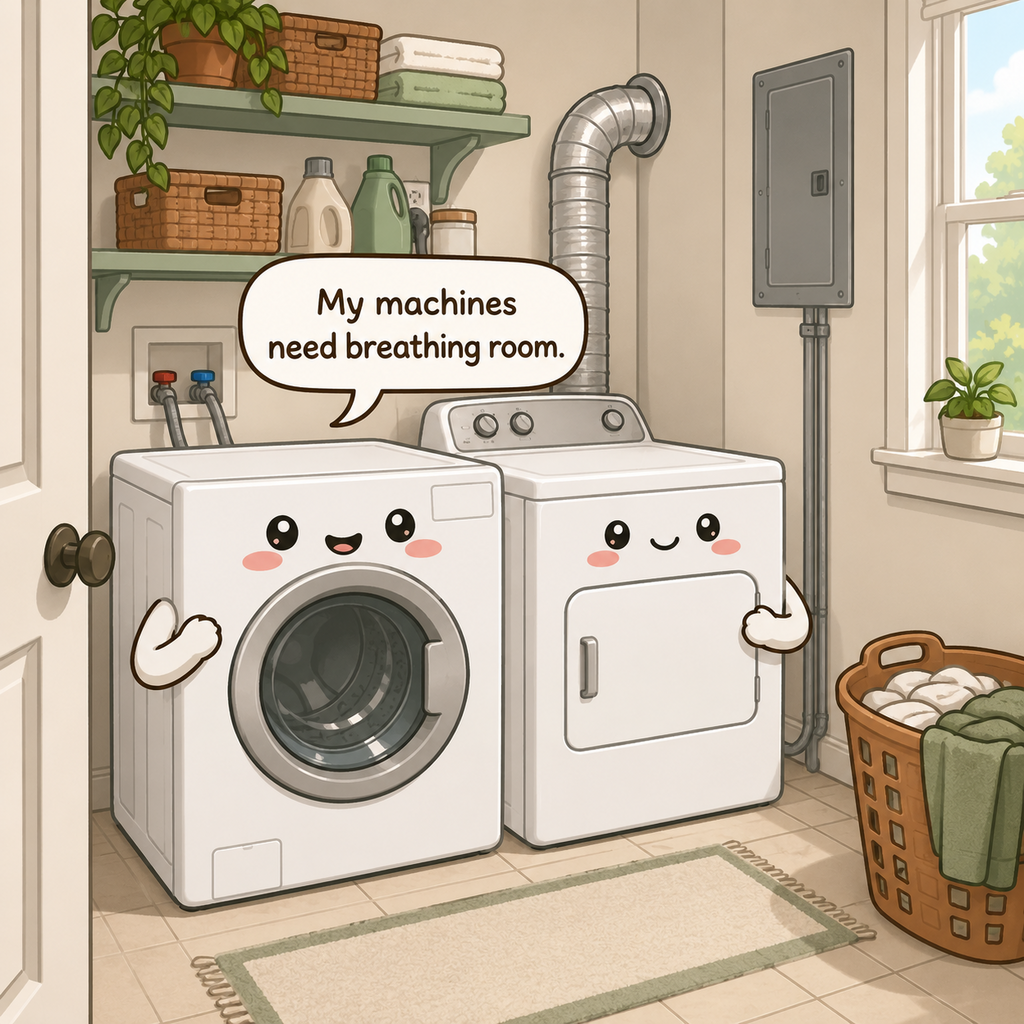
Remove loose baskets, bulk refills, cleaning gear, and household overflow from the floor. Preserve a direct path to the washer, dryer, shutoff valves, electrical connections, utility panels, and any water heater or other equipment in the room. Do not hide a leak, drain, or service point behind permanent storage.
If the laundry room shares space with a furnace, water heater, or other heat-producing equipment, USFA says to keep anything that can burn at least 3 feet away. Also follow the equipment manufacturer's service clearances and local code, which may require additional access; do not crowd an appliance simply to gain one more shelf.
Map service access before placing any shelf or cart. You should be able to reach water shutoffs, drain or supply connections, plugs, controls, and the vent route without unloading a wall of household stock. If a furnace, water heater, electrical panel, or other utility shares the room, preserve its required manufacturer and code clearances. A rolling cart is useful only if it can move without trapping hoses, blocking a door, or becoming the obstacle during a leak or repair.
Separate dangerous or messy supplies from easy-grab laundry tools
Keep stain sticks, clothespins, dryer balls, and empty laundry baskets in easy daily reach. Store detergents, bleach, disinfectants, pods, and other household chemicals in original labeled containers; in homes with children, lock them up and keep them out of reach and sight. Never decant cleaners into food or drink containers and never mix products.
Contain products that can leak in a washable tray and keep incompatible chemicals separated according to their labels. Keep detergent pods in their original child-resistant package rather than decorative containers, and never combine cleaning products unless their labels explicitly direct it.
Separate everyday laundry tools from products that require controlled access. Clothespins, mesh bags, and dryer balls can sit in open reachable bins; bleach, concentrated detergent, pods, disinfectants, and stain chemicals should remain in original labeled packaging and be secured from children. Use a washable tray for containers prone to drips. Never combine cleaners or decant them into food-like containers simply to make the shelf look uniform.
Build a three-zone wall: wash, dry, and household overflow
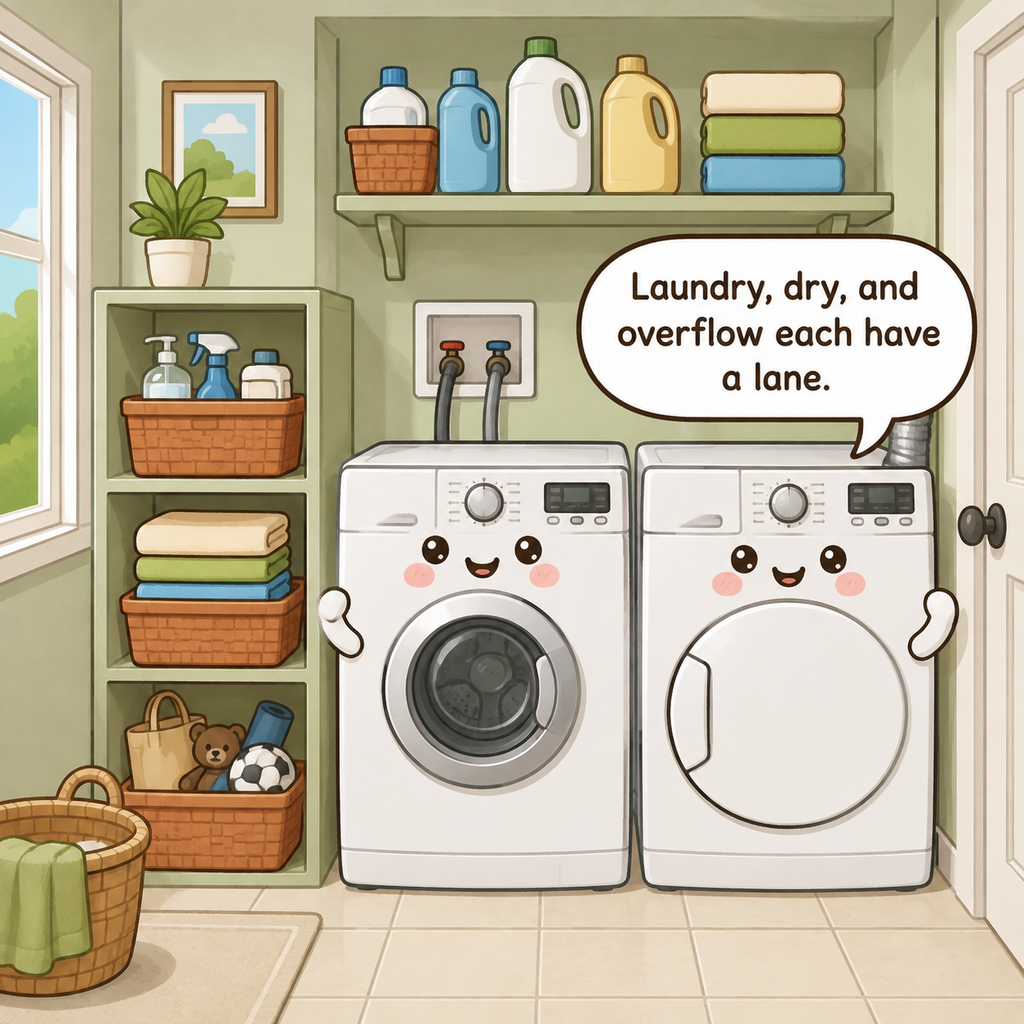
Place washing supplies nearest the washer, drying and hanging tools nearest the dryer or hanging rail, and unrelated household overflow in a clearly separate upper or side zone. Use shallow shelves or labeled bins so daily products are visible and bulk refills do not push them to the edge.
Keep wall systems within their rated loads and avoid hanging heavy refills above appliances where vibration or retrieval can cause a fall. Renters can use freestanding shelving, rolling carts that do not block appliance access, or tension-based drying rods instead of permanent installation.
Build the wall from the appliance outward: wash products nearest the washer, drying and hanging tools nearest the dryer or drying rail, and true household overflow only in the remaining space. Keep high shelves for light items such as empty baskets or paper goods and put heavy liquid refills lower. A renter can use a slim freestanding rack or rolling cart if it leaves hoses, vents, plugs, and appliance doors accessible and does not create a tipping hazard.
Give dirty laundry a footprint instead of letting it spread
Use one hamper system sized to the household and available floor area. Separate loads only when the categories are useful to your routine—for example lights, darks, delicates, or towels—rather than creating more baskets than the room can hold. Keep hampers out of the door swing and away from appliance service areas.
Do not pile clothing on top of the washer or dryer as a permanent sorting surface. Wet or damp laundry should not sit compressed in a closed hamper for long periods; move it promptly into washing or a ventilated drying step.
Choose the smallest hamper arrangement that matches actual sorting behavior. If everyone sorts only on wash day, one ventilated hamper may work better than four permanent baskets. If loads are routinely separated, give each category a clearly bounded slot and keep the whole system outside the door swing and service path. Damp towels or wet clothes should not sit compressed in a closed bin; move them to washing or a ventilated drying step promptly.
Treat lint as maintenance, not decor
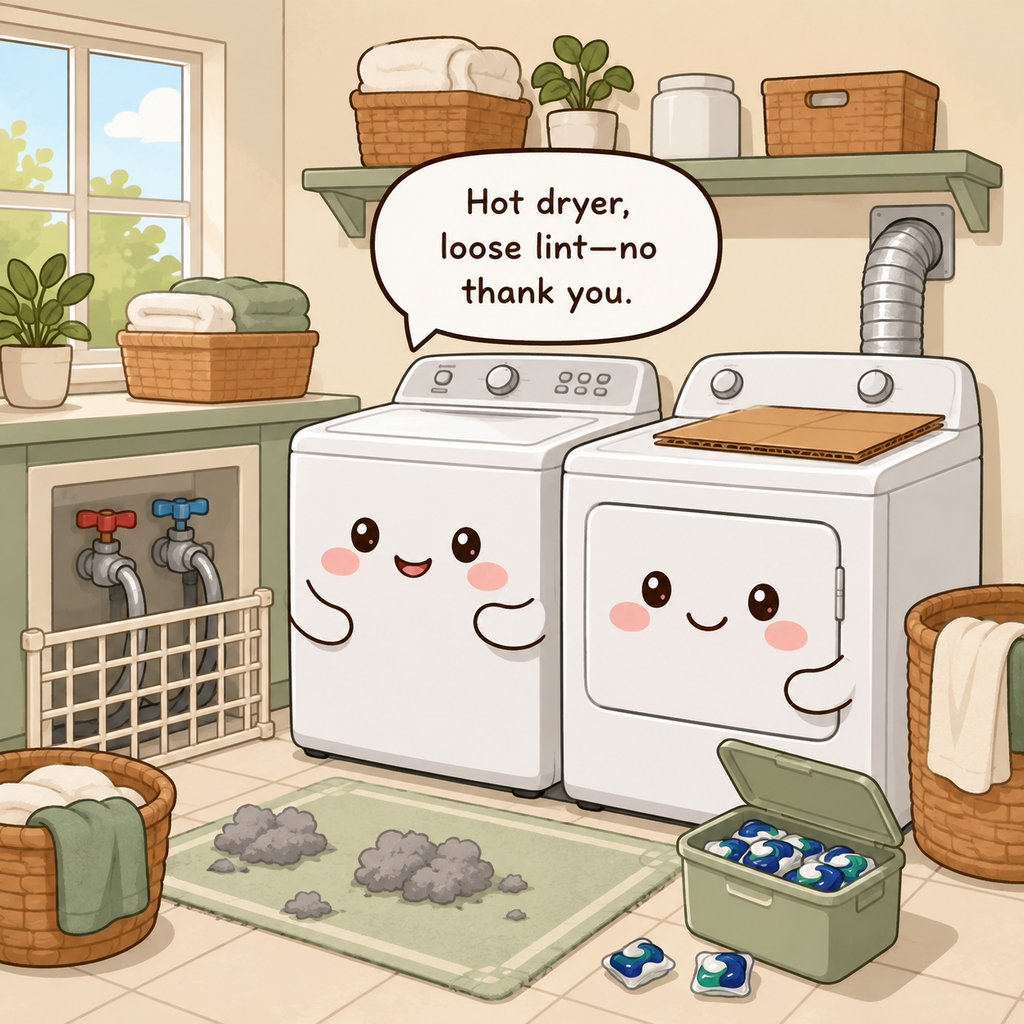
Clean the dryer's lint filter before each load; USFA guidance emphasizes removing lint from the filter and checking that the vent behind the dryer is not crushed or restricted. Keep the area around and behind the dryer free of lint, boxes, clothing, and other combustibles, and make sure the outdoor vent can open when the dryer runs.
Have the dryer exhaust system inspected and cleaned as needed based on the appliance instructions and signs of restriction, and stop using the dryer if you notice abnormal heat, long drying times, or a vent problem. Do not use organization products that block the vent, cover the machine's ventilation, or make the plug inaccessible.
Watch for performance clues between scheduled cleanings: drying suddenly takes longer, the dryer or laundry area becomes unusually hot, the outside exhaust flap does not open normally, or visible lint builds up around the machine. Those are reasons to investigate the exhaust path and appliance condition rather than adding storage around the symptom. Keep the vent route and plug accessible enough that maintenance can happen without dismantling the room.
Use vertical space for light things and a folding surface for active work
Store empty baskets, paper goods, and light backstock on high shelves, reserving heavy detergent refills for lower stable storage. A wall-mounted or over-appliance folding surface can help if it does not block lids, controls, ventilation, or service access.
Keep the folding surface clear between loads so it stays a workspace rather than a shelf. If a surface repeatedly collects household clutter, move that overflow category out of the laundry room instead of giving it a larger basket.
A folding surface earns its space only if it remains available for folding. Keep it clear between loads and use wall storage above it for light supplies that cannot fall into the appliance. Do not cover ventilation openings or controls with a countertop, shelf, or basket. If the room is extremely narrow, a fold-down surface may work, but its hardware must be rated for the load and it must fold away without blocking appliance access.
Make refills leave as fast as they arrive
Set a backstock limit based on the shelf or bin you have assigned, not on warehouse-club package size. When a refill is opened, recycle or dispose of the outer packaging promptly and move the active product into its safe daily location without decanting away hazard labels.
Do not keep months of heavy liquids on a high shelf. Buy quantities you can store safely and inspect for leaks. A small backstock boundary prevents the laundry room from turning into a chemical warehouse.
Set one defined backstock area for detergent and household refills and let that physical boundary control purchasing. Heavy liquids belong low enough to lift safely and in a tray if leaks are possible. When an active package is replaced, remove the empty packaging immediately and keep the new product's original label intact. If warehouse-size stock no longer fits safely, store less; the laundry room should not become a chemical storeroom simply because supplies were bought in bulk.
Habits that undo a small laundry room
Do not block shutoffs or appliance access, store combustibles around the dryer, ignore lint accumulation, or put detergent pods and chemicals in unlabeled decorative containers. Avoid heavy refills over your head, wet laundry sealed in bins, and random household overflow on top of appliances.
Do not assume a generic clearance around a furnace or water heater substitutes for the appliance label or local code. Keep access open and follow the specific equipment requirements.
Most laundry-room failures are visible early: detergent migrates onto the dryer, empty baskets block the door, bulk stock hides the shutoff, or lint collects behind a shelf. Correct the first broken boundary instead of adding another basket. Never let organization make maintenance harder. If a shelf has to be removed to reach the vent, a cart blocks a leak check, or a refill sits over your head because lower space is full, reduce or relocate storage.
The weekly reset
Once a week, clear the folding surface, return baskets, wipe detergent drips, process orphan socks, and remove household items that migrated into the room. Check the floor around appliances for leaks or unusual debris and clean lint from accessible areas.
During normal laundry, clean the dryer lint filter before each load and keep the vent path unobstructed. A weekly room reset plus load-by-load lint maintenance keeps both clutter and fire risk from accumulating.
Use the weekly pass to catch drift before it reaches safety-critical areas: a refill migrates onto the dryer, a basket blocks a shutoff, lint appears around the appliance, or household overflow creeps toward the heat-source clearance. Keep the load-by-load lint-filter routine separate from this reset, and keep the annual dryer-duct cleaning on the home-maintenance calendar. If a storage item has to move every time you inspect the vent or reach a valve, it does not have a permanent home there.
Three working zones
Keep here
- Wash: detergent, stain treatment, mesh bags
- Dry: dryer sheets or wool balls, lint tools, hanger staging
- Overflow: a tightly limited amount of household backstock away from heat and service access
Store elsewhere
- Combustible clutter beside heat-generating equipment
- Loose items on a dryer that can fall behind it
- Unlabeled chemicals
- Bulk storage that blocks vent or shutoff access
Laundry fire & chemical safety
- Clean the dryer lint filter every time the dryer is used.
- USFA recommends cleaning dryer vent ductwork every year.
- Keep anything that can burn at least 3 feet from a furnace, water heater, or other heat-generating equipment.
- Secure detergent and cleaning products from children and keep them in original labeled containers.
Sources: U.S. Fire Administration — Basement and Garage Fire Safety; U.S. CPSC — Poison Prevention Information Center
Renter-friendly option
Use a slim freestanding shelf, rolling cart that leaves hoses and vents accessible, or a tension drying rod rated for the load instead of permanent wall shelving. Do not place no-drill storage inside appliance, utility, or fire-clearance zones.
30-second success check
- Water shutoffs, plugs, vents, drains, and service paths remain accessible without moving permanent storage.
- Combustible storage stays at least 3 feet from a furnace, water heater, or other heat-producing equipment where applicable.
- The lint filter is cleaned with every dryer use and annual vent-duct cleaning is on the maintenance calendar.
- Detergents and chemicals remain original-labeled and secured from children.
- The folding surface is still usable for active laundry rather than permanent overflow.
Questions that come up
Frequently asked questions
Part of Garage, Laundry, Attic & Basement — 6 guides.