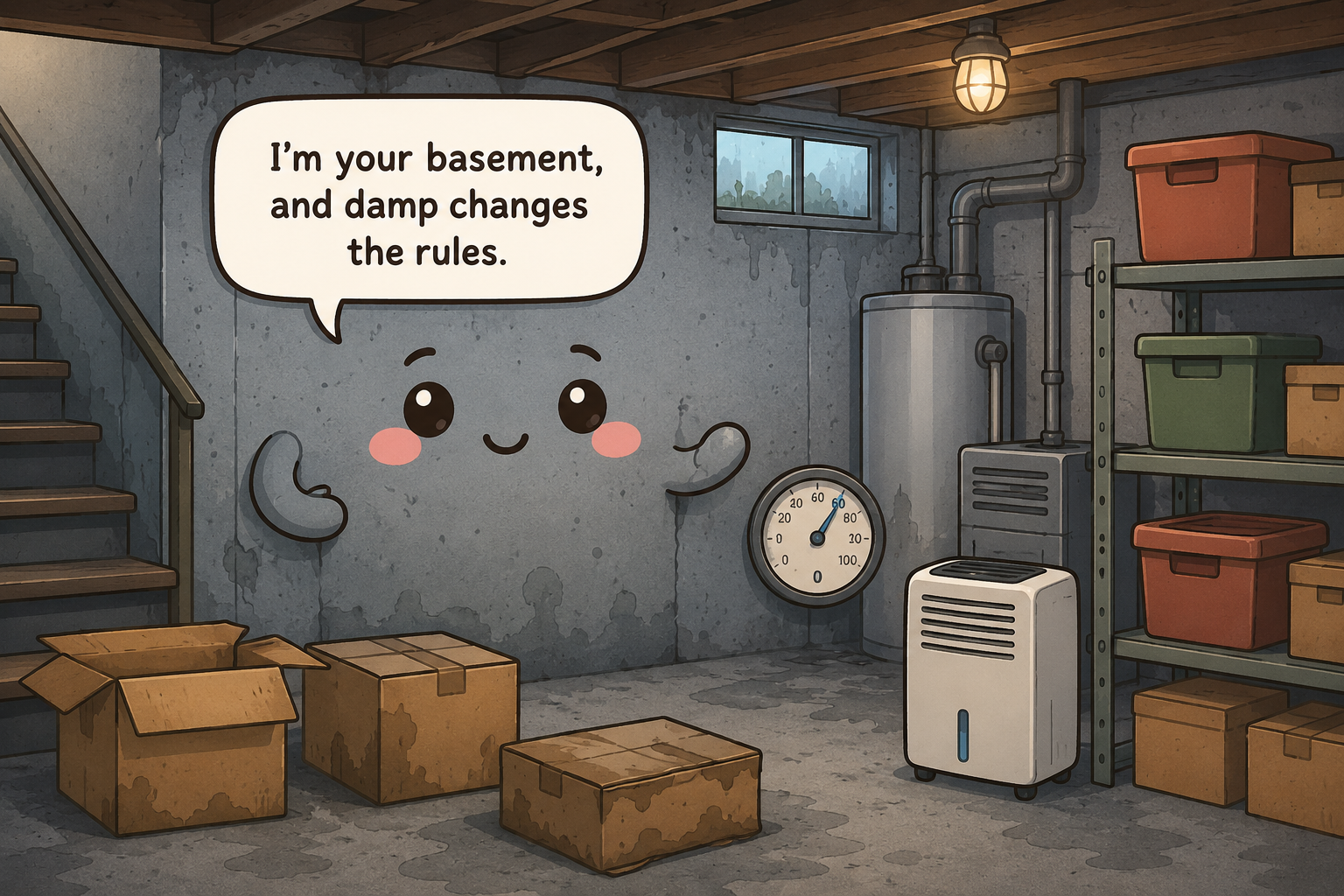
The short answer
Fix leaks and moisture before building a storage system. EPA recommends keeping indoor relative humidity below 60%, ideally about 30–50% where practical; use shelving or pallets that keep appropriate stored items off the floor, avoid cardboard in persistently damp areas, leave air and inspection space around storage rows, keep utility and service access open, and use lidded plastic bins for belongings that tolerate basement conditions.
What to gather before you start
- An inexpensive hygrometer
- A dehumidifier if needed for the space
- Sturdy shelving suitable for the basement environment
- Closed plastic bins for appropriate stored goods
- Large waterproof or moisture-resistant labels
- Painter's tape for utility and exit clear zones
Measure first. Buy only the pieces that solve a specific access problem.
Pass the moisture gate before adding storage
EPA recommends keeping indoor relative humidity below 60%, ideally 30–50% where practical. A basement with active leaks, condensation, or persistent high humidity needs moisture control before more bins and shelving.
- Use a hygrometer and inspect after heavy rain or plumbing events.
- Fix active leaks and dry wet materials promptly; EPA notes that drying wet or damp materials within 24–48 hours can often help prevent mold growth.
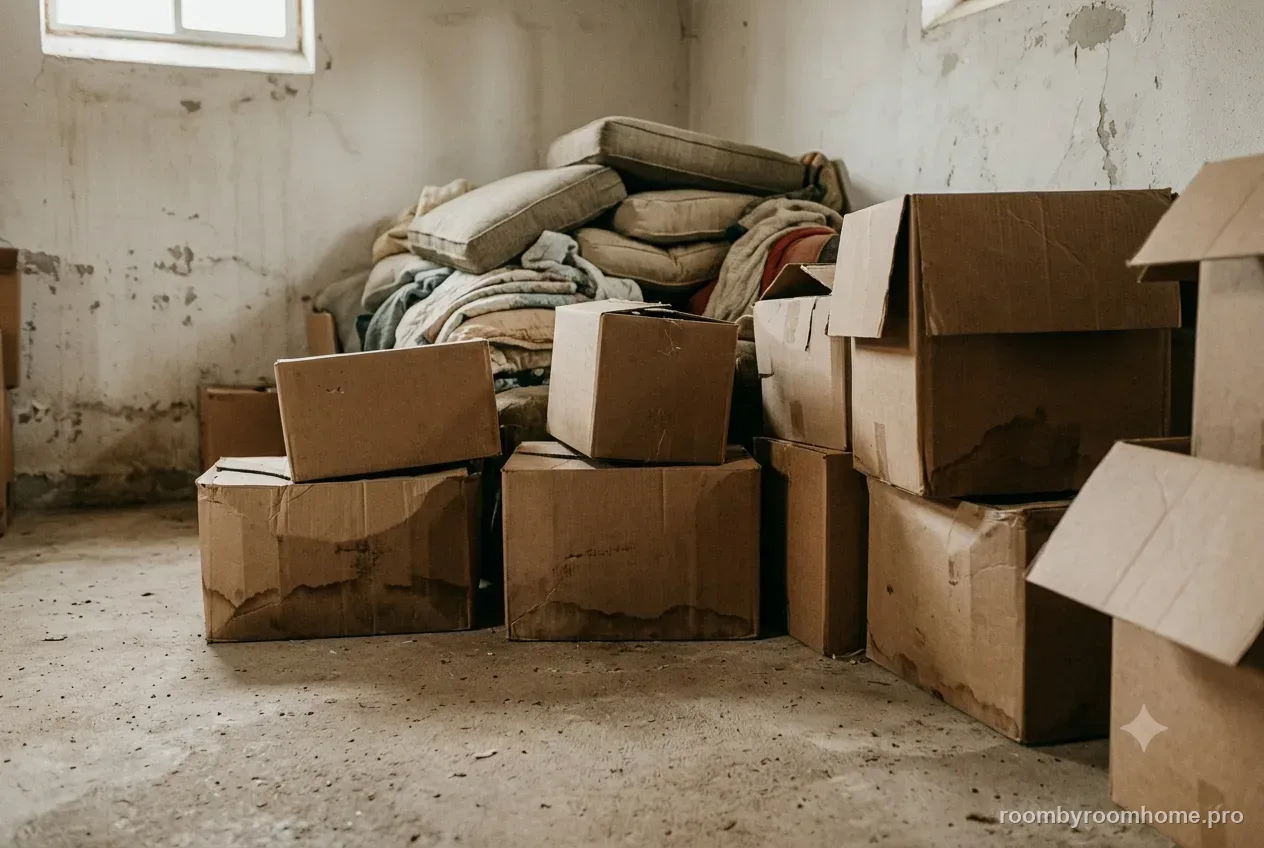
- Keep stored items off the floor and avoid long-term cardboard storage in damp areas.
- Leave walls, drains, shutoffs, sump equipment, and utility service paths visible and reachable.
- USFA says anything that can burn should stay at least 3 feet from furnaces, water heaters, and other heat-generating equipment.
Sources: U.S. EPA — A Brief Guide to Mold, Moisture and Your Home; U.S. Fire Administration — Basement and Garage Fire Safety
Fix wetness before you organize around it
Find the moisture source first: plumbing leaks, foundation seepage, condensation, poor drainage, or chronically high humidity. EPA guidance recommends keeping indoor relative humidity below 60% and ideally around 30–50% where possible, and drying wet materials quickly—often within 24 to 48 hours—to limit mold growth. Organization cannot compensate for an active water problem.
Use a hygrometer to understand conditions and repair leaks before adding storage. If mold covers a large area, follows flooding or sewage, or involves materials and health concerns beyond routine cleanup, use EPA guidance and qualified remediation help rather than simply sealing affected boxes.
Record a baseline humidity reading and inspect the same trouble points after heavy rain or humid weather: floor-wall joints, pipe surfaces, foundation cracks, window wells, and the area around any drain or sump. If moisture repeatedly returns to one location, keep storage away from that area until the source is corrected. A dehumidifier that runs constantly while water is still entering is a symptom-management tool, not proof that the storage environment is solved.
Get every stored item off the floor
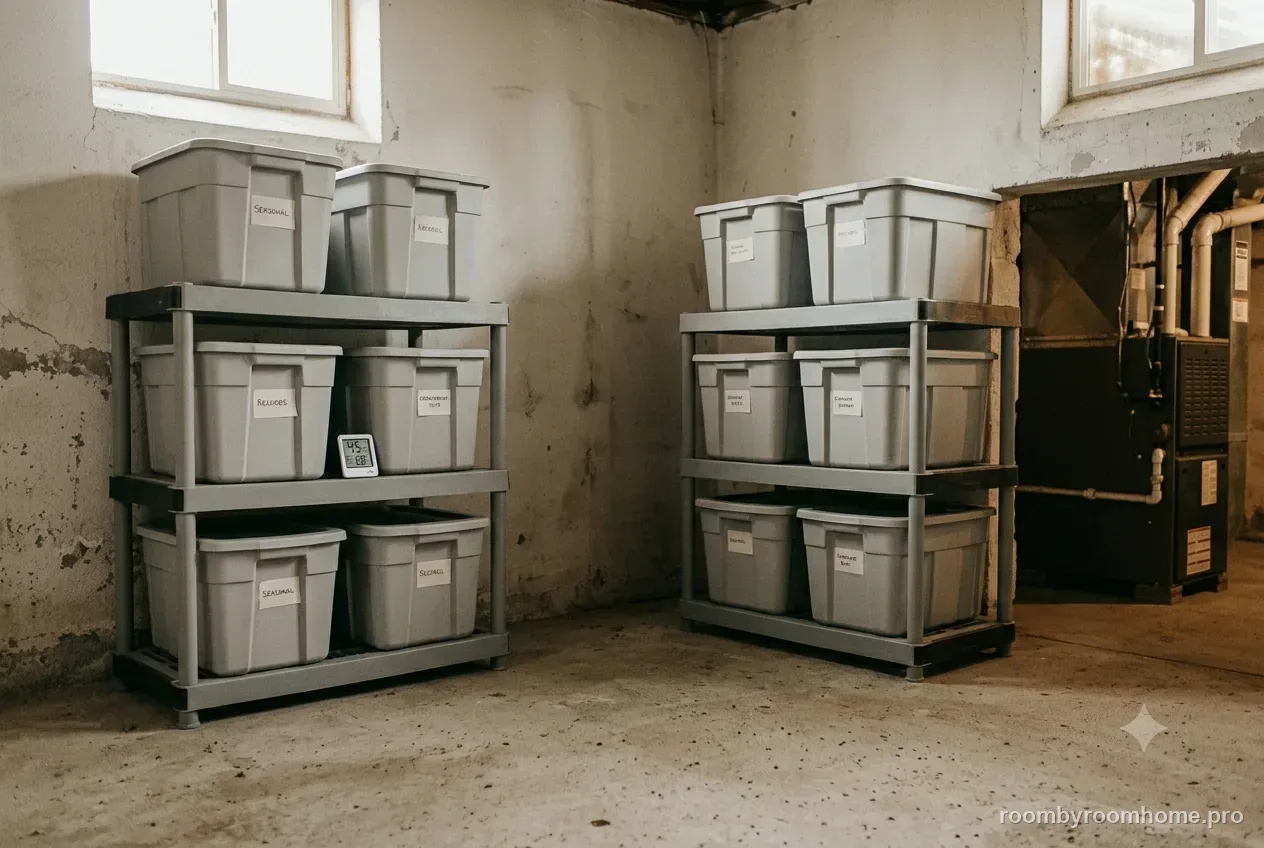
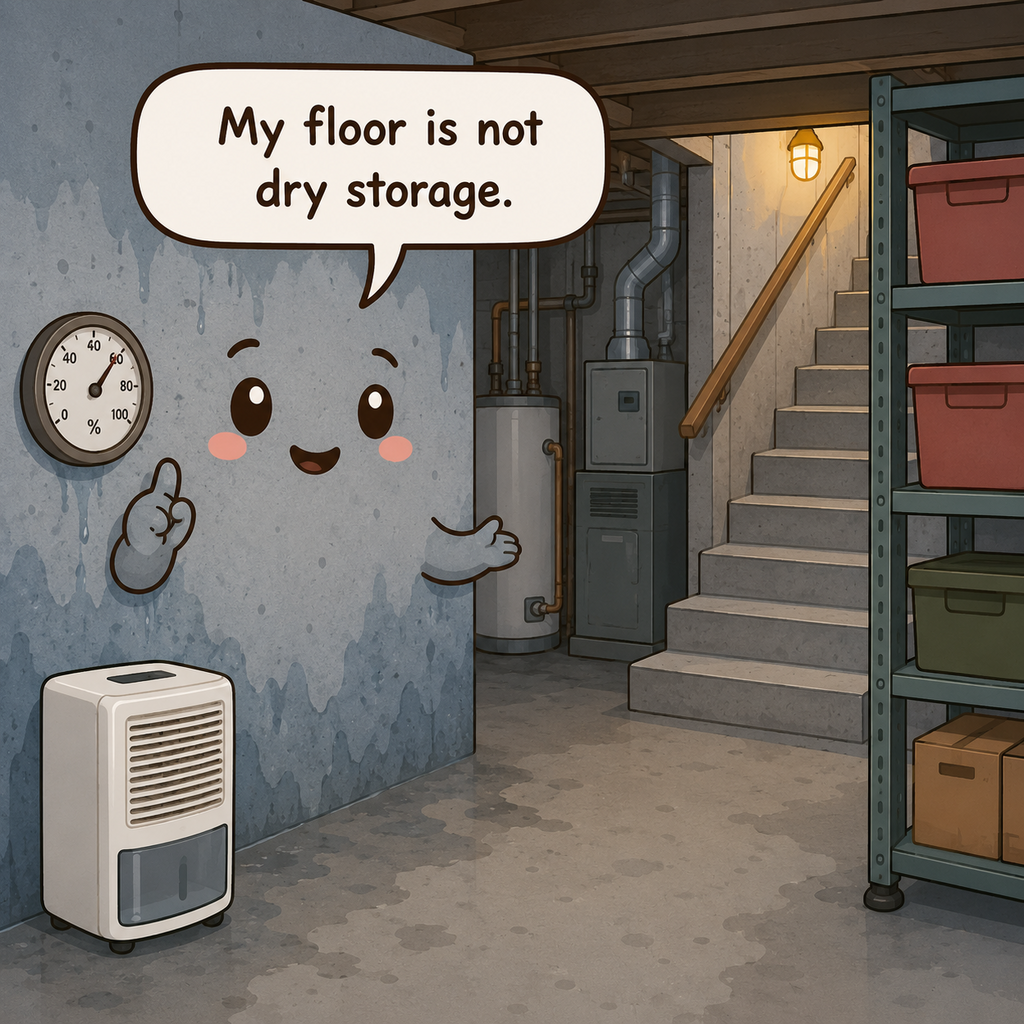
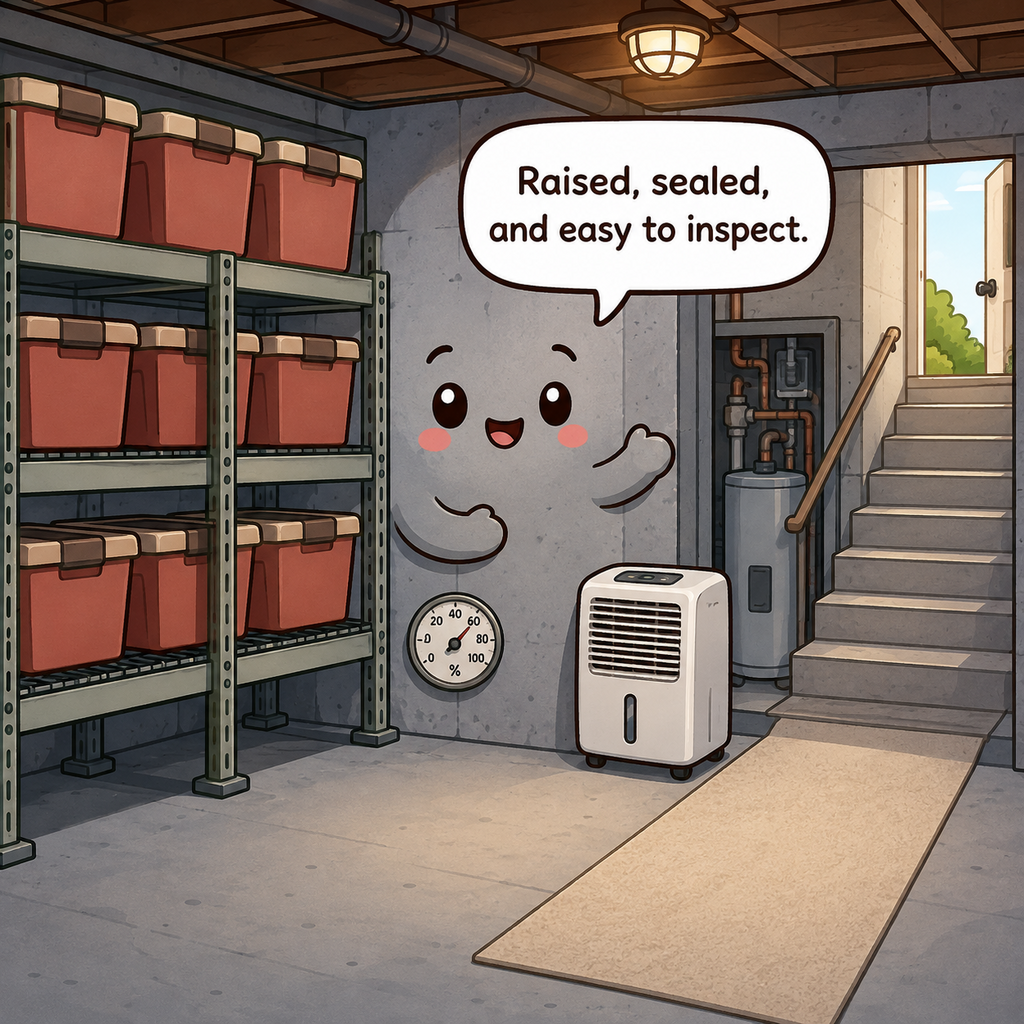
Use sturdy shelving, raised platforms, or other stable supports so bins do not sit directly on a slab that may seep, sweat, or flood. Keep the lowest shelf high enough to reduce exposure to minor water events based on the basement's actual history; there is no universal flood height that fits every home.
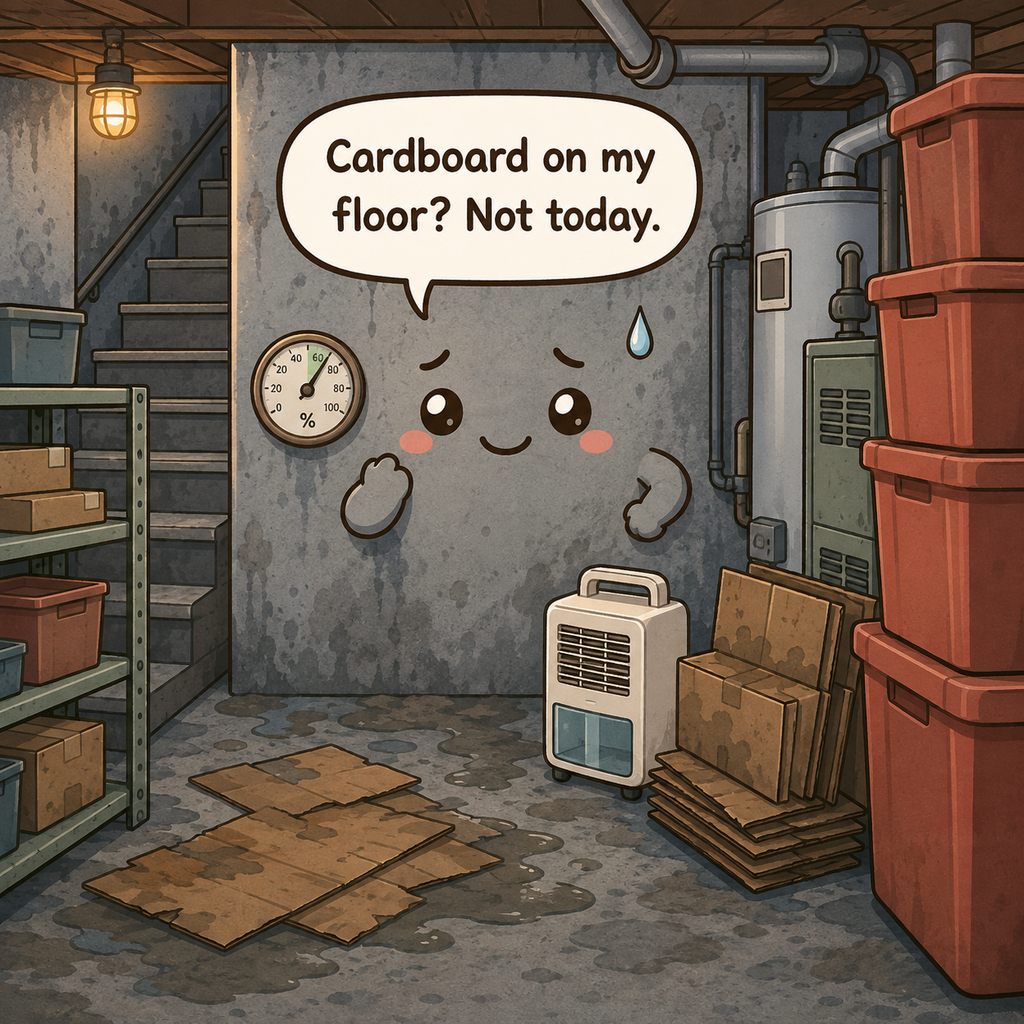
Use lidded plastic bins for appropriate durable belongings and avoid cardboard for long-term storage in damp conditions because it absorbs moisture and can support mold. Do not store irreplaceable paper records, photos, medicines, or other humidity-sensitive items in a basement with unreliable moisture control.
Raise every stored category on sturdy shelving or another water-tolerant support appropriate to the load, not directly on a basement floor. Use lidded plastic bins for belongings that are otherwise suitable for the environment and avoid cardboard in damp or flood-prone areas. Keep the lowest level for durable, replaceable items. Important papers, photographs, medicines, and sensitive electronics belong in a drier, more stable part of the home.
Build storage rows with air, inspection, and utilities in mind
Leave visible gaps around shelving so you can inspect walls and floors for new moisture, pests, or mold. Keep aisles wide enough to carry bins without brushing pipes or equipment. Do not cover cleanouts, electrical panels, sump pumps, shutoffs, drains, meters, or HVAC service areas with shelving or stacks.
Keep utility equipment and service routes visible. USFA says anything that can burn should stay at least 3 feet from furnaces, water heaters, wood stoves, oil burners, and other heat-generating equipment; also follow the appliance manufacturer's service clearances and local code, which may require additional access.
Arrange shelf rows so you can inspect walls, read the hygrometer, reach drains and shutoffs, and service mechanical equipment without unloading half the basement. Do not build storage against utilities just because the wall is empty. Where a furnace, water heater, or other heat source is present, USFA says to keep anything that can burn at least 3 feet away; also preserve the manufacturer's service clearances and local-code access requirements.
Zone by tolerance, not just by category
Put the most moisture-tolerant items in the lowest and least conditioned storage zones, and move sensitive items upstairs. Holiday plastic decor, some tools, and sealed durable household goods may tolerate basement conditions better than photos, books, documents, leather, delicate textiles, or electronics.
Within those limits, group by use so retrieval stays easy. Keep emergency supplies near the stairs rather than behind seasonal storage, and keep chemicals or hazardous products in their original labels, secured from children and according to product temperature and ventilation instructions.
Zone by moisture tolerance and replacement cost. Durable plastic household gear can use lower shelves; textiles that are fully dry may use higher protected bins only when humidity is controlled; irreplaceable records and sensitive electronics should move upstairs. Keep chemicals in original labeled containers and secure them from children. A category can be perfectly organized and still belong in the wrong environment, so suitability comes before bin size or shelf symmetry.
Use vertical space without building damp towers
Anchor tall shelving as appropriate, keep heavy bins low, and use shelf labels that face the aisle. Leave wall and floor visibility where moisture has been a problem instead of pushing shelving flush against a damp foundation. Avoid stacking plastic totes so high that the bottom bin cannot be inspected or removed safely.
Follow the shelving load rating and keep top shelves for lightweight items only. If the basement ceiling contains pipes or valves, preserve access and do not hang storage that makes leaks harder to notice.
Use freestanding shelving rated for the stored load, anchor tall or tip-prone units as appropriate, and keep dense bins on lower levels. Leave enough room around shelves for air movement and inspection rather than building solid towers against damp walls. If pipes or valves run overhead, keep them visible and reachable. Do not suspend heavy storage from unknown basement framing simply to reclaim the floor; verify the structure and hardware first.
Give the dehumidifier a real maintenance routine
Place the dehumidifier where air can circulate and follow the manufacturer's clearance, drainage, filter, and cleaning instructions. Use a reliable drain setup when available and appropriate, or empty the reservoir before it shuts off and humidity rises. Check the hygrometer rather than assuming the machine is controlling the whole basement.
Clean filters and coils as directed and inspect the drain hose for clogs or leaks. A dehumidifier surrounded by boxes or left with a full bucket is not a moisture-control system.
Run the dehumidifier from measured conditions, not from a feeling that the basement seems dry. Follow its manual for placement, airflow, filter cleaning, reservoir or drain setup, and operating temperature. Check that a drain hose is not kinked or leaking and that a full bucket has not shut the unit off. If humidity stays above the target despite normal operation, investigate the moisture source or equipment capacity instead of adding scented moisture absorbers around boxes.
Make flood recovery possible before a flood happens
Keep valuable storage in smaller labeled bins that one person can lift, place critical documents and irreplaceable items outside the basement when possible, and maintain a clear route to drains, sump equipment, and shutoffs. Photograph or list higher-value stored items for household records.
If the basement has flooded before, set the lowest storage level based on that local risk and consider moving more categories upstairs. No organizer can make a floor-level cardboard archive flood-resistant.
Plan for the first hour after a leak or flood: keep drains, sump equipment, and shutoffs accessible; use bins light enough to move; and keep valuable items above the lowest risk level or outside the basement. Photograph higher-value stored property for household records. EPA emphasizes drying wet materials quickly—generally within 24–48 hours when possible—so recovery depends on access and decisions, not on having decorative matching containers.
What breaks a damp basement system
Do not organize around an active leak, use cardboard in chronically damp storage, block utility equipment, stack heavy bins high, or seal moldy belongings into plastic. Avoid placing sensitive records and electronics in a space that cannot reliably control humidity.
Do not quote a generic furnace or water-heater clearance as though it replaces the appliance label or code. Maintain required access and keep combustibles away according to the specific equipment instructions.
When clutter returns, do not let it erase moisture-control rules. Floor piles, cardboard backstock, blocked utility access, and bins touching a damp wall are signals to reduce inventory or add appropriate raised capacity. If storage has to occupy the 3-foot combustible-clearance zone around heat-producing equipment, it does not fit safely in the basement. Move the belongings; do not redefine the safety boundary to accommodate them.
The weekly reset
Once a week, read the hygrometer, empty or check the dehumidifier, look for new water marks, and keep the floor path clear. Wipe small dry spills and return loose items to raised storage rather than letting a floor pile begin.
After heavy rain or a plumbing incident, inspect immediately instead of waiting for the weekly reset. Dry wet materials promptly and address the moisture source before returning stored items.
Once a week, read the hygrometer, check the dehumidifier and drain, look for new water marks or odors, and clear anything that has migrated onto the floor. After heavy rain, plumbing work, or a known leak, inspect sooner. Keep RH below 60% and ideally 30–50% when practical, and address persistent moisture at its source. A stable basement system is one you can inspect easily before small dampness becomes hidden damage.
Store by moisture tolerance and replacement cost
Keep here
- Durable, water-tolerant household items in lidded bins
- Seasonal plastic decor and some tools on raised shelving
- Lightweight bins that can be moved quickly during a leak or flood
Store elsewhere
- Irreplaceable documents, photos, or sentimental items
- Cardboard boxes in persistently damp conditions
- Textiles stored before they are fully dry
- Combustible storage inside heat-equipment keep-clear areas
Moisture & fire constraints
- EPA recommends indoor relative humidity below 60%, ideally 30–50% where practical.
- Dry wet or damp materials promptly and fix the moisture source before restoring storage.
- USFA says anything that can burn should stay at least 3 feet from furnaces, water heaters, and other heat-generating equipment.
- Keep utility shutoffs, drains, sump equipment, and service paths accessible.
Sources: U.S. EPA — A Brief Guide to Mold, Moisture and Your Home; U.S. Fire Administration — Basement and Garage Fire Safety
Renter-friendly option
Use sturdy freestanding shelving that keeps bins off the floor and preserves inspection space rather than fastening storage into questionable masonry or damp walls. Tip-prone units still need appropriate anchoring; get landlord approval instead of substituting adhesive or unstable bracing.
30-second success check
- A hygrometer shows indoor relative humidity below 60%, ideally about 30–50% where practical.
- Stored belongings are raised off the floor and cardboard is absent from persistently damp storage.
- Combustibles stay at least 3 feet from furnaces, water heaters, and other heat-generating equipment where USFA guidance applies.
- Drains, sump equipment, panels, shutoffs, and service routes remain visible and reachable.
- Valuable or sensitive items can be moved quickly because flood-recovery paths are not blocked.
Questions that come up
Frequently asked questions
Part of Garage, Laundry, Attic & Basement — 6 guides.