The short answer
Start by clearing safe walking and parking lanes, then zone the garage by activity and move as much appropriate lightweight gear as possible onto rated wall or shelf storage. Keep heavy items low, secure tall shelving, store chemicals, pesticides, fuels, and sharp tools in their original labeled containers and locked away from children, and keep weather-sensitive belongings out of extreme heat, cold, or damp.
What to gather before you start
- Wall-mounted shelving, a track-and-hook system, or a pegboard
- Sturdy freestanding shelving units for bins
- Stackable, lidded, weatherproof bins
- Hooks for bikes, ladders, hoses, and long tools
- A lockable cabinet or high shelf for chemicals and power tools
- Labels and a marker for every bin
Measure first. Buy only the pieces that solve a specific access problem.
Map the parked car and hazards before installing storage
The first garage measurement is not shelf width—it is the space required to park, open doors, walk safely, and reach the equipment that serves the house.
- Park the vehicle normally and mark the real door-swing and walking zones.
- Keep exits, electrical panels, garage-door tracks, emergency release access, and appliance service paths clear.
- Store lawn and garden chemicals in original labeled containers and secure hazardous products from children.
- USFA advises storing oil, gasoline, paints, propane, and varnishes in a shed away from the home.
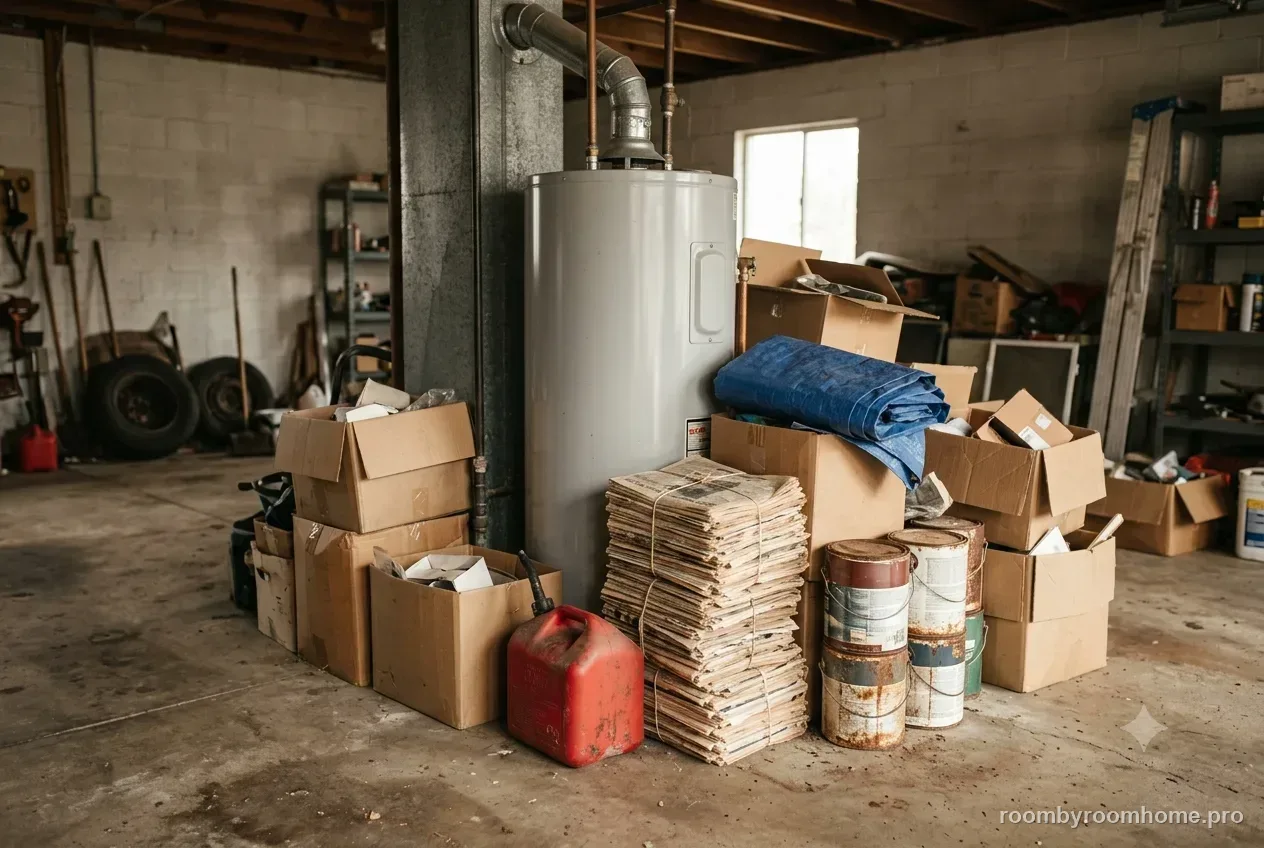
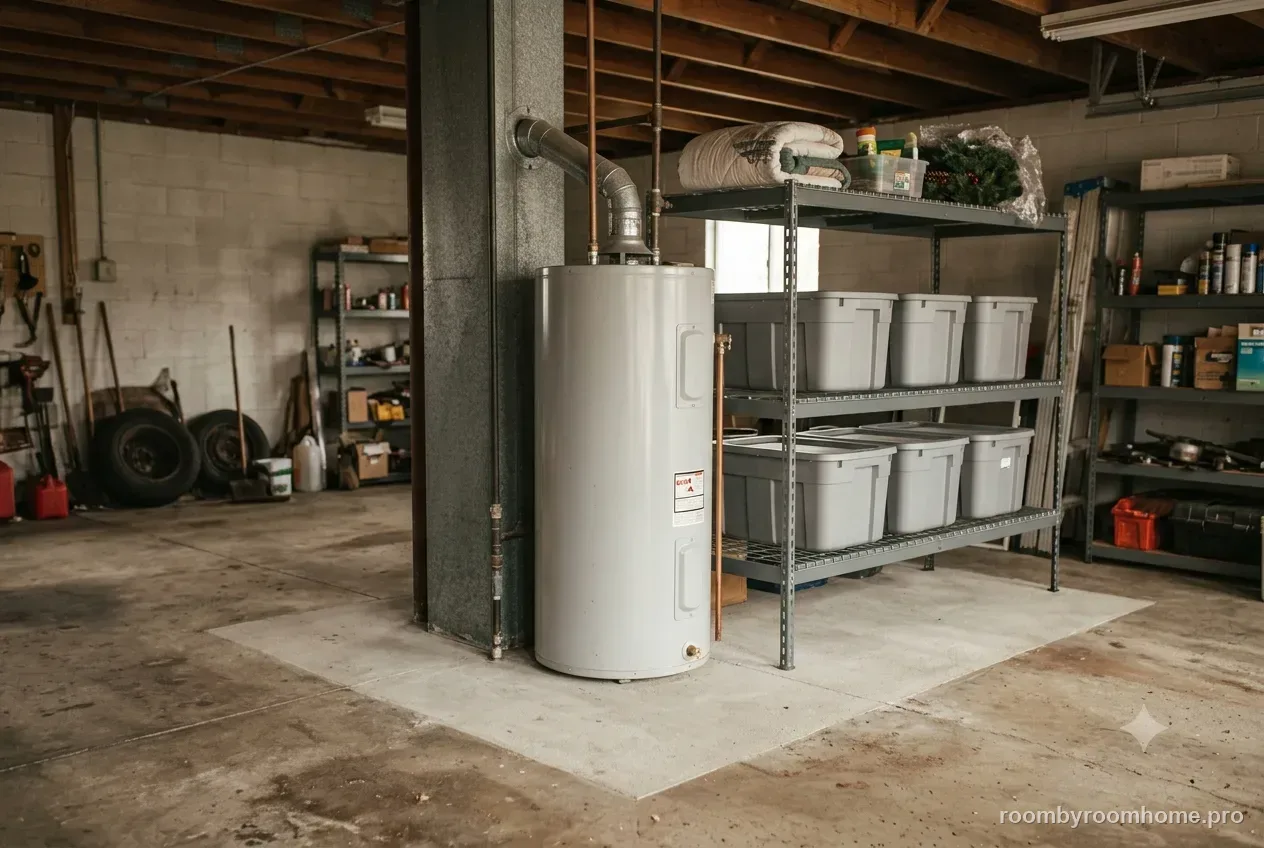
- Keep anything that can burn at least 3 feet from heat-generating equipment.
Sources: U.S. Fire Administration — Basement and Garage Fire Safety; U.S. CPSC — Poison Prevention Information Center
Pull it all out and sort without mercy
Work in manageable sections so you do not create an unsafe driveway pile you cannot finish before dark or bad weather. Sort tools, automotive supplies, sports gear, yard care, seasonal items, household overflow, hazardous products, donations, and trash. Remove broken items and duplicates that no longer have a job before buying racks for them.
Keep chemicals, fuels, pesticides, batteries, and sharp tools separate during sorting. Do not mix or decant chemical products, and follow local hazardous-waste rules for disposal. Keep children and pets away from the sorting area while hazardous products are accessible.
Keep hazardous materials in a separate supervised sorting zone from the first minute. Fuels, pesticides, solvents, batteries, sharp tools, and unknown chemicals should remain in original labeled containers while you decide their proper storage or disposal. Do not create an all-day driveway spread that leaves dangerous products accessible to children, pets, or weather. Keep a weather plan before starting: if rain or overnight exposure would damage what is outside, work one wall or shelf at a time. A controlled section-by-section sort prevents rushed reloading that puts chemicals or sharp tools back wherever space remains.
Map zones by activity
Mark parking clearance first, including door swing, vehicle hatch space, walking paths, electrical panels, utility equipment, and any required service access. Then assign walls or shelves to gardening, sports, automotive care, tools, and seasonal storage. Put the most frequent activities closest to the door where they are used.
Keep fire extinguishers, shutoffs, and electrical panels visible and reachable. Do not build shelving that blocks a utility label, vent, or service panel. When a clearance is specified by the equipment manufacturer or local code, follow that requirement rather than a generic storage rule.
Map utility equipment and fire-safety clearance before drawing storage zones. USFA advises keeping anything that can burn at least 3 feet from furnaces, water heaters, and other heat-generating equipment. Keep electrical panels, shutoffs, vents, and appliance service areas unobstructed, and follow any larger manufacturer or code-required clearance. Mark parking stops or floor boundaries only after confirming they do not create a tripping edge or interfere with tires. The storage map should preserve room to open car doors, load the trunk, and reach household doors without squeezing past shelves.
Get everything off the floor where practical
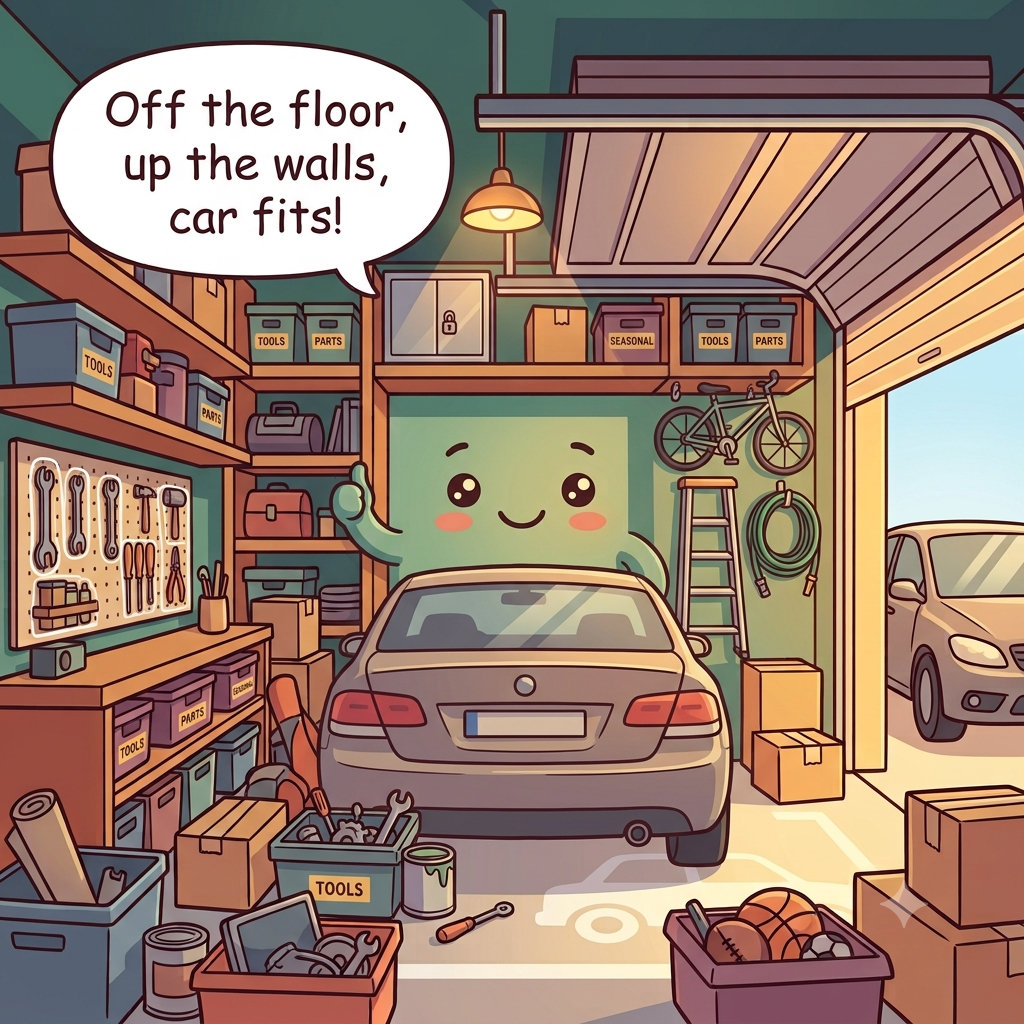
Use rated wall hooks, pegboard, ceiling systems designed for garage loads, and sturdy shelving to lift bicycles, folding chairs, hoses, and light equipment out of the walking lane. Store bulky items only where they can be removed without standing under an unstable stack. Keep the garage floor as clear as practical for sweeping, leaks, and safe vehicle movement.
Do not hang anything from drywall anchors or ceiling framing without confirming the hardware, structure, and load rating. Very heavy items are often safer on the lowest shelf than overhead. Anchor tall freestanding shelving to the wall as appropriate and keep the heaviest bins low.
Use the wall for light and moderate gear only when hooks, tracks, anchors, and structure are rated for the load. Heavy bins are usually safer on the lowest shelf than overhead. Anchor tall freestanding shelving and keep the vehicle path clear so nothing can roll under tires or fall into a door swing. Keep bicycles, ladders, and long tools on hardware designed for their shape so they cannot rotate unexpectedly into the vehicle path. Ceiling storage should be limited to light, infrequent items when structure and manufacturer-rated hardware are confirmed.
Put dangerous things up and away
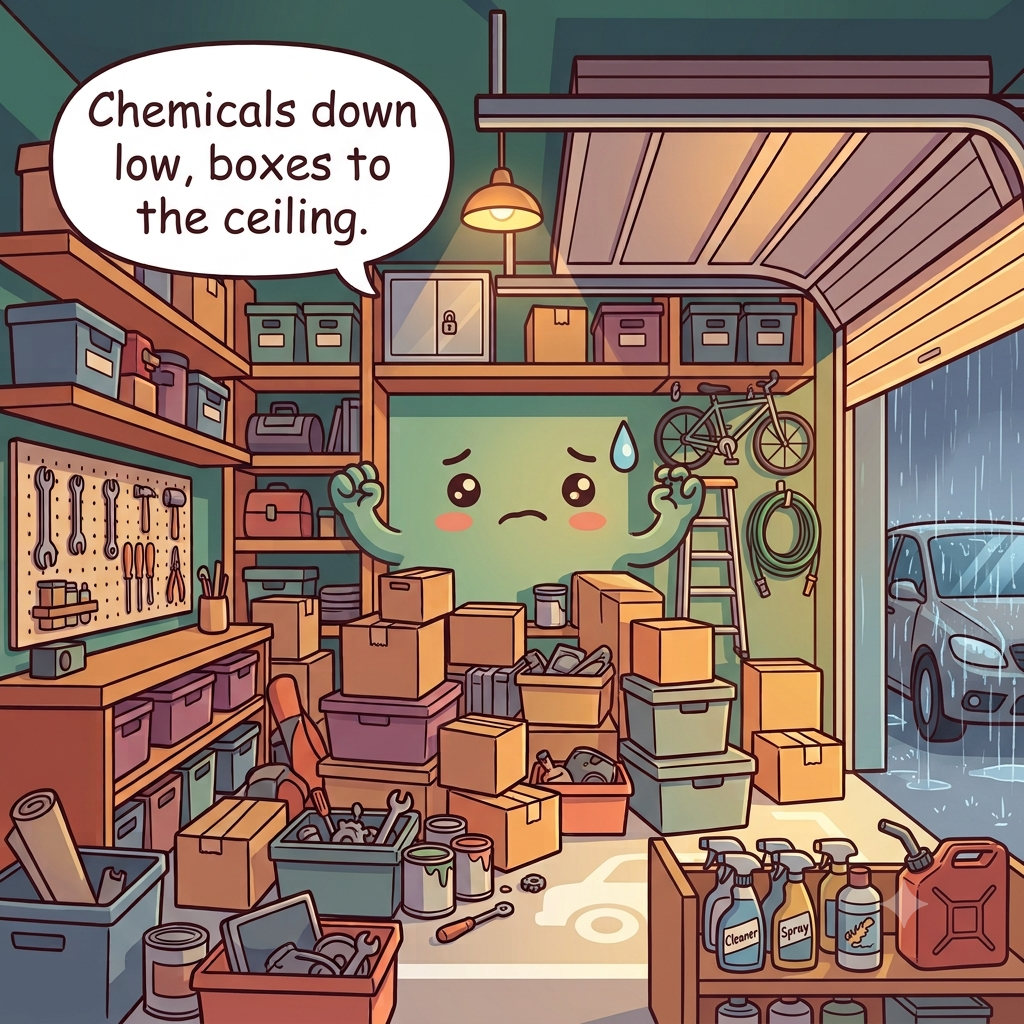
Store pesticides, solvents, automotive chemicals, fuels, sharp tools, and similar hazards in original labeled containers, secured high and locked or otherwise inaccessible to children. Never pour chemicals into drink bottles or unlabeled jugs, and never mix cleaners, pesticides, fuels, or solvents to consolidate space.
Follow each product label for temperature, ventilation, and storage restrictions. Some products should not be stored in attached garages because of heat, freezing, ignition, or vapor concerns; when the label conflicts with your desired location, the label wins. Keep ignition-sensitive materials away from flames, heaters, and other ignition sources.
USFA recommends storing oil, gasoline, paints, propane, and varnishes in a shed away from the home when possible. For other hazardous products, follow each label for temperature, ventilation, and ignition restrictions and secure them from children. Never decant or combine chemicals to save shelf space. Keep propane cylinders, gasoline, and other fuels out of ordinary household shelving where a leak or ignition could affect the attached home. USFA specifically recommends a shed away from the house for oil, gasoline, paints, propane, and varnishes.
Protect what the weather would ruin
Garages can experience large temperature and humidity swings. Move paper records, photographs, medicines, many electronics, delicate textiles, and other temperature- or moisture-sensitive belongings to conditioned indoor storage unless their manufacturer explicitly allows garage conditions. Use sealed plastic bins for appropriate non-sensitive items where dust or occasional dampness is a concern.
Keep storage off floors that may get wet and inspect for roof or door leaks. Avoid cardboard for long-term storage in damp garages because it absorbs moisture and can support mold. If the garage is damp enough to use a hygrometer, EPA guidance for indoor spaces is to keep relative humidity below 60%, ideally 30–50% where possible; address persistent moisture before expanding storage.
Move medication, important papers, photographs, sensitive electronics, and delicate textiles indoors unless their storage instructions explicitly permit garage conditions. Keep appropriate stored goods up off floors that may get wet and avoid cardboard in damp areas. A recurring leak or humidity problem should be corrected before storage expands. Use plastic bins only for belongings that are actually suitable for the garage environment; a sealed container does not turn an unconditioned garage into climate-controlled storage. Heat can still damage medicines, electronics, adhesives, candles, and many finishes inside a closed tote.
What breaks a garage system
Do not hang heavy objects overhead without verified structural and hardware capacity, place gasoline or chemicals in random unlabelled containers, block electrical or utility access, or stack shelving so high that heavy bins must be lifted above your head. Avoid treating the garage as climate-controlled household storage.
Do not let wall storage intrude into vehicle sightlines or door paths, and do not use the floor beneath a parked car for loose objects that can roll under tires. Capacity should be limited by safe access, not by every cubic foot that can be filled.
Do not block the 3-foot combustible-clearance zone around heat-generating equipment, cover electrical panels, or hang heavy objects from unverified ceiling structure. Avoid gasoline or chemicals in random containers and keep flammables away from ignition sources. A garage is not climate-controlled household storage simply because a shelf is empty. Keep the 3-foot clearance zone visibly marked around heat-generating equipment if stored items tend to drift back. A painted floor line or clearly empty shelf boundary can make the fire-safety limit easier to maintain between full garage resets.
The twice-a-year reset
In spring and fall, sweep the floor, inspect for leaks and pests, tighten loose hooks or shelf hardware, and remove equipment for sports or yard tasks you no longer do. Bring the next season's active gear forward and move the outgoing season to a labeled reserve zone.
Review hazardous products for damaged containers and disposal needs, keeping labels intact. Check that tall shelving remains anchored and heavy items have not migrated upward. A twice-yearly pass keeps the garage from returning to floor storage.
Use spring and fall to inspect anchors, hooks, shelves, leaks, pests, and hazardous-product containers. Bring the next season's gear forward only after old equipment and duplicates leave. Recheck the heat-source clearance and service paths each time, because boxes and seasonal items tend to migrate into the safest empty floor space. Test the garage door path and emergency access after seasonal reloading. Bicycles, ladders, and bins that were safe in summer may block the vehicle or door once snow equipment, holiday storage, or yard gear changes position.
Put the garage into zones by risk and activity
Keep here
- Frequently used bikes and outdoor gear near the exit when they do not obstruct egress
- Tools grouped by task on rated wall or cabinet storage
- Weather-tolerant items in lidded bins on shelving
- Heavy items low and stable
Store elsewhere
- Gasoline, propane, oil, paint, or varnish stored casually inside the attached garage
- Paper archives, photos, medication, or heat-sensitive electronics
- Floor piles that narrow the walking path
- Unsecured sharp tools or chemicals within a child’s reach
Garage fire & chemical safety
- USFA advises storing oil, gasoline, paints, propane, and varnishes in a shed away from the home.
- Keep items that can burn at least 3 feet from heat-generating equipment.
- Secure hazardous chemicals and sharp or powered tools from children and keep them in appropriate labeled storage.
Sources: U.S. Fire Administration — Basement and Garage Fire Safety; U.S. CPSC — Poison Prevention Information Center
Renter-friendly option
Prefer sturdy freestanding shelving, rolling tool storage, and landlord-approved no-drill systems where permanent wall tracks are not allowed. Do not use a no-drill workaround for a load that requires structural anchoring; heavy or overhead storage still needs rated hardware and an appropriate structure.
30-second success check
- Parking, walking, household-door, and utility-service paths remain clear.
- Combustible storage stays at least 3 feet from furnaces, water heaters, or other heat-producing equipment where USFA guidance applies.
- Hazardous products remain original-labeled, secured from children, and stored according to temperature, ventilation, and ignition instructions.
- Heavy items stay low and any wall or ceiling storage uses structure and hardware rated for the load.
- Medicines, important papers, and other climate-sensitive belongings have been moved out of the unconditioned garage.
Questions that come up
Frequently asked questions
Part of Garage, Laundry, Attic & Basement — 6 guides.