The short answer
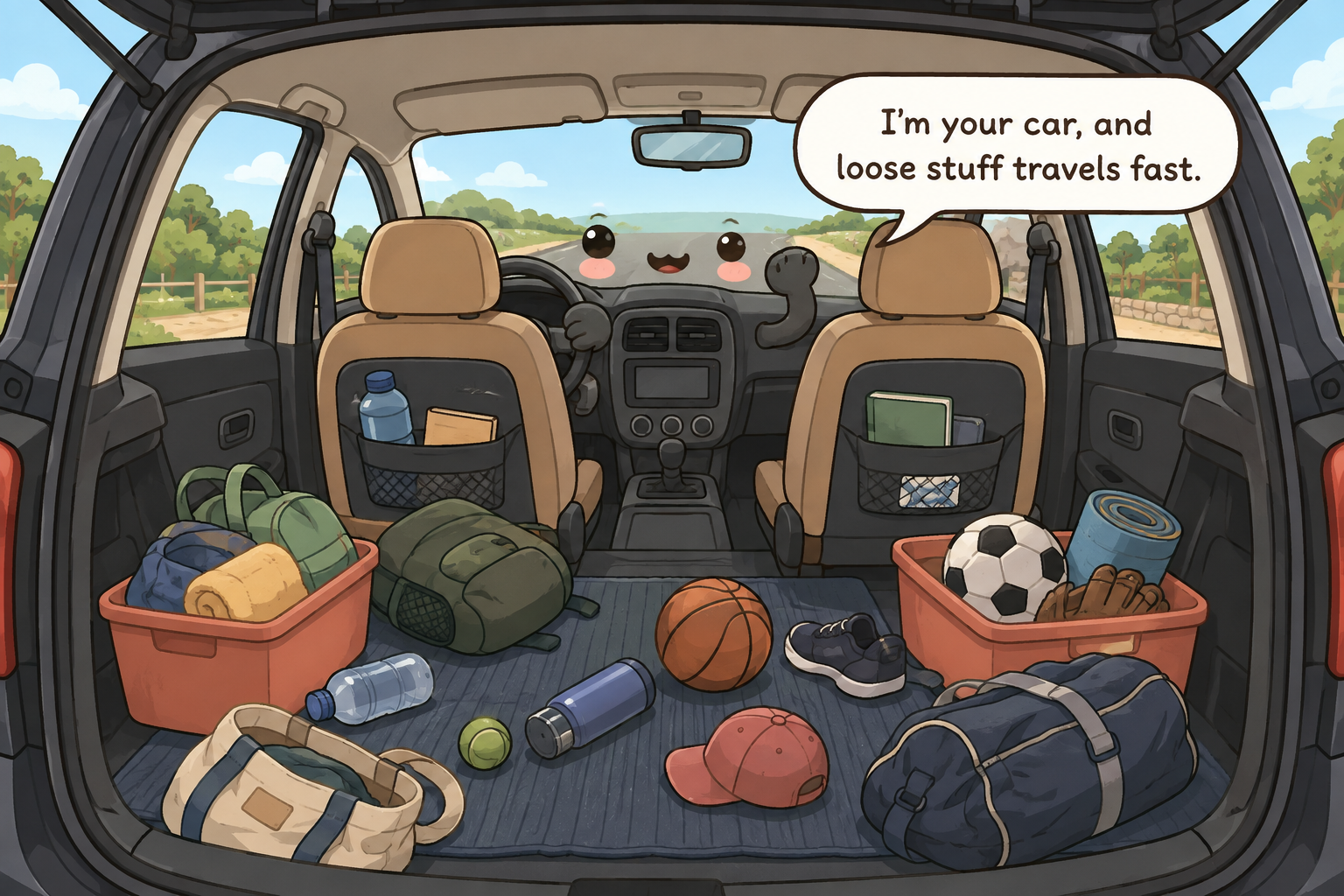
Keep the driver's sightlines, pedals, controls, seat movement, and airbag deployment zones completely clear before adding any organizer. Secure trunk cargo so it cannot slide or become a projectile, give passengers only small contained pockets, and use a take-with-you list for medicines, aerosols, electronics, batteries, and other heat-sensitive items that should not remain in a hot parked car.
What to gather before you start
- A small lidded or anchored cargo bin
- Reusable grocery bags folded together
- A compact emergency kit
- A trash pouch secured where it cannot interfere with driving
- Seat-back or door storage used only where it is safe
- Hook-and-loop straps or cargo tie-downs appropriate to the vehicle
Measure first. Buy only the pieces that solve a specific access problem.
Empty it completely enough to find the hazards
Remove loose bottles, toys, papers, tools, sports gear, reusable bags, chargers, coins, and everything in the trunk that is not permanently part of the vehicle. Check under seats only when the vehicle is safely parked and powered off. Dispose of trash and move household items that have been riding around without a purpose.
Identify safety equipment that must remain accessible, such as the spare-tire tools or emergency kit specified for your vehicle. Do not bury factory equipment under a trunk organizer or place loose objects where they can roll into the driver's footwell.
Empty the cabin and cargo area far enough to inspect under seats, seat rails, footwells, and trunk corners while the vehicle is safely parked. Anything that can roll toward pedals or become a hard loose object needs a secured home or should leave the vehicle. Keep factory emergency and spare-tire equipment accessible. Do not add an organizer until you know it will not cover a latch, seat mechanism, battery access point, or other vehicle-specific service feature.
Protect sightlines, controls, and airbags before adding organizers
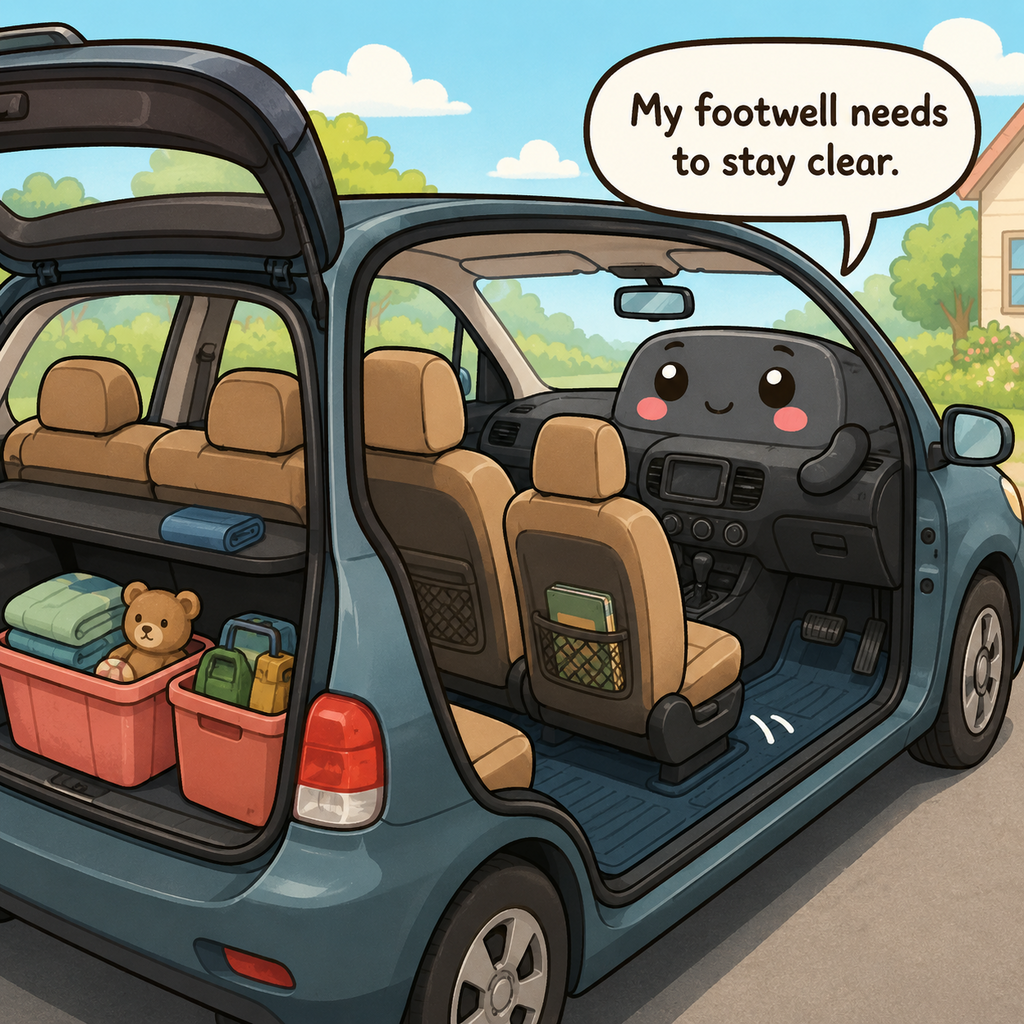
Nothing should block the windshield, mirrors, camera views, pedals, gear selector, seat controls, or steering movement. NHTSA advises maintaining proper distance from frontal airbags and recognizes side airbags in seats and side structures; do not attach organizers or hard objects in an airbag deployment area. Check the owner's manual for the airbag locations in your specific vehicle.
Keep the dashboard and front-seat area free of loose hard objects. Do not hang heavy accessories from headrests or place devices where they obstruct vision. Vehicle safety layout wins over storage convenience.
Use the owner's manual to locate frontal, side-seat, door, and curtain airbag zones before mounting anything. NHTSA recommends at least 10 inches between a frontal airbag cover and an occupant's breastbone while maintaining proper seating and pedal reach. Organizers, phone mounts, hard decorations, and seat accessories must not intrude into deployment areas or sightlines. Vehicle-specific instructions take priority because airbag locations and seat systems vary.
Turn the trunk into two secured zones: daily and emergency
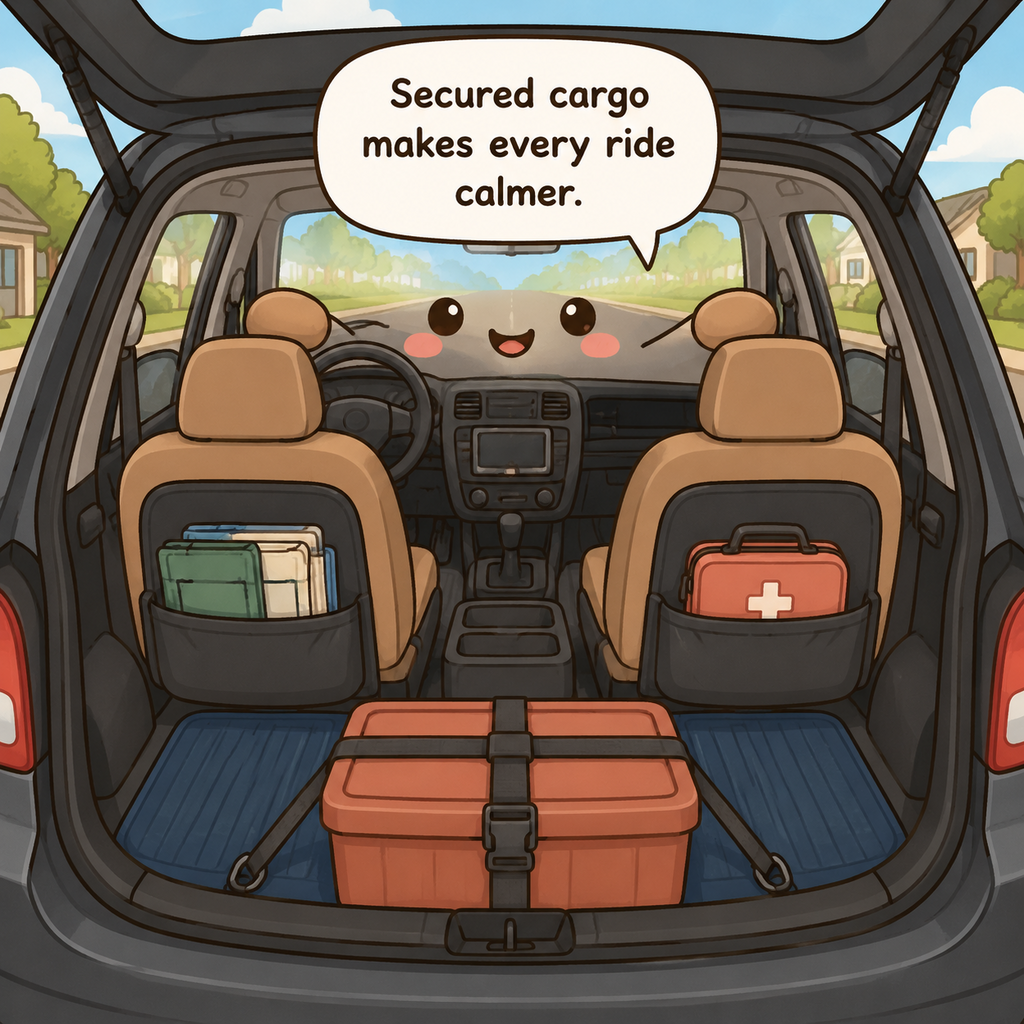
Use one small secured container or trunk organizer for daily reusable bags, a blanket, or regularly carried gear, and keep the emergency kit separate and immediately identifiable. Use cargo hooks, straps, nets, or the vehicle's tie-down points according to the owner's manual so heavier items cannot slide during braking or a crash.
Put dense objects low and against the most secure part of the cargo area, not loose on a rear parcel shelf. Do not exceed cargo or tie-down ratings. If the rear seats fold, keep the load secured even when the trunk is otherwise closed because cargo can move forward in a sudden stop.
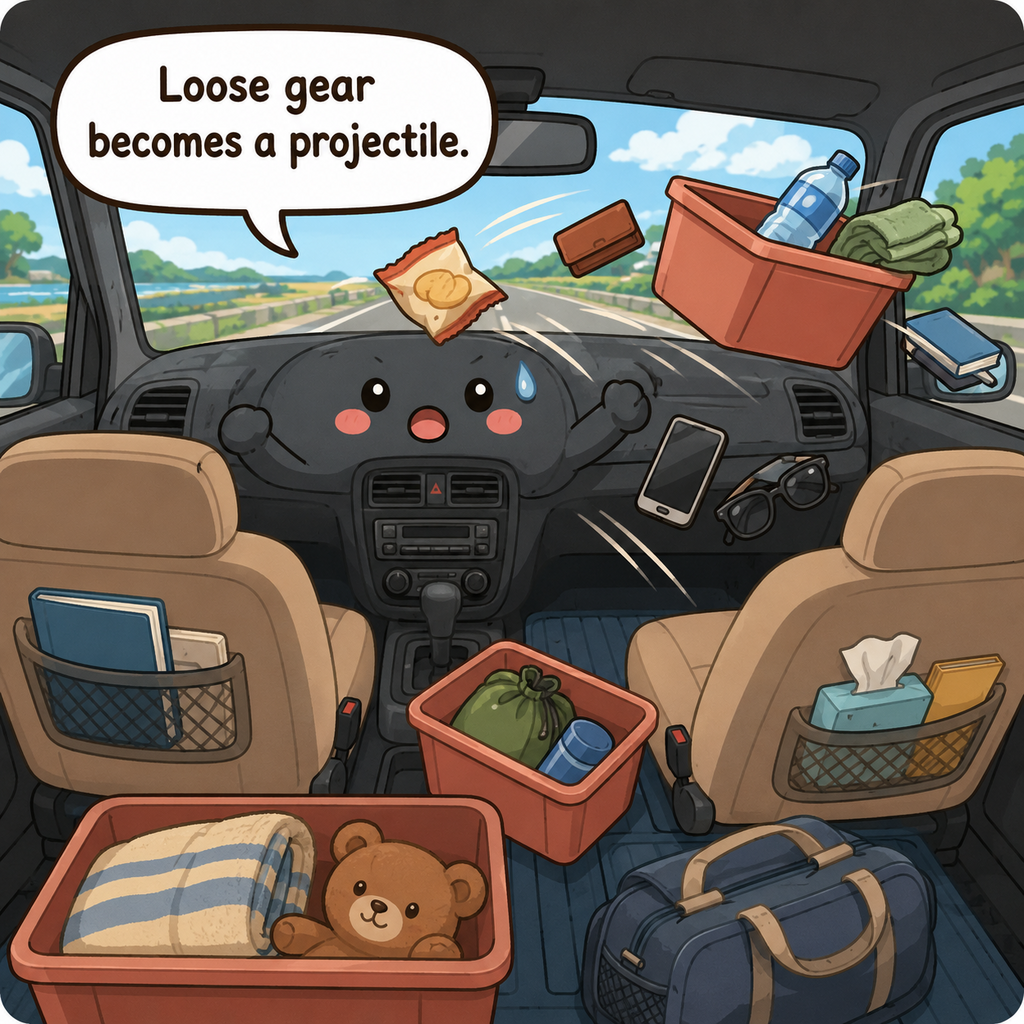
Secure cargo for the hard stop, not for the parked photo. NHTSA advises using straps, netting, tie-downs, or other proper restraints so loads cannot shift or escape. Keep dense items low and use the vehicle's rated attachment points as directed. A trunk organizer with loose heavy tools inside is not automatically secured; the organizer itself and the contents may still need restraint so they cannot move forward in a collision.
Give passengers one small pocket each, not a rolling bedroom
Use door pockets, a small seat-back organizer, or one soft pouch for tissues, wipes, or travel items only when it does not interfere with side airbags, seat operation, or child-restraint setup. Keep the quantity small enough that every item is contained instead of spreading across the floor.
For children, keep small hard objects and choking hazards appropriately secured and follow the child-restraint and vehicle manuals. Do not attach aftermarket accessories to a child safety seat unless the seat manufacturer permits them.
Keep each passenger's storage soft, small, and compatible with the seat and restraint system. A seat-back pocket may hold tissues or a light travel item only if it does not interfere with seat-mounted airbags, child-seat installation, or seat adjustment. Do not clip hard accessories to a child restraint unless its manufacturer permits them. For children under 13, NHTSA recommends riding in the back seat, with the appropriate restraint for the child.
Keep heat-sensitive items on a leave-with-it list
Do not use the parked car as storage for medicines, many electronics, batteries, aerosols, cosmetics, food that requires temperature control, or other products whose labels warn against heat. Interior temperatures can rise quickly in sun, and FDA notes that heat can damage products such as medicines and cosmetics.
Keep a short list in the driver's routine: phone, medication, work electronics, power bank, aerosol products, and groceries leave with you. Never leave a child or pet in a parked vehicle, even for a short errand.
Make heat-sensitive removal part of the exit routine. Medicines, electronics, batteries, aerosols, cosmetics, and temperature-controlled foods can have product-specific heat limits, so follow their labels rather than relying on a generic car temperature. Keep these items in a grab-and-go bag when practical. Never use the car as long-term storage for anything whose safety, effectiveness, pressure container, or battery can be affected by heat.
Make cleanup tools tiny and secure
Carry only the cleanup items you actually use, such as a small trash bag roll, microfiber cloth, or compact brush, and keep them in a soft closed pouch in the trunk. Do not store leaking chemicals or full-size household cleaner bottles loose in the passenger area.
If you keep windshield fluid or automotive chemicals in the vehicle, follow the product label and vehicle guidance for transport and temperature. Secure containers upright and remove any product that is not intended for long-term in-vehicle storage.
A car-cleanup kit should be compact, soft, and secured in the cargo area. Keep a small trash-bag roll, microfiber cloth, or brush rather than full-size household chemicals rolling under seats. Automotive fluids that must travel in the vehicle should stay upright, closed, and secured according to their labels and the vehicle manual. If a cleaner leaks, remove and clean it promptly instead of adding another bin around the bottle.
Reset at the gas station or once a week
Choose one predictable trigger: while fueling or once each week, remove trash, return reusable bags to the trunk zone, take household objects back inside, and verify that the driver's footwell is empty. Check that cargo straps and the emergency kit are still in place.
After a trip with sports gear, tools, or luggage, unload the car immediately rather than letting temporary cargo become the permanent system. The safest car interior is intentionally sparse.
Tie the reset to a behavior that already happens, such as fueling or Sunday errands. Remove trash, household objects, sports gear, and heat-sensitive items; return reusable bags to one secured cargo zone; and check the footwells. After any trip that adds tools, luggage, or bulky purchases, unload them as soon as the trip ends. Temporary cargo is where a sparse safe interior most often turns into long-term clutter.
Habits that undo a car interior
Do not hang organizers in airbag deployment zones, block sightlines, leave hard objects loose on seats or the rear shelf, let bottles roll near pedals, or use the trunk as long-term storage for heat-sensitive products. Avoid aftermarket accessories that conflict with the vehicle or child-restraint manual.
Another mistake is assuming the trunk lid contains everything safely. Unsecured cargo can move violently in a sudden stop, so use the vehicle's tie-down points and suitable restraints for heavier items.
If the car becomes messy again, identify whether the problem is passenger accumulation, trunk overflow, or incomplete unloading. Do not solve loose cabin items by hanging larger organizers across seats or airbag areas. Reduce what remains in the car and secure the true essentials. A closed trunk does not make unsecured heavy cargo harmless; NHTSA's cargo guidance focuses on preventing loads from shifting or escaping during real driving forces.
The weekly reset
Once a week, empty trash and cups, remove heat-sensitive items, clear the footwells, and return every trunk item to the secured daily or emergency zone. Check under seats for objects that could roll forward.
Before a long trip, review the owner's manual for cargo loading, airbags, and child-restraint considerations and reduce unnecessary loose gear. A five-minute reset is easier when the car is not treated as overflow storage.
Once a week, clear footwells, cup holders, seats, and the rear shelf; remove heat-sensitive products; and confirm heavier trunk items are still restrained. Before a long trip, review cargo limits, airbag locations, seat function, and child-restraint instructions in the vehicle manual. Leave passenger space intentionally sparse. Empty space in a vehicle is a safety feature because it reduces loose objects and preserves access to controls and restraint systems.
Vehicle safety comes first
- Do not place organizers or loose items where they block the driver’s view, controls, pedals, seat belts, or an airbag deployment zone.
- NHTSA recommends at least 10 inches between a person’s breastbone and a frontal airbag cover.
- Secure trunk and cabin cargo so it does not become a projectile in a sudden stop, and remove heat-sensitive items from a hot vehicle.
30-second success check
- Nothing blocks sightlines, mirrors, controls, pedals, seat movement, belts, or an airbag deployment zone.
- Heavy trunk cargo and organizers are restrained with the vehicle’s rated tie-down system as appropriate.
- Heat-sensitive medicines, electronics, batteries, aerosols, cosmetics, and temperature-controlled food leave the vehicle when required by their labels.
- Footwells and the rear parcel area remain free of loose hard objects.
- Any child under 13 rides in the back seat with the appropriate restraint, consistent with NHTSA guidance.
Questions that come up
Frequently asked questions
Part of Garage, Laundry, Attic & Basement — 6 guides.